

InfoSAWIT, JAKARTA – When the government announced plans to add 2.3 million hectares of new oil palm plantations as part of its national energy security strategy, the most fundamental question emerged upstream: is Indonesia’s palm oil governance healthy enough to sustain expansion on such a scale?
The statement by Kuntoro Boga Andri, Director of Downstream Plantation Products at the Ministry of Agriculture of the Republic of Indonesia, regarding the government’s commitment to expand oil palm areas—following the direction of Prabowo Subianto—at first glance sounds like a logical continuation of the broader narrative of downstream industrialization, renewable energy, and strengthening the national economy.
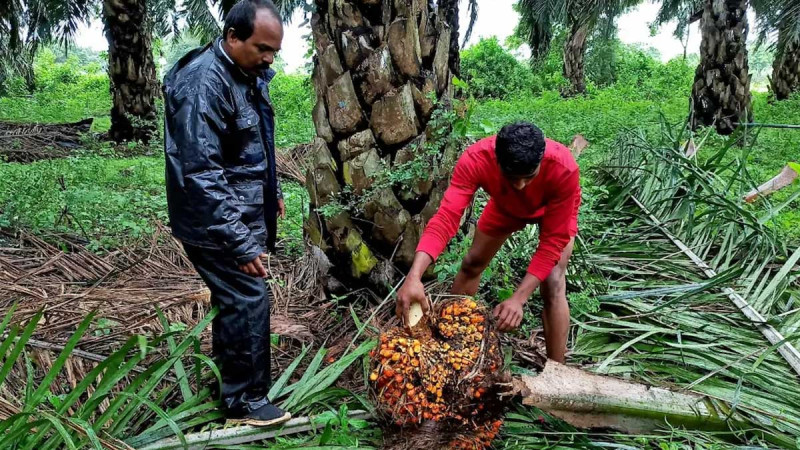
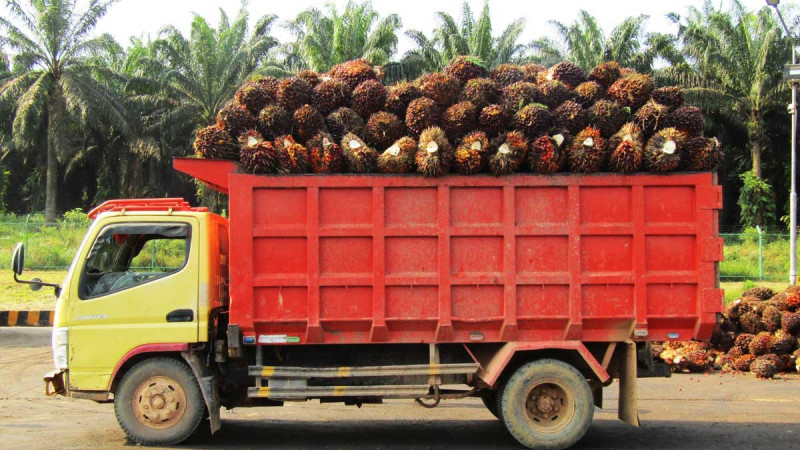
In the logic of development, palm oil is indeed too large to ignore. It generates foreign exchange earnings, serves as feedstock for biodiesel, supports the oleochemical industry, and provides livelihoods for millions of Smallholders across Indonesia.
Yet behind that optimism lies one unresolved issue: Indonesia has not fully put its existing palm oil sector in order.
The Forest Area Control Task Force (PKH) has brought nearly 4 million hectares of illegal oil palm plantations located within forest areas under enforcement. That figure is no small number—it is even larger than the expansion target now being promoted. In other words, before talking about opening new land, Indonesia is still dealing with a legacy of plantations with unclear land status, problematic legality, and governance structures that have yet to take healthy form.
At this point, the 2.3 million-hectare expansion plan deserves to be read not merely as an economic agenda, but as a political test of natural resource governance.
A Giant Called Palm Oil, Built on a Cracked Foundation
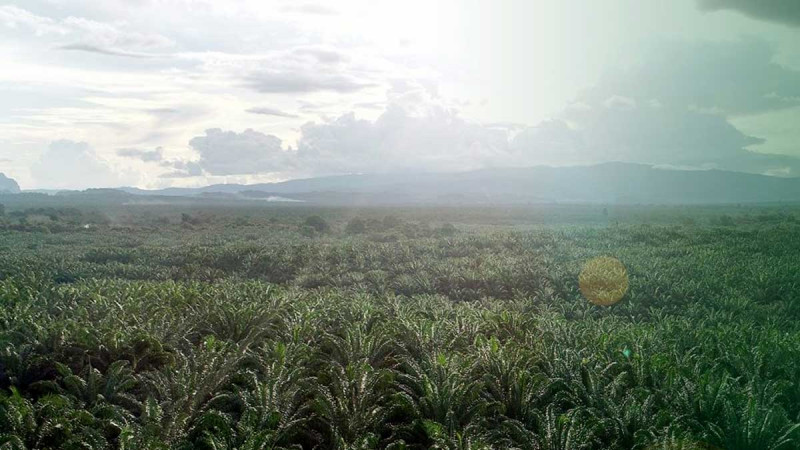
Indonesia today is the world’s largest palm oil producer. Its plantation area in 2024 is estimated at 16.01 million to 16.83 million hectares, with Riau as the main epicenter, accounting for around 2.82 million hectares, or nearly one-fifth of the national total.
But land area is not the whole story.
Indonesia’s palm oil production could, in fact, be increased significantly through intensification rather than extensification. In other words: improve existing plantations, rather than rush to clear new forests.
Replanting aging oil palm trees approaching 30 years of age, using superior seeds, strengthening biotechnology research, digitizing plantations, improving mill efficiency, and implementing precision agronomy are pathways that make far more ecological sense. Productivity can rise without opening a single hectare of new land.
The problem is that even at the most basic governance level, the homework remains substantial.
The Indonesian Sustainable Palm Oil (ISPO) certification scheme—Indonesia’s national sustainability standard—appears to be growing numerically. By the end of 2021/early 2022, more than 760 ISPO certificates had been issued. But when looking at Smallholders, the picture changes drastically.
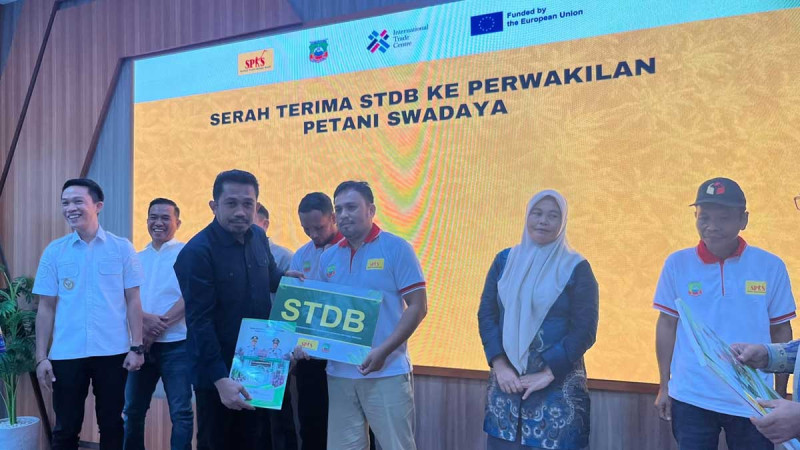
Out of 6.2 million hectares of Smallholder-owned oil palm plantations in 2023, only 81 ISPO certificates had been issued, covering 58,289 hectares. That means only around 0.3 percent of independent Smallholders are certified.
That figure is not merely low. It is an alarm bell.
The Chairman of Asosiasi Petani Kelapa Sawit Indonesia (Apkasindo), Gulat Manurung, has argued that oil palm Smallholders actually meet sustainability aspects in ecological, social, and economic terms. The main stumbling block is land legality and governance. Around 76.64 percent of Smallholder oil palm plantations are located within forest areas.
This means that most of Indonesia’s palm oil farmers operate in a legal gray zone.
And the European Union is watching.
The Shadow of EUDR and the Trace of Deforestation
The European Union Deforestation Regulation (EUDR) is fundamentally simple yet firm: products entering the EU market must not originate from land deforested after 31 December 2020.
Palm oil is included on the watchlist, alongside coffee, cocoa, soybeans, timber, and beef.
For Indonesia, the implications are significant. To date, oil palm plantations located within forest areas are estimated at 3.1–3.4 million hectares, spread across conservation forests, protected forests, limited production forests, permanent production forests, and convertible production forests.
Some are in the process of obtaining legal status through forest release mechanisms. But many others remain suspended in uncertainty.
When the EUDR takes full effect—30 December 2026 for large and medium-sized companies, and 30 June 2027 for micro and small businesses—this issue will no longer be merely domestic. It will become a market access issue.
Indonesia’s palm oil will be required not only to be productive, but also traceable, legal, and free from deforestation footprints.
At that point, the narrative of opening new land becomes even more complex.
Peatlands: A Threatened Carbon Engine
There is one deeper layer of the issue—both literally and ecologically—namely peatlands.
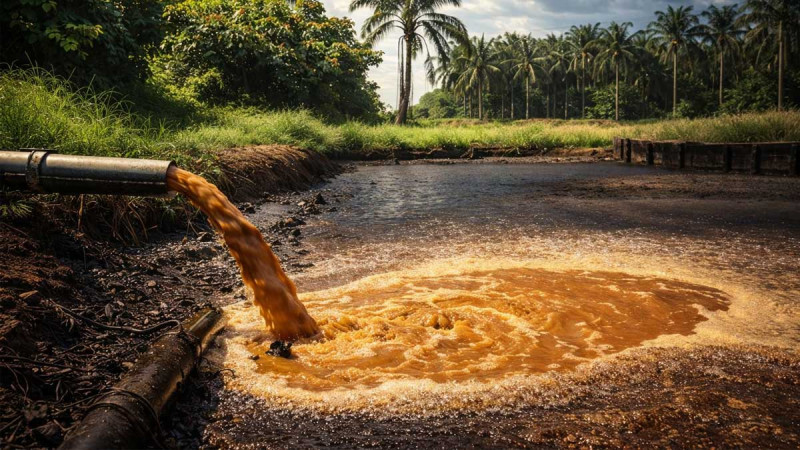
Many of Indonesia’s oil palm plantations are established on peat landscapes. And not all of them are shallow peatlands that remain relatively suitable for cultivation. A significant portion is located on medium to very deep peat, ecosystems that store extraordinarily large amounts of carbon.
Research published in Nature Sustainability> on 18 November 2021 showed that peatland areas in Kalimantan and Papua are among the regions with the highest carbon concentrations on Earth. If that carbon is released due to drainage, fire, or land conversion, the impact would no longer be local—but global.
Its recovery would not take years, but centuries.
In Sumatra, it is estimated that no less than 3.27 million hectares of oil palm plantations are located on medium to very deep peat. In Kalimantan, the figure is around 4.53 million hectares.
In total, oil palm plantations on peatlands that potentially threaten carbon reserves are estimated to reach 7.82 million hectares, or approximately 53.56 percent of Indonesia’s total oil palm area.
With such a composition, palm oil expansion without strict spatial discipline risks becoming a carbon bomb.
Is There Still Room? Yes. But...
Theoretically, room for expansion still exists.
Data from The State of Indonesia’s Forest (SOFO) 2020 shows that Indonesia still has 10.2 million hectares of Convertible Production Forest (HPK) that can administratively be allocated for non-forestry development, including plantations.
If only 30 percent of that area were utilized, there would be around 3 million hectares of new space—even exceeding the 2.3 million-hectare target.
The potential increase is significant: around 25 million tons of palm oil production per year.
But past experience offers expensive lessons.
The government once revoked palm oil permits covering 1.788 million hectares belonging to 137 companies across 19 provinces, from Papua, West Papua, Central Kalimantan, to Sumatra, due to various violations—ranging from permit misuse to allegations of using concession areas for other interests, including mining.
This means Indonesia’s issue is not simply a lack of land. The core problem is governance.
If Palm Oil Must Expand
If the 2.3 million-hectare expansion truly becomes a national agenda, at least three guardrails must not be crossed.
First, avoid peatlands—especially medium to deep peat.
These ecosystems are far too important as global carbon sinks to be sacrificed for short-term expansion.
Second, avoid tenure conflicts, particularly in customary land areas such as Papua.
Without fair resolution, palm oil expansion will only add to the long list of agrarian conflicts.
Third, ensure permits are granted only to credible companies with financial capacity, technical capability, and long-term commitment—not companies merely hunting for concessions.
Because in the end, the biggest question is not whether Indonesia still has land for palm oil.
The real question is: has Indonesia learned enough from the governance of its old palm oil sector before opening a much larger new chapter?
Author: Pramono Dwi Susetyo / Formerly worked at the Ministry of Environment and Forestry of the Republic of Indonesia.
Disclaimer: This article reflects the personal opinion of the author, who bears full responsibility for its content, and it has no affiliation with InfoSAWIT.