InfoSAWIT, JAKARTA – PT Agrinas Palma Nusantara is promoting a new development model for Indonesia’s palm oil sector that combines higher production targets with environmental restoration, stronger conservation commitments, and a more inclusive partnership framework for Smallholders.
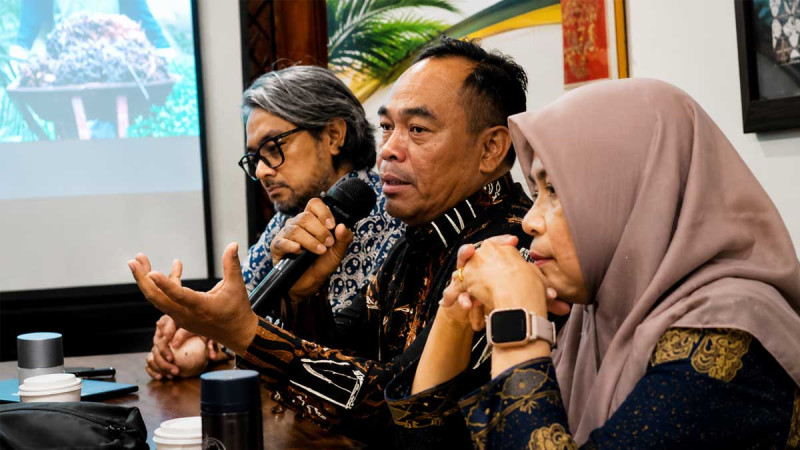
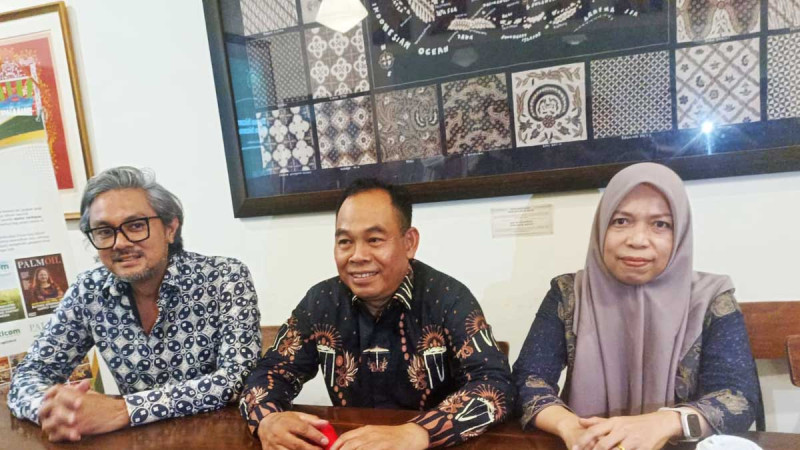
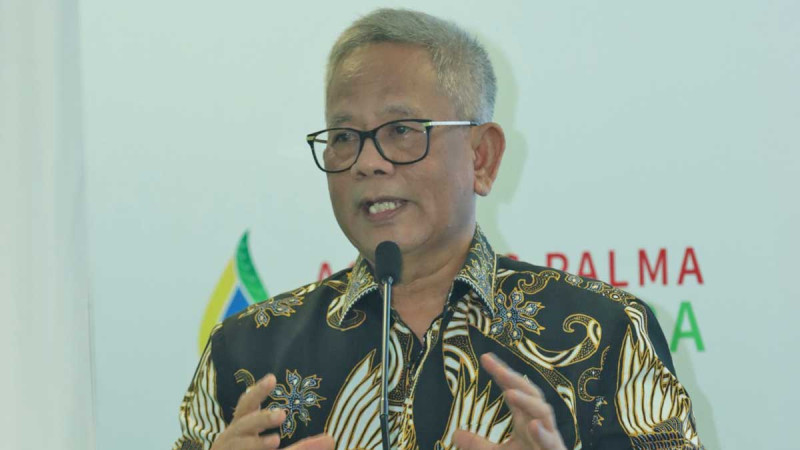
Speaking at a limited discussion forum at Menara Agrinas Palma, Mohammad Abdul Ghani, President Director of Agrinas Palma Nusantara, said Indonesia still has substantial room to increase palm oil production—provided expansion is supported by sound governance and sustainability-led land management.
“If managed properly, the opportunity to significantly raise national output remains wide open. But that growth cannot come at the expense of the environment. On the contrary, we must build a palm plantation model that moves in harmony with conservation,” Ghani said at the forum attended by InfoSAWIT on April 27, 2026.
According to Ghani, one of the key approaches being developed is the integration of forest-oriented conservation management within plantation landscapes, particularly in marginal lands and ecologically sensitive areas. The concept is designed to establish a new benchmark for Indonesia’s palm oil industry in responding to global scrutiny over deforestation and environmental stewardship.
Under the proposed framework, each plantation right holder would be encouraged to adopt measurable conservation commitments, subject to periodic independent evaluation, and integrated into overall business compliance standards.
“For companies, this should not be seen as a burden, but as a long-term business investment. When firms are serious about protecting the environment, the economic returns are also tangible—whether through carbon value opportunities or stronger market acceptance as global buyers increasingly demand sustainable products,” he said.
Ghani pointed to industry experience showing that sustainably produced palm oil can command premium pricing in international markets, while conservation-focused operational models can also generate additional long-term economic value, told Ghani.
Beyond environmental commitments, Agrinas is also preparing a socially inclusive plantation management model, particularly for oil palm areas located within production forest zones that are currently undergoing regulatory restructuring by the state.
From the land bank expected to be managed in the future, part of the area is planned to be allocated as conservation zones aimed at maintaining ecological balance while supporting responsible commercial cultivation.
Strategically, Agrinas is positioning itself not only as a productivity-driven state enterprise, but also as a new model for public-private-smallholder partnership in the palm oil industry—one that emphasizes fairness, modernization, and long-term sustainability, says Ghani.
To support that vision, the company has established a dedicated directorate focused on strengthening partnerships with growers and business partners, including facilitating access to bank financing, expanding technical assistance, and developing collaboration models based on shared growth rather than purely transactional arrangements.
The initiative is expected to provide a stronger foundation for Indonesia’s palm oil industry—one capable of raising productivity, preserving environmental value, and improving the strategic role of Smallholders across the sector’s value chain. (T2)