InfoSAWIT, JAKARTA – Land legality issues involving community-managed oil palm plantations located within designated forest areas remain one of the biggest obstacles to accelerating Indonesia’s Smallholder Replanting Program (PSR), prompting the government to intensify cross-ministerial coordination and establish a dedicated task force to resolve long-standing administrative bottlenecks.
Togu Rudianto Saragih, Head of Oil Palm Cultivation Group at the Directorate General of Plantations, said many oil palm growers have cultivated their land legally for years — in some cases holding government-issued land certificates — yet still face unresolved legal status because their plantations fall within areas classified under forest jurisdiction.
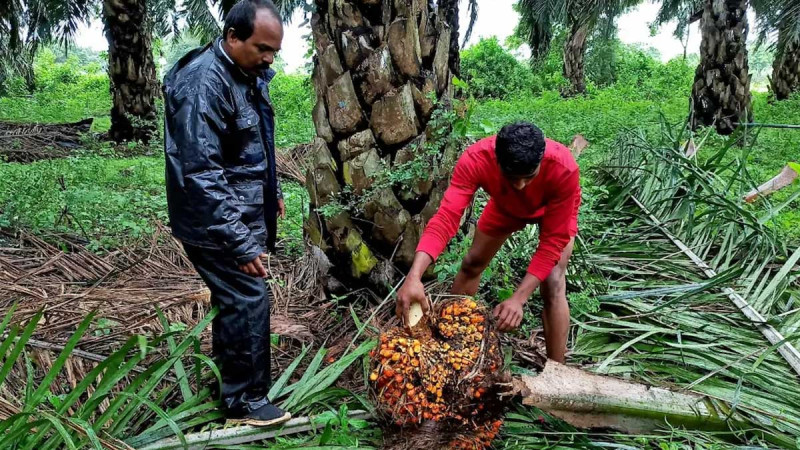
According to Togu, some Smallholders manage plots of around four hectares that function both as productive farmland and family living areas, but land status complications have prevented them from obtaining full legal certainty needed to access government-backed support programs, including PSR.
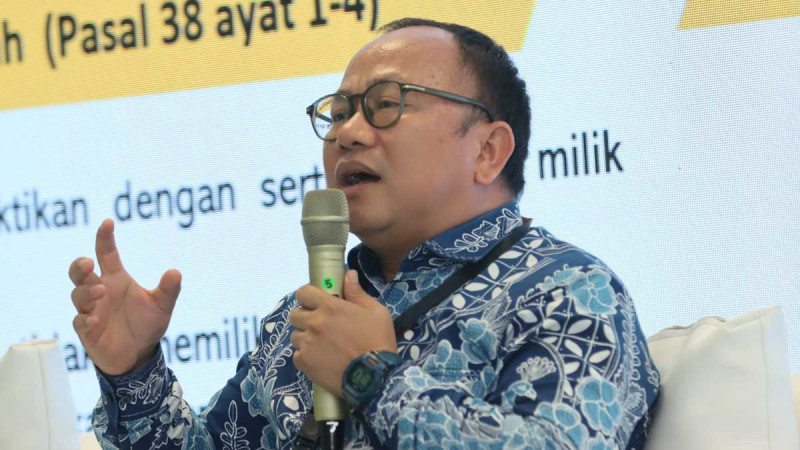
“This legality issue is what we are working to resolve, and we hope the acceleration task force can help overcome many of the obstacles that have persisted on the ground,” Togu said during a limited discussion forum at Menara Agrinas Palma attended by InfoSAWIT on April 27, 2026.
He explained that the special task force, operating under coordination of the Coordinating Ministry for Economic Affairs, was formed to speed up the settlement of legal and administrative barriers facing Smallholders, while also supporting broader implementation of the national replanting agenda.
However, Togu noted that the biggest challenge is not policy alignment at the central government level, but uneven interpretation and implementation in regional administrations. While inter-agency coordination in Jakarta has intensified, policy execution at field level remains inconsistent, creating uncertainty for growers seeking legalization and program access.
Technical requirements such as polygon mapping, field verification, and spatial documentation also remain costly and complex, particularly for Smallholders with limited financial capacity.
“The state must step in. Farmers should focus on applying good agricultural practices in oil palm cultivation, while administrative and legality matters receive institutional support,” he stressed.
The Directorate General of Plantations views land legality as a critical prerequisite for achieving PSR acceleration targets. Without legal certainty over land status, efforts to improve productivity through replanting will remain constrained, even as millions of hectares of aging Smallholder plantations require renewal.
The government is now expected to translate cross-sector discussions into concrete field action, allowing Indonesia’s long-delayed Smallholder replanting agenda to move forward more effectively and strengthen long-term productivity across the national palm oil sector. (T2)