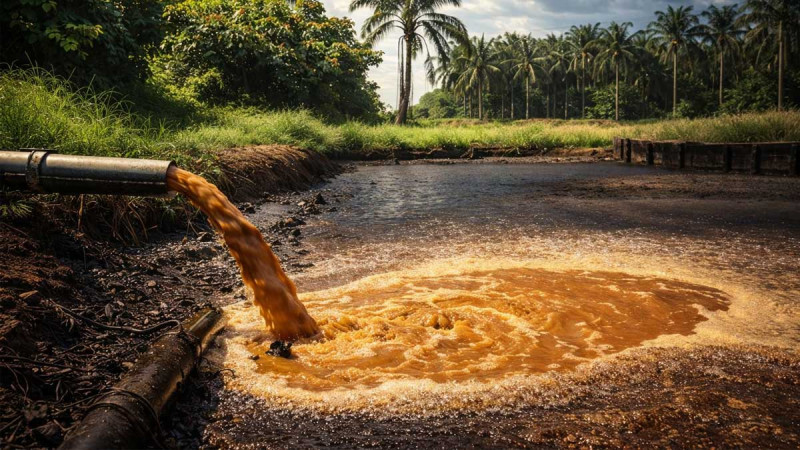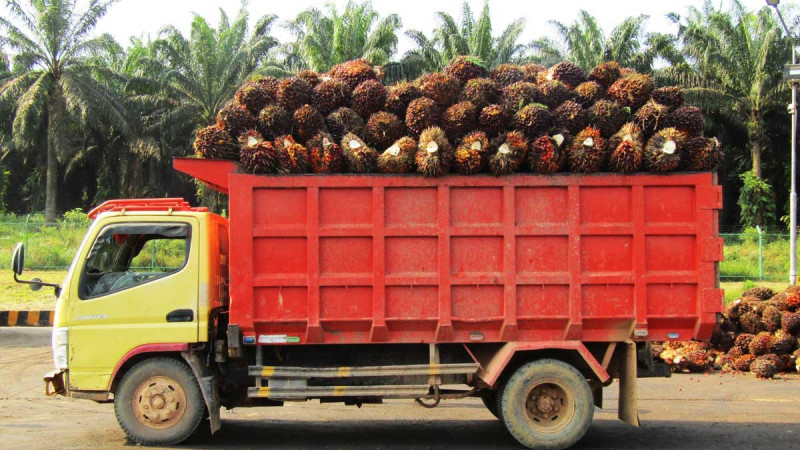
InfoSAWIT, JAKARTA – Indonesia’s palm oil industry produces vast amounts of waste every day, much of which is still treated as a burden rather than an opportunity. Yet behind this waste lies a significant untapped energy potential worth billions of rupiah.
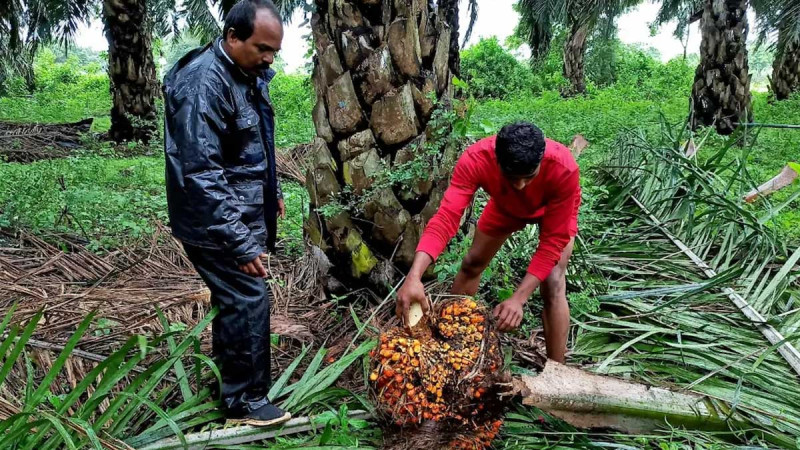
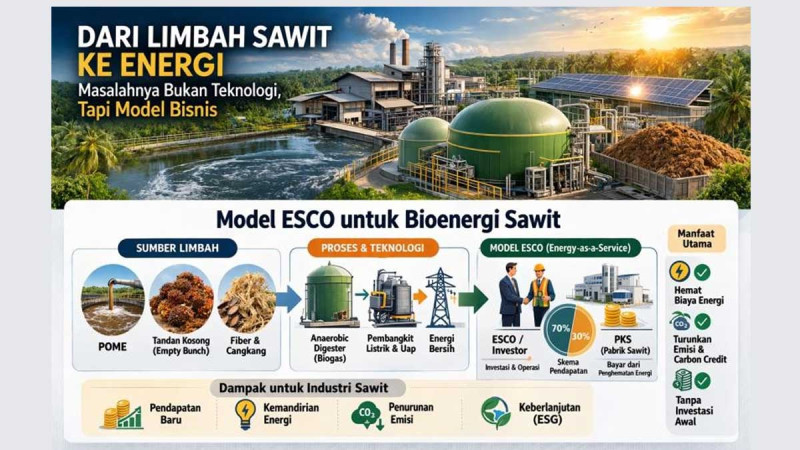
Palm Oil Mill Effluent (POME), along with biomass such as empty fruit bunches, fiber, and shells, holds strong potential for renewable energy production. POME, rich in organic content, can be converted into biogas through anaerobic digestion, while biomass can be utilized for thermal and electricity generation.
Despite the availability of proven technologies—ranging from biogas reactors to biomass power plants—adoption remains slow across the industry. Many mills continue to rely on conventional waste management practices without transforming waste into value.
At the core of the issue is not technology, but business viability.
Many palm-based bioenergy projects struggle to attract investment due to relatively low internal rates of return (IRR) and perceived risks. As a result, projects often stall before implementation.
However, a new approach is emerging through the Energy-as-a-Service (EaaS) model, implemented via Energy Service Companies (ESCOs).
Under this scheme, palm oil mills are no longer required to bear upfront capital expenditure. Instead, ESCOs provide both technology and financing, while mills pay only for the energy produced—similar to a service model.
This shift transforms waste from an operational cost into a revenue-generating asset.
A conservative simulation based on industry practices suggests potential annual revenues of up to Rp16 billion from energy sales and carbon credits. In such a model, approximately 70% of revenue goes to the ESCO, while 30% remains with the mill—without any initial investment. The IRR could reach 17–19%, making it increasingly attractive to investors.
Beyond financial gains, large-scale adoption could significantly reduce greenhouse gas emissions and strengthen the industry’s alignment with global sustainability and ESG standards.
Ultimately, the challenge lies in changing perspectives—from managing waste to monetizing energy. (*)
Author: Idad S Haq / Lecturer in Palm Oil Processing Technology (ITSB) and trainer for GHG Emission Calculation
Disclaimer: This article reflects the author’s personal opinion and is entirely the author’s responsibility; it is not associated with InfoSAWIT.