InfoSAWIT, JAKARTA – Papua has long been placed at a crossroads that seems to offer no real choice. It is forced to choose between mining or forests, between growth or conservation—as if the two can never coexist. Yet perhaps the question itself has always been flawed. It is not about choosing, but about managing.
For decades, Papua has been confined within two opposing narratives. It is praised as a resource-rich frontier waiting to be exploited, while at the same time revered as the last bastion of untouched nature. Caught between these opposing forces, Papua lives in irony—rich, yet fragile; vast, yet underdeveloped.
What is often overlooked is that Papua’s challenges are not merely economic or ecological. At their core, they are about justice. Unequal distribution of benefits, weak coordination between central and regional governments, and the marginalisation of indigenous communities in decision-making have created a complex knot that cannot be untangled through conventional approaches.
Meanwhile, the world is not standing still. The transition toward a low-carbon economy has become a central force in global geopolitics. Countries are racing to restructure supply chains, measure carbon footprints, and renegotiate their positions in international trade. In this new landscape, Papua is no longer on the margins—it is at the centre of attention.
Under President Prabowo Subianto’s administration, two major agendas have emerged: food sovereignty and leadership in the carbon economy. Both find their space in Papua—a region endowed with vast land reserves, intact tropical forests, and largely untapped renewable energy potential.
Yet, every grand ambition must confront a fundamental question: who is the true subject of this development?
This is where the concept of green development balance becomes relevant. It is not merely a technocratic term, but a new way of thinking. Development has long been measured through visible indicators—GDP growth, investment value, export volume. Forests gain value only when they are cut. Rivers are counted when they are dammed. Land is considered productive only when cultivated.
In reality, ecological and social values often far exceed what is recorded in economic metrics.
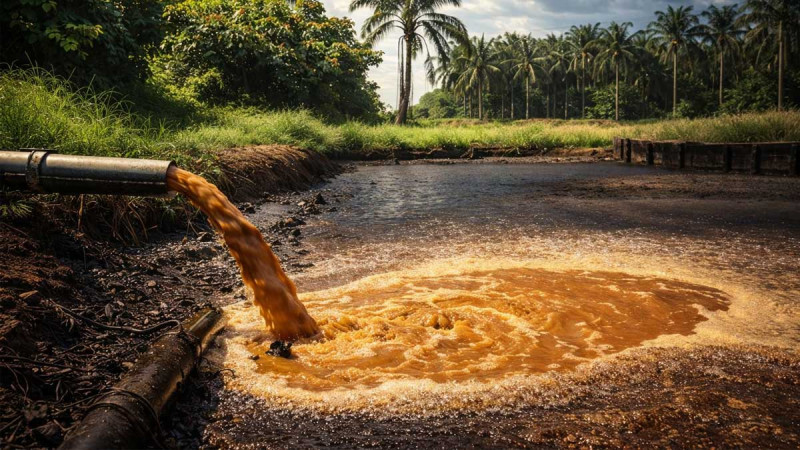
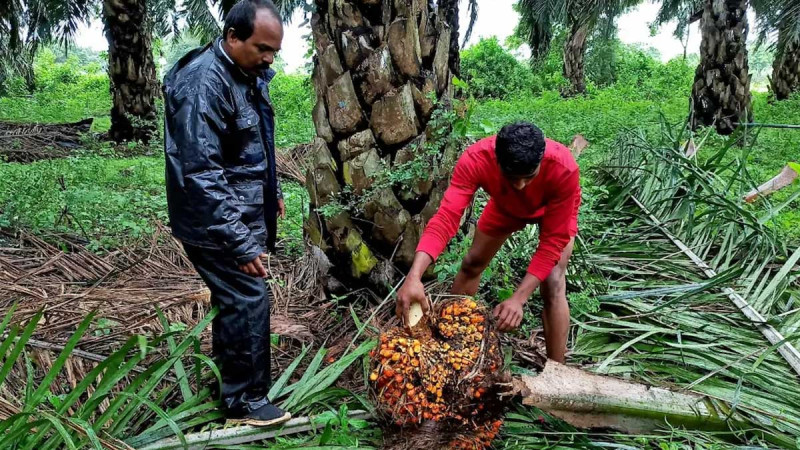
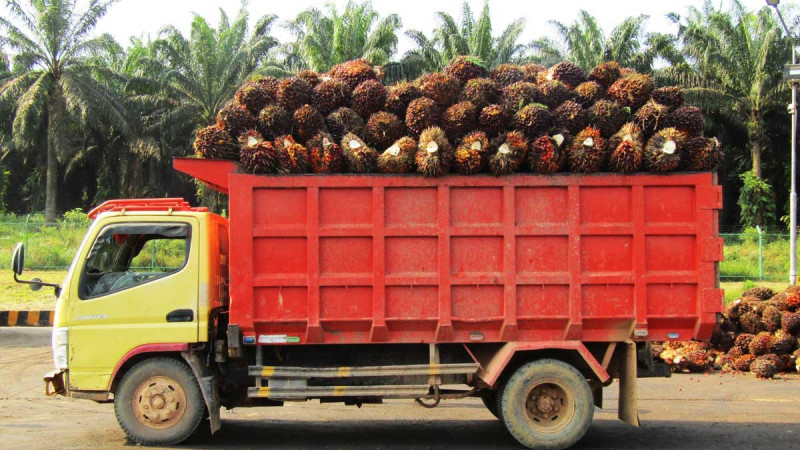
In this context, palm oil—often placed at the centre of controversy—could instead become an entry point for a new approach. Not as a commodity exploited without limits, but as part of a production system that integrates ecological costs, decarbonisation opportunities, and socio-economic benefits.
In other words, palm oil is no longer just about oil—it is about redefining the development model itself.
Papua has the prerequisites. Its landscape is vast. Its biodiversity is immense. There is still room to redesign development pathways from the outset. But this potential will remain unrealised without a clear and unified direction.
The recent expansion into multiple provinces offers opportunities to accelerate public services. Yet it also carries the risk of fragmentation. Without a shared framework, development may proceed in isolation—without orchestration, without harmony.
Therefore, Papua needs more than sectoral plans. It requires a shared roadmap—a regional blueprint agreed upon by all stakeholders: government, business actors, and most importantly, indigenous communities.
Every inch of land should not be viewed merely as economic space. It must be understood as an ecosystem—with carrying capacity, social value, and inherent conflict risks. Transparency is not optional; it is a prerequisite. Accountability is not an accessory; it is the foundation.
Within this framework, the idea of Integrated Green Industrial Clusters gains meaning. It is not just about industrial zones, but about breaking away from the old pattern: extracting in one place, processing in another, and leaving value-added benefits outside Papua.
In the south, regions such as Merauke and Boven Digoel could become modern food production hubs—integrating palm oil, rice, corn, and sugarcane into a unified system. In the north, the Mamberamo River holds immense hydropower potential—energy that is not only abundant but strategic. This is not just electricity; it is the key to ensuring Indonesian products remain competitive in a global market increasingly sensitive to carbon footprints.
Yet development that speaks only in numbers will always lose meaning if the people within it are not counted.
In Papua, this means one thing: indigenous communities must no longer be sidelined. The principle of Free, Prior, and Informed Consent is not merely administrative—it is recognition that land is not just an economic asset, but a living space embedded with identity, history, and dignity.
Customary land rights, often seen as barriers to investment, can instead serve as the foundation of social legitimacy. They provide certainty—not only for communities, but also for businesses that have long operated under the shadow of conflict.
At this point, development ceases to be a short-term project. It becomes an intergenerational social contract.
The next question then arises: how can the benefits of development be sustained beyond a single economic cycle?
One answer lies in establishing a Papua Sovereign Fund—a mechanism to transform natural resource revenues into long-term investments. Portions of income from palm oil, carbon trading, and other sectors could be allocated toward education, healthcare, and strengthening local community capacity.
In this way, what is passed down is not merely a legacy of extraction, but a foundation of sustainability.
Ultimately, any discussion about Papua returns to a deeper choice: will we continue repeating old patterns that leave scars, or dare to design a more just path forward?
Papua is not merely a region in the east waiting to be developed. It is a mirror—reflecting whether Indonesia can reconcile with its own natural wealth.
If commodity-based development, including palm oil, can be managed through a balanced approach—economic, social, and ecological—then Papua will no longer symbolise the curse of abundance. Instead, it could become proof that natural wealth, when managed wisely, can lead to prosperity without compromise.
Author: Edi Suhardi – Sustainable Palm Oil Analyst
Disclaimer: This article reflects the personal views of the author and is entirely his responsibility, with no affiliation to InfoSAWIT.