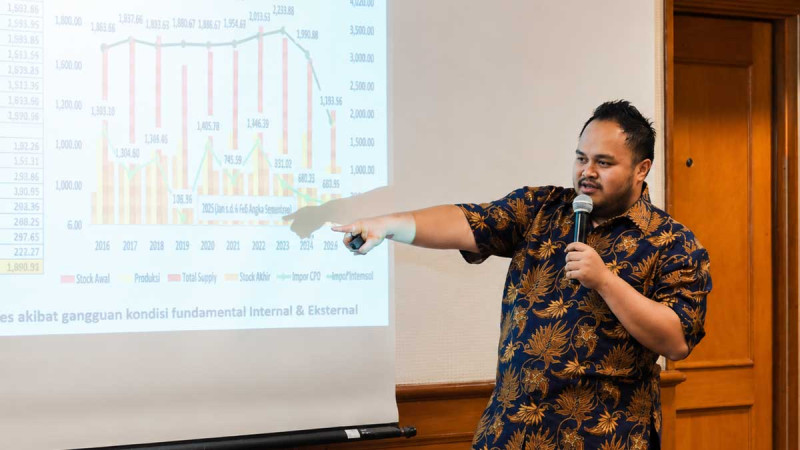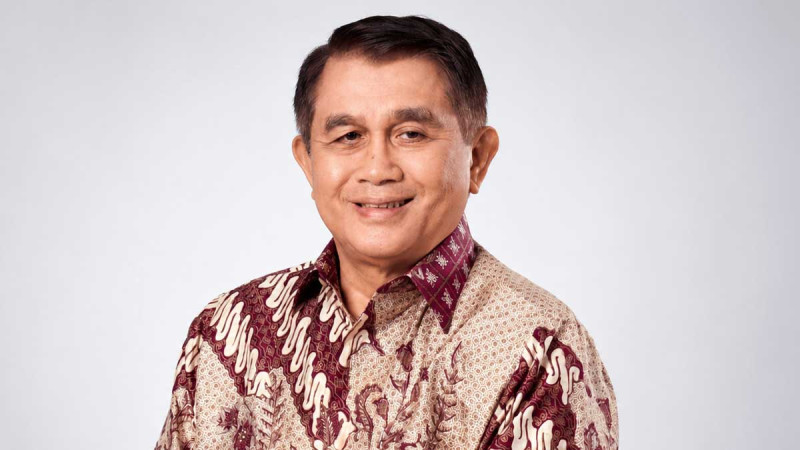
InfoSAWIT, BOGOR – Indonesia’s palm oil industry should prioritize improving productivity on existing plantations rather than expanding cultivated areas if it aims to remain globally competitive while meeting increasingly stringent sustainability requirements, according to Prof. Hariyadi, Professor at the Faculty of Agriculture, IPB University.
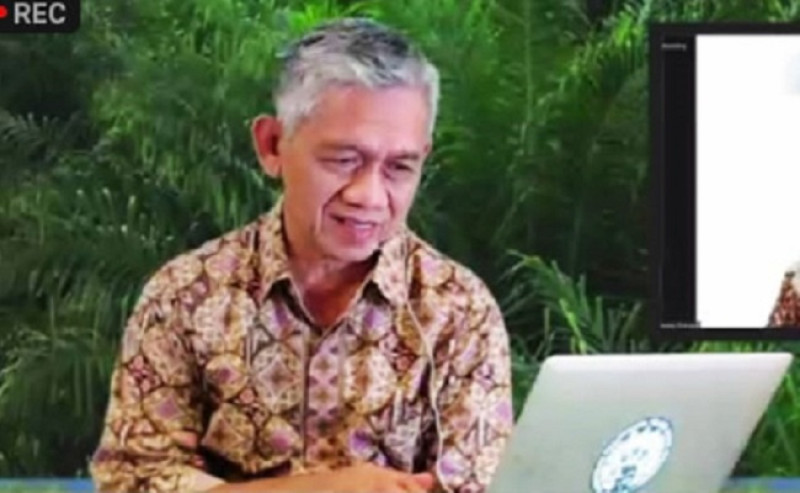
Speaking during his inaugural professorial lecture on Saturday, Prof. Hariyadi introduced the concept of a “New Nexus”, an integrated framework that combines higher productivity, environmental sustainability, and technological innovation as the foundation for the future development of Indonesia’s palm oil sector.
He argued that productivity among independent smallholders remains significantly below its potential, making intensification a more effective strategy than opening new plantations.
“Smallholder productivity is still below 60% of its potential. Therefore, expanding plantation areas should not be the primary solution unless it is supported by quality planting materials and proper nutrient management,” Prof. Hariyadi said, according to a statement from IPB University received by InfoSAWIT on Tuesday.
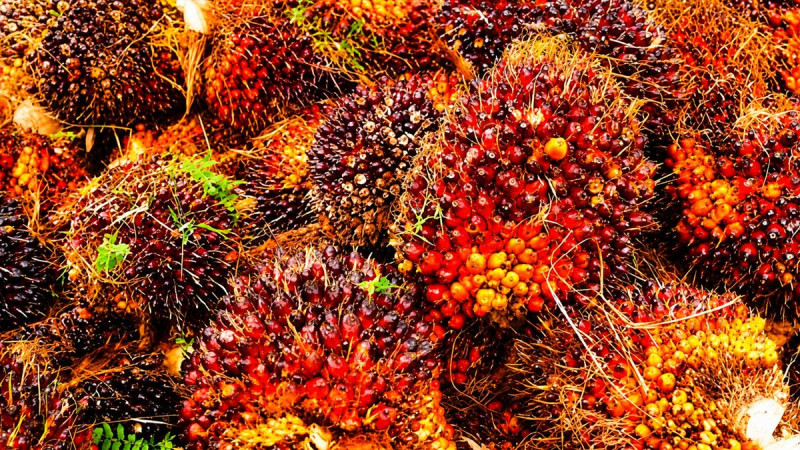
He explained that successful intensification depends largely on the use of certified high-yield planting materials combined with balanced fertilisation and sound agronomic management. With improved cultivation practices, production can increase substantially without additional land conversion.
According to Prof. Hariyadi, the widespread adoption of Good Agricultural Practices (GAP) should become the cornerstone of efforts to improve plantation productivity. One of the most critical elements is implementing the “Five Rights” principle in fertiliser application—using the right fertiliser type, the correct dosage, proper placement, appropriate timing, and suitable application methods.
Beyond improving yields, the New Nexus framework also highlights the importance of a circular economy within the palm oil industry.
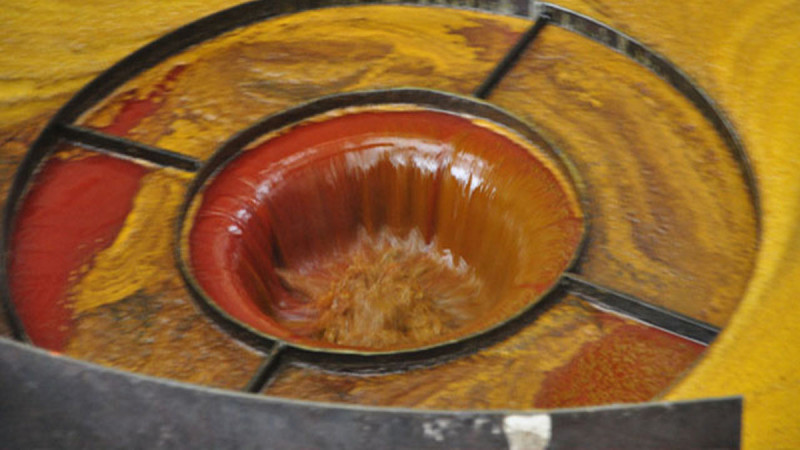
Prof. Hariyadi noted that by-products generated throughout the production chain—including fronds, empty fruit bunches (EFB), shells, fibre, and Palm Oil Mill Effluent (POME)—represent valuable economic resources rather than waste.
These materials, he said, can be processed into renewable energy, organic fertilisers, livestock feed, and other value-added products, creating new revenue streams while reducing environmental impacts.
However, he acknowledged that implementing circular economy practices remains challenging due to high initial investment costs, limited technological capacity, logistical constraints, underdeveloped downstream markets, regulatory barriers, and the relatively low adoption of innovation among smallholders.
Concluding his address, Prof. Hariyadi stressed that the future of Indonesia’s palm oil industry requires a more integrated development model.
Through the New Nexus approach, he said, palm oil development should extend beyond increasing production to include climate resilience, circular economy implementation, digital transformation, and stronger compliance with Environmental, Social and Governance (ESG) principles that are becoming increasingly important in international markets.
“The future competitiveness of Indonesia’s palm oil industry will depend not only on how much it produces, but also on how sustainably and efficiently it is managed,” he said. (T2)