InfoSAWIT, JAKARTA — The government has reaffirmed its commitment to building a people-centered economy by strengthening the agriculture and plantation sectors. Through a massive downstreaming program worth IDR 371 trillion, the government aims to create millions of jobs, improve farmers’ welfare, and develop local resource-based industries across Indonesia.
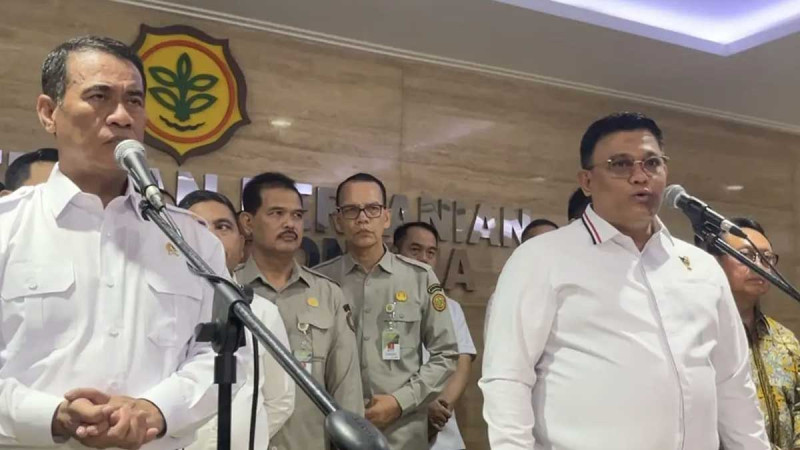
The commitment was underscored during the Final Coordination Meeting on Plantation and Industrial Downstreaming at the Ministry of Agriculture, chaired by Minister of Agriculture Andi Amran Sulaiman alongside Minister of Investment and Downstreaming/BKPM Rosan Roeslani.
Minister Amran emphasized that downstreaming is not just a slogan but a concrete strategy to make agriculture a driver of the national economy. “President Prabowo has instructed that agriculture must not stop at the upstream level. Added value must be created domestically so that farmers directly benefit from the industry,” he said.
Most investments will target key plantation commodities such as sugarcane, cocoa, cashew, and coconut. Amran cited coconut processing in North Maluku, where value has risen from IDR 600 to IDR 3,500 per nut, as an example of downstreaming’s transformative potential.
The government also allocated IDR 20 trillion to strengthen the integrated poultry and egg industry supporting the Free Nutritious Meals (MBG) program, aimed at improving food security and creating new jobs.
Minister Rosan highlighted that agricultural downstreaming offers broader social impacts than mineral downstreaming. “This sector is labor-intensive, directly revitalizing rural economies. Each processing plant built means new jobs and an active local economy,” he said.
Strategic state-owned enterprises (SOEs) will be tasked with implementing priority downstream projects, focusing on export-oriented commodities such as coconut, cocoa, and cashew.
This initiative marks Indonesia’s shift from a raw commodity-based economy to one with higher value-added production — a transformation expected to strengthen economic independence and enhance public welfare. (T2)