InfoSAWIT, KETAPANG – The commitment to Net Zero Emission by 2060 and achieving Sustainable Development Goals (SDGs) by 2030 continues to be realized by PT Bumitama Gunajaya Agro (Bumitama) through concrete steps in the field. Together with IDH (Sustainable Trade Initiative), the company continues its strategic collaboration to strengthen sustainable landscape management in West Kalimantan, particularly through the Production–Protection–Inclusion (PPI Compact) approach that balances productivity, conservation, and community welfare.
This collaboration is not new. Since 2018, Bumitama and IDH have rolled out various programs in the Bumitama Biodiversity and Community Project (BBCP) — an initiative that combines forest conservation, capacity building for smallholder farmers, and empowerment of local communities around the operational areas.
In 2025, this partnership continues with the launch of the Empowered Village School Program, designed to strengthen village communities' capacity in managing natural resources productively and responsibly. “Without IDH, we would not have obtained the main permit to manage conservation areas as part of our operational permit,” said Martin Mach, Head of Environmental Protection & Governance at Bumitama, in an official statement received by InfoSAWIT, Thursday (6/11/2025). This statement affirms that sustainability can only be achieved through cross-sector collaboration.
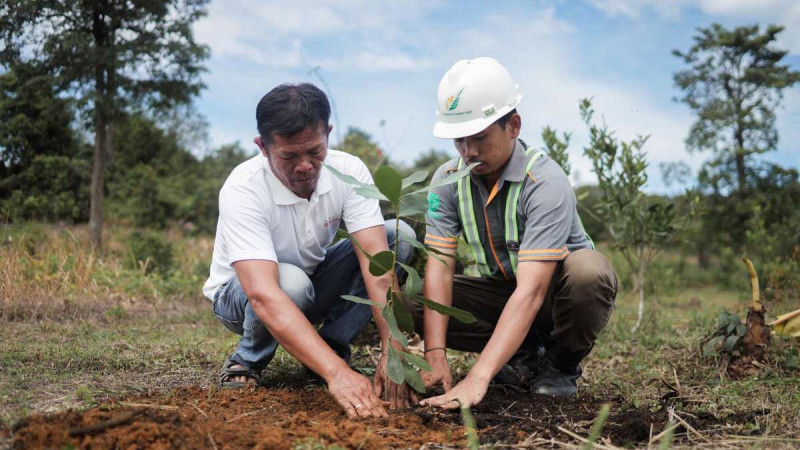
The main focus of this PPI Compact program is in Ketapang Regency, West Kalimantan, especially in the Gunung Tarak – Gunung Palung – Sungai Putri conservation corridor, covering an area of more than 8,000 hectares. Several fostered villages such as Nanga Tayap, Simpang Dua, and Kendawangan are actively involved in conservation and social activities, ranging from tree planting, critical land rehabilitation, to the formation of women's farmer groups and sustainable agronomy training.
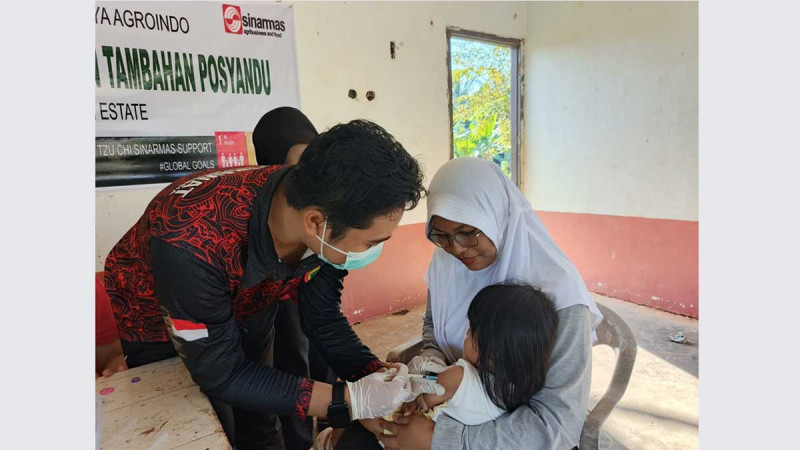
In addition, training and economic mentoring are also an important part of community empowerment efforts. To date, approximately 25,000 hectares of forest have been conserved, with more than 60 High Conservation Value (HCV) trainings and fire mitigation followed by 1,389 residents. Meanwhile, 469 independent smallholder farmers have received sustainable palm oil farming training, and 434 residents have participated in alternative business training. Even 234 community land legalization documents have been issued, while conservation areas like Rimbak Sangiang are now developing into community-based ecotourism destinations.
“The three aspects — production, protection, and inclusion — must be present in every collaborative project like this,” explained Sacha Amaruzaman, Senior Program Manager at IDH. “The collaboration between IDH and Bumitama in Ketapang becomes a real example of how a landscape approach can provide economic benefits while preserving the environment.”
Going forward, Bumitama and IDH plan to strengthen a sustainable monitoring system involving local communities and active support from local governments. Through this synergy, both are committed to proving that economic growth and environmental preservation are not two opposing things, but two sides of one shared goal — a greener, more inclusive, and resilient West Kalimantan. (T2)