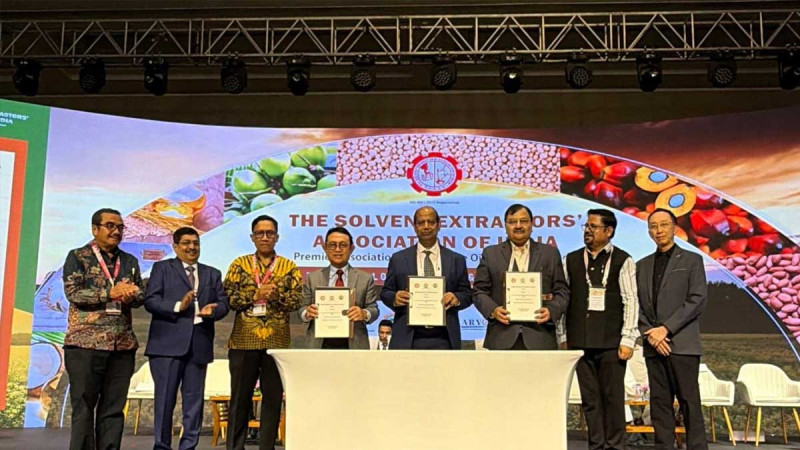
InfoSAWIT, MUMBAI – The Asian palm oil trade landscape is entering a new chapter. At the SEA AGM & GlobOil India 2025 event, three major associations—the Solvent Extractors' Association of India (SEA), the Asian Palm Oil Alliance (APOA), and the Indonesian Palm Oil Association (GAPKI)—signed a tripartite Memorandum of Understanding (MoU). This agreement is a crucial step to strengthen cooperation in trade, sustainability, innovation, and market development across the regional palm oil value chain.
For India, this commodity is more than just a food industry raw material. With an import dependency of over 60 percent to meet its national edible oil needs, palm oil is the backbone of supply stability. Indonesia, as the primary supplier for over a decade, plays a vital role in meeting this demand. In August 2025, for instance, India's palm oil imports surged nearly 16 percent to 990,528 tons—the highest figure in the last year. This context underpinned the strategic agreement between SEA, APOA, and GAPKI.
Shri Sanjeev Asthana, President of SEA, emphasized that this partnership will bring dual benefits. “SEA welcomes cooperation with GAPKI and APOA as an important step to deepen India’s relationship with Indonesia and other Asian partners. This MoU not only strengthens India’s access to quality palm oil at affordable prices but also opens opportunities for technical cooperation that can provide greater stability to the edible oil industry in India,” he said in an official statement received by InfoSAWIT on Monday (9/29/2025).
Atul Chaturvedi, Chairman of APOA, echoed a similar sentiment, calling the agreement a historic milestone for palm oil consumers in Asia. “Together with GAPKI and SEA, we want to ensure secure supply, strengthen regional cooperation, and increase consumer awareness. Our focus is on representing the voice of consumers in Asia while advancing sustainability and inclusive growth,” he stated.
Meanwhile, Dr. B. V. Mehta, Executive Director of SEA and Secretary General of APOA, viewed the MoU as a collaborative breakthrough. “This move strengthens India's edible oil supply security and affirms a joint commitment to sustainability, transparency, and innovation in the palm oil value chain. By aligning efforts through SEA, GAPKI, and APOA, we build a strong platform for knowledge sharing, policy dialogue, and market development that benefits the entire region,” he explained.
From Indonesia, Eddy Martono, Chairman of GAPKI, stressed the importance of palm oil for the national economy. He highlighted Indonesia's efforts through ISPO certification, forest conservation, and the implementation of responsible production practices. “India is one of Indonesia's main export markets and a strategic partner. Through this partnership, we are ready to cooperate to meet consumer demand while promoting sustainable practices. This MoU will also increase public awareness about the positive contribution of the palm oil industry, from upstream to downstream,” Eddy asserted.
The agreement, valid for three years, has six main focus areas, Facilitating Stakeholder Interaction through the exchange of delegations and regular visits. Boosting Trade through exhibitions, conferences, and webinars. Encouraging the Exchange of Information and Technical Standards to enhance industry efficiency. Executing Joint Projects to strengthen sustainability, aligned with the Indian Palm Oil Sustainability (IPOS) and Indonesian Sustainable Palm Oil (ISPO) frameworks. Increasing Consumer Awareness to address public misconceptions. And Policy Advocacy with governments and regulators to reduce trade barriers.
Additionally, GAPKI will support the Indian palm oil industry through technical knowledge transfer, trade facilitation, and campaigns on the economic and nutritional benefits of palm oil. SEA and APOA, on the other hand, will open market access, bridge industry networks, and invite GAPKI to various international conferences and seminars.
To ensure effective implementation, a Joint Working Group has been established. This body is tasked with developing an annual work plan, setting key performance indicators (KPIs), and publishing regular progress reports. This ensures every agenda item is measurable and results-oriented.
More than just a document, the MoU reflects a new spirit of regional collaboration. Amid rising global food needs and demands for sustainable practices, this three-party cooperation signals that Asia is ready to take a greater role in securing supply and driving inclusive growth.
As the association leaders emphasized, palm oil is not just a matter of trade, but also about building economic, environmental, and social bridges. With this strategic step, India, Indonesia, and their Asian allies solidify their position as important engines in ensuring a more resilient and sustainable future for palm oil. (T2)