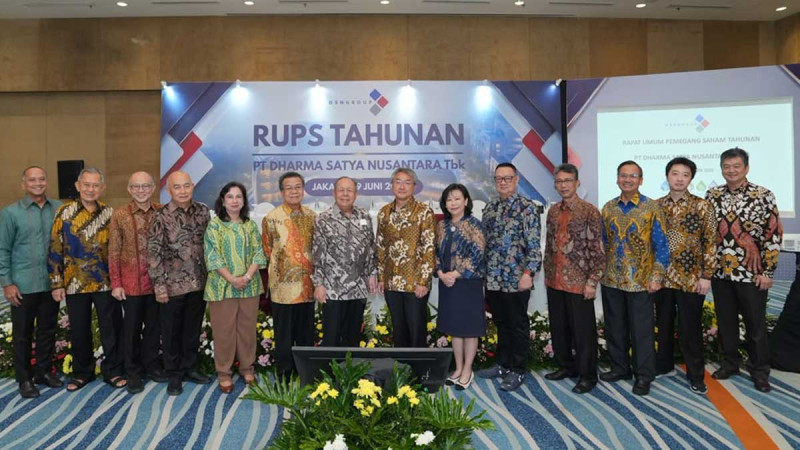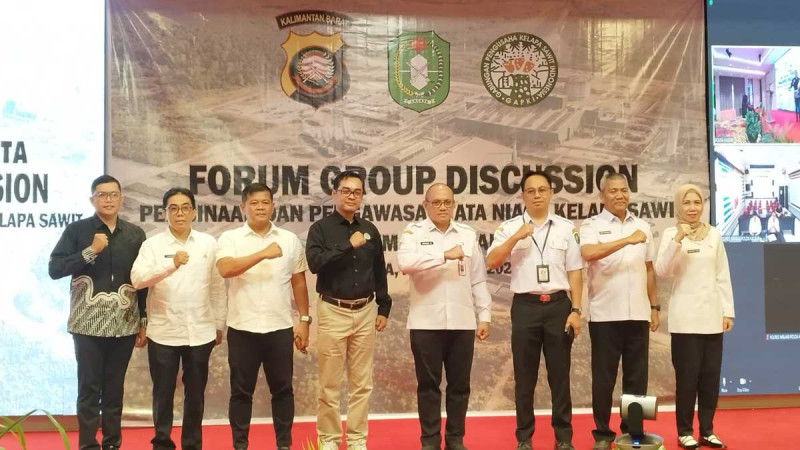
InfoSAWIT, KUBU RAYA – The West Kalimantan Provincial Government (Pemprov Kalbar) in collaboration with the Indonesian Palm Oil Entrepreneurs Association (GAPKI) West Kalimantan Branch held a Focus Group Discussion (FGD) titled "Coaching and Supervision of Palm Oil Trade in Kalbar" on Wednesday, July 9, 2025, at Alimoer Hotel, Kubu Raya. This forum serves as a strategic space to seek solutions to various issues in the Fresh Fruit Bunch (TBS) trade that have long concerned business actors, farmers, and local governments.
The Head of the West Kalimantan Agriculture and Plantation Office, Heronimus Hero, was a key speaker in the discussion, which brought together government representatives, business actors, and other stakeholders. He emphasized the importance of cross-sector collaboration in improving palm oil trade governance to be more transparent, fair, and sustainable.
The FGD was opened by the Governor of West Kalimantan, represented by the Assistant II for Economic and Development Affairs, Ignasius IK. In his remarks, Ignasius stressed that the plantation subsector, particularly palm oil, remains the backbone of both regional and national economies.
"The plantation subsector plays a strategic role in the national economy, contributing to gross domestic product, job creation, foreign exchange earnings, provision of industrial raw materials, and regional development acceleration," he stated, as reported by InfoSAWIT from the official Facebook page of the West Kalimantan Agriculture and Plantation Office on Saturday, July 12, 2025.
Furthermore, he highlighted the need for systematic efforts to promote healthier and more sustainable trade practices. According to him, this FGD is a concrete step towards equitable and just development, as well as a means to formulate improvement measures in the management of this strategic commodity.
"This FGD is expected to be one of the instruments in formulating sustainable improvements in palm oil governance in Kalbar," Ignasius added.
The discussion was dynamic, addressing several crucial issues, including the establishment of fair TBS pricing mechanisms for farmers, strengthening farmer institutions, and efforts to prevent detrimental trade practices. Participants also underscored the importance of synergy among farmers, companies, and the government in creating a healthy trading ecosystem.
Amid global pressures for sustainable palm oil practices, West Kalimantan, as one of the national palm oil hubs, faces the challenge of continuously improving its trade and production systems. This FGD represents an important moment to bridge interests among parties while maintaining a balance between economic, social, and environmental aspects.
Through this forum, it is hoped that policy recommendations will emerge to strengthen the position of smallholder farmers, enhance transparency in trade governance, and maintain regional economic stability based on strategic commodities such as palm oil. (T2)