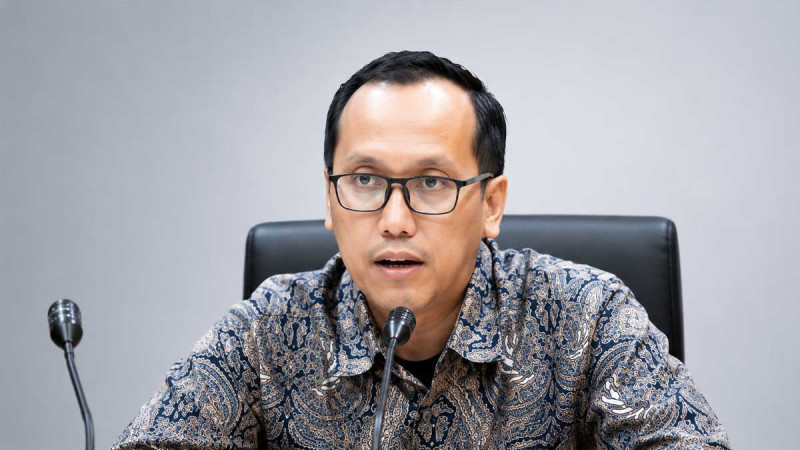
InfoSAWIT, JAKARTA — Zulham S. Koto vividly remembers the moment he first connected with PT Agrinas Palma Nusantara (Persero). “On November 10, 2024, at 11:03 AM,” he recalls, smiling at the phone call that changed the trajectory of his long career in the plantation and energy sectors.
The caller was no ordinary person—Agrinas' Commissioner, retired Lieutenant General Wisnoe Prasetja Boedi. “I’m interested. I want to learn about palm oil,” Zulham quotes, marking the beginning of his conversation with the company that now manages over 480,000 hectares of palm oil plantations in Indonesia.
For many, that figure seems almost unbelievable. Amid global palm oil industry giants that take decades to reach 50,000 hectares, Agrinas Palma has surged ahead at a remarkable pace—an analogy Zulham himself uses to describe this state-owned enterprise, "still a baby, but already has steel muscles."
Zulham did not arrive as a newcomer. Before serving as the Director of Business and Commercial, he had been part of the Audit Committee and the Nomination & Remuneration Committee at Agrinas. Now, he holds the mandate to build systems, create flagship products, and ensure that the entire business chain of Agrinas operates efficiently—from plantations, factories, to export markets.
With extensive experience in the energy and palm oil industries, including with a U.S. multinational company, Zulham quickly grasped the company's grand vision: national energy independence. This vision aligns with President Prabowo Subianto's ambition to promote the development of B100 biodiesel.
“If we want energy independence, we need an additional six million hectares of new palm oil plantations,” he stated seriously. “Currently, there are about 17 million hectares, but most of it is already allocated for food, pharmaceuticals, cosmetics, and other industries. If we want B100, we need additional plantations—without disrupting the existing palm oil industry ecosystem.”
From Disputed Assets to National Assets
The plantations managed by Agrinas are no ordinary plantations. Most of them come from state-seized assets, including those from the former Duta Palma Group, PKH, and Torganda. These assets were once abandoned or entangled in legal issues. Now, through professional management, Agrinas has transformed them into productive machines supplying crude palm oil (CPO) to various industries.
“Imagine, building just 10,000 hectares is incredibly challenging for a regular company. We manage nearly half a million hectares in less than a year. This is extraordinary,” Zulham said, appreciating the collective efforts of his team.
However, he does not turn a blind eye to the significant challenges behind this massive expansion. Damaged infrastructure, pothole-ridden plantation roads, aging factories, and cultural differences among existing companies are all issues that need to be addressed. “This is not just business. This is national reconstruction work,” he stated.
One of the biggest challenges is uniting hundreds of previously independent business units. “We are bringing together hundreds of companies with different work cultures. Some are fast, some are slow. We need to align our pace,” Zulham noted.
To achieve this, Agrinas has established work values that form the foundation of the company culture: Patriot, Loyal, Professional, along with basic principles such as discipline, honesty, and responsibility.
“If we want superior CPO, then our human resources must also be superior,” he emphasized.
Currently, Zulham is designing a roadmap for Agrinas' product development. The target is not just to become an ordinary CPO producer but to create products that range from standard to premium and super premium.
“With the same plantations and factories, we can produce different qualities, depending on management. Premium grades can add $3–5 per ton in value, even more if entering niche markets,” he said optimistically.
This initiative is expected to enhance Agrinas' competitiveness in the international market while also optimizing the value of state assets. (T2)