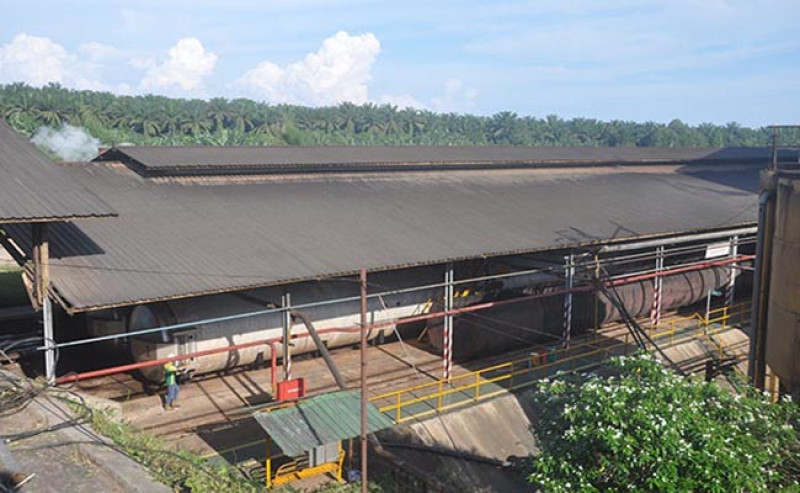
InfoSAWIT, JAKARTA – Palm oil industries in Indonesia face new challenge for the operation of palm oil mill (POM) without having or cultivating planatations or that purchase seeds. But General Directorate of Plantation Ministry of Agriculture published circulars for the governors, regents, and mayors to supervise POM in their territories because of the facts and the mills are not supervised and getting available development.
POM without plantations often operates next to the POM that is in partnership with plasma or independent smallholders. Its presence has something to do with POM that is in partnership (with smallholders). POM without plantations would purchase fresh fruit bunch (FFB) from the smallholders in partnership or independent ones without qualifying the terms and conditions, such as, the materials would minimally be from the mill’s plantations as it is regulated in Indonesian Sustainable Palm Oil (ISPO) and European Union Deforestation Regulation (EUDR) standards.
Posma Sinurat, Chairman in POM Perkumpulan Praktisi Profesional Perkebunan Indonesia (P3PI) said that the other issue that palm oil industries face is that POM that purchased the seeds. It operates next to the existing POM and may move the seeds that may influence crude palm oil (CPO) quality and smallholders’ FFB price.
“This produces CPO with highly as acid substance which is taken as waste, not as the main product. This would reduce the quality of CPO in a whole and would raise issue for the future,” Sinurat said.
Coordinator of Palm Oil Industry from General Directorate of Plantation and Forest Product Industry, Ministry of Industry, Lila Harsya Bachtiar told that Ministry of Industry is preparing new regulation to change CPO standards to be food grade. The new regulation would be about CPO quality standards which are closer. Mixing other materials, such as, POME (palm oil mill effluent) or the other residue would not be permitted.
To escalate palm oil industrial efficiency, Ministry of Industry would do the best to escalate tingkat komponen dalam negeri (TKDN) so that the industries would not depend on machine imports and tools from abroad.
Through the programs, such as, TPOMI (technology palm oil mill) that would be implementing in Bandung on 18 – 19 July, palm oil industries in Indonesia would adopt new technologies which are more efficient and environmental.
To face such challenges, POM without plantations, POM that purchased the seeds and dependence on machine imports, palm oil industries in Indonesia should keep innovating and collaborating with the governments, academy, private sectors to create more efficient and sustainable ecosystem. (T2)