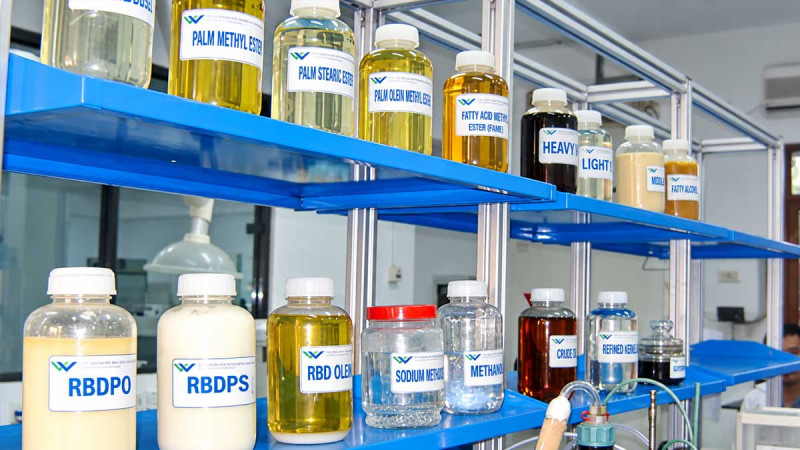
InfoSAWIT, KUALA LUMPUR – Malaysia is strengthening its downstream palm oil industry by expanding the development of oleochemicals, nutraceuticals, and pharmaceutical products to increase domestic value addition and reduce reliance on crude palm oil (CPO) exports.
Deputy Minister of Plantation and Commodities Datuk Seri Huang Tiong Sii said the development of higher-value products is an important strategy for protecting the industry against fluctuations in global CPO prices.
According to Bernama, as published by InfoSAWIT on Wednesday, October 28, 2026, Huang explained that the government is encouraging manufacturers to produce premium ingredients for cosmetics, personal care, and specialized industrial applications.
The Malaysian Palm Oil Board (MPOB) supports these efforts through research and technical services aimed at expanding the commercial applications of palm-based products.
Malaysia is also exploring higher-value components found in palm oil, including tocotrienols, a form of vitamin E, and carotenoids. These compounds can be used in health-related products that command greater value in international markets.
Huang said Malaysia’s exports of palm oil and palm-based products had exceeded RM100 billion, highlighting the sector’s contribution to the national economy. Further processing within the country is expected to create additional opportunities to increase export earnings.
Diversifying Downstream Applications
The strategy aligns with Malaysia’s National Agri-Commodity Policy 2021–2030, which emphasizes value creation, market development, productivity, research, commercialization, and innovation.
The government is promoting a broader range of palm-based applications, including oleochemicals, fibers, biocomposite materials, and biochemicals. This diversification is intended to strengthen domestic processing capabilities and improve the industry's competitiveness.
Malaysia is also expanding the use of palm-based biofuels through domestic biodiesel blending programs while developing second-generation biofuels derived from waste materials, including sustainable aviation fuel (SAF).
Expanding Opportunities for Smallholders
Malaysia also aims to extend the economic benefits of downstream development to oil palm smallholders by creating opportunities for greater participation in value-added activities.
Through research, innovation, product diversification, and market expansion, the government hopes to reduce dependence on raw CPO exports and strengthen Malaysia’s position in international markets for higher-value palm-based products. (T2)