InfoSAWIT, ACEH TAMIANG – Independent oil palm smallholders in Aceh Tamiang are stepping up efforts to restore local ecosystems and strengthen climate resilience by planting 5,000 fruit and hardwood trees across strategic areas of the landscape.
The initiative is part of a broader environmental rehabilitation effort in an area that was affected by abrasion and disasters in late 2025. It also reflects growing efforts among smallholders to integrate environmental protection into sustainable palm oil practices.
The program, initiated in March 2026, was a collaboration between the Indonesian Sustainable Palm Oil Farmers Forum (FORTASBI) and the Tenggulun Lestari Palm Oil Growers Association (PESATRI). The groups established nurseries producing a range of trees with both economic and ecological value.
Unlike conventional nurseries in oil palm plantations, the seedlings were not oil palms. Instead, the program produced 14 varieties of fruit and hardwood trees, including 1,500 durian seedlings, 800 avocado seedlings and 500 mango seedlings, along with honey guava, duku, longan, jengkol, matoa, mangosteen, candlenut, mahogany and cinnamon.
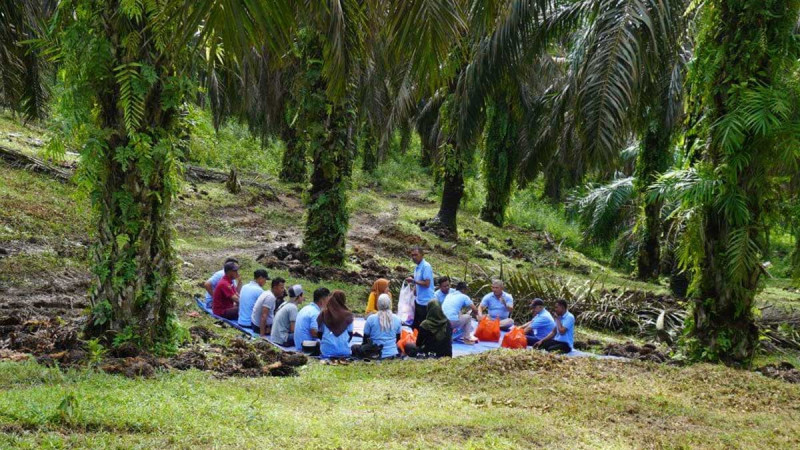
The tree-planting campaign reached its peak on July 26, 2026, in Sumber Makmur Village, Tenggulun District, when the seedlings were planted simultaneously at several locations.
Planting areas included residential yards, the banks of the Pantai River in Rengas Hamlet around the Rengas Dam, elementary and kindergarten school grounds, village roads and social forestry areas near the Leuser Ecosystem.
Smallholders Link Palm Oil With Environmental Restoration
The initiative involved a broad cross-section of the local community, including village officials, teachers, community leaders, youth groups, forest farmer groups and representatives of the Sustainable District Collaborative Network (LTKL).
The collaboration was designed partly to restore riverbank areas affected by abrasion while strengthening the ecological functions of landscapes vulnerable to environmental disasters.
FORTASBI Chairman Sutiyana said sustainable palm oil certification should go beyond meeting market requirements. In his view, certification should become a starting point for smallholders to protect high conservation value areas and develop a stronger culture of environmental stewardship around plantations.
He described the tree-planting program as a practical example of regenerative agriculture, where plantation productivity is combined with efforts to mitigate climate change.
“Independent oil palm plantations are not only important for farmers’ livelihoods, but can also help protect biodiversity and maintain important areas such as riverbanks,” Sutiyana said.
Sumber Makmur Village Head Salihin welcomed the initiative, saying it could deliver both environmental and economic benefits to the community.
Trees planted around homes, public facilities, schools and village offices, he said, would make the surroundings greener and cooler while potentially providing economic value through future fruit production.
A Model for More Resilient Palm Oil Landscapes
PESATRI Chairman Langkat Ginting said the initiative demonstrated that oil palm smallholders could contribute directly to environmental conservation.
He hoped the program would inspire other regions to develop plantation landscapes that are not only productive but also better prepared to face climate change and ecological risks.
The planting of thousands of trees also expands the role of smallholders beyond the production of a strategic commodity. By restoring riverbanks, diversifying vegetation and maintaining ecological buffer zones, farmers can contribute to broader landscape-level conservation efforts.
For Aceh Tamiang’s independent smallholders, the initiative represents an effort to build a more resilient agricultural landscape in which economic activity and environmental stewardship can develop side by side. (T2)
Source: InfoSAWIT