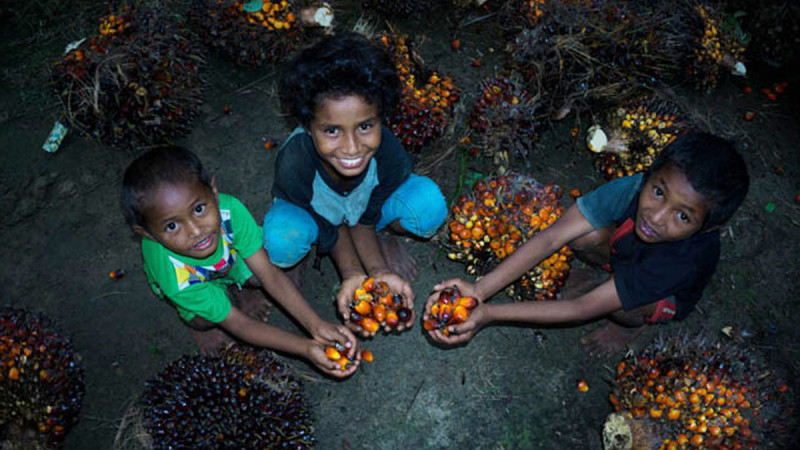
InfoSAWIT, SABAH – Efforts to address child labor in the palm oil supply chain are being strengthened through a community-based approach known as the Child Rights Action Hub, aimed at reinforcing protection systems and remediation access for affected children.
Riri Siti O. Malikah, Vice President Services & Products Asia at The Centre for Child Rights and Business, explained that the initiative was established in Sabah, Malaysia, following a comprehensive landscape analysis conducted three years ago.
The study, supported by funding from the United States Department of Labor (USDOL), involved nearly 50 stakeholders from the private sector, government, and civil society across Sabah and Sarawak.
The findings revealed a critical gap: although many stakeholders had observed children involved in hazardous work within the palm oil sector, there had been no documented example of sustainable remediation for these children.
“This gap is what the Action Hub aims to address—helping companies meet their human rights due diligence obligations while ensuring children and families have access to remediation,” Riri said during a webinar attended by InfoSAWIT on Wednesday (April 15, 2026).
The initiative is also supported by global private sector partners, including Nestlé, as well as sustainability-focused funding programs.
Five Strategic Pillars
The Action Hub operates through five main pillars to drive systemic change:
First, continuous research and mapping to better understand on-the-ground conditions.
Second, capacity building for lower-tier supply chain actors, such as independent smallholders and medium-scale plantations.
Third, supplier-based programs encouraging large companies to collaborate with farmers and third-party suppliers.
Fourth, the establishment of child rights focal points within communities to monitor risks and support remediation.
Fifth, strengthening collaboration among private sector actors, local organizations, regional governments, and international experts.
Early Impact and Community Role
The program has begun to show tangible results. To date, 27 children involved in child labor situations have entered remediation programs—marking one of the first documented efforts in the region.
Community-based actors play a crucial role, particularly in early risk identification at the smallholder level and as trusted channels for reporting issues and accessing support.
This approach is expected to enhance transparency and build trust among stakeholders in the palm oil supply chain. With increasing global attention on sustainability and human rights, the Child Rights Action Hub represents a significant step toward more responsible industry practices while protecting vulnerable groups.
InfoSAWIT quoted from the webinar presentation, on Wednesday (April 15, 2026), highlighting the importance of collaborative and community-driven solutions. (T2)