InfoSAWIT, JAKARTA – Palm kernel shells should not be viewed merely as a byproduct of fresh fruit bunch (FFB) processing. With effective management and the right commercial strategy, the material can become an additional revenue stream for palm oil mills (POMs), according to industry expert Bonar Saragih.
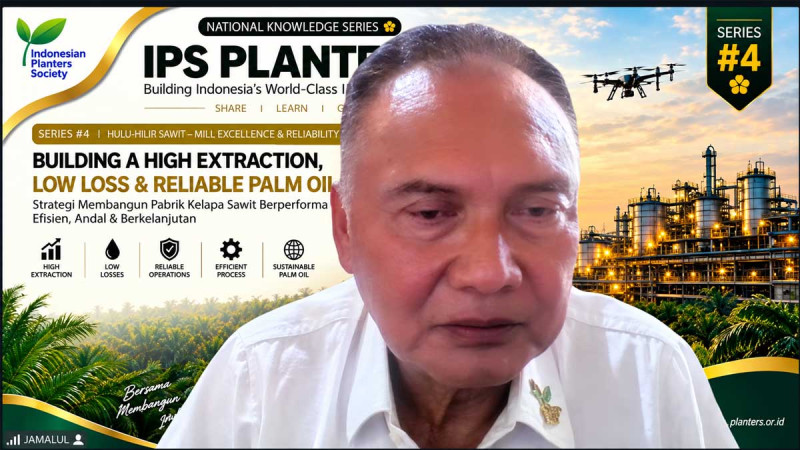
The director of PT Mitra Agro Servindo shared his insights during the Indonesian Planters Society (IPS) Planter Talk Series #4, titled “Building a High Extraction, Low Loss and Reliable Palm Oil,” held on Saturday, October 24, 2026.
Bonar explained that palm oil processing generates several products, including crude palm oil (CPO), palm kernels, fiber, empty fruit bunches, and palm kernel shells. He said mills should manage these byproducts strategically to improve overall operational profitability.
“Palm kernel shells are one of the commodities that can significantly contribute to profit margins,” Bonar said.
He estimated that only a small proportion of Indonesia’s approximately 1,500 palm oil mills specifically develop palm kernel shells as a commercial product. However, this figure was based on his assessment during the event and was not supported by independently verified comparative data.
Bonar also shared an example of a mill established around 2022 that reportedly generated more than Rp100 billion in cumulative revenue from shell sales during the operating period he discussed.
He cited indicative prices of approximately Rp1,000–Rp1,200 per kilogram in several parts of Sumatra, noting that prices vary depending on location, market conditions, and buyer demand.
However, selling shells requires careful financial analysis because the material also serves as an internal fuel source for mill operations.
Mill operators must compare potential sales revenue against replacement energy costs, transportation expenses, material handling costs, and operational requirements before deciding how much to sell.
Bonar added that byproduct utilization should be considered during mill design and construction. Existing mills can also explore opportunities by reviewing their combustion systems, energy consumption, and material management practices.
By treating palm kernel shells as a commercial asset rather than simply an operational residue, palm oil mills could strengthen margins while improving resource efficiency. (T2)