InfoSAWIT, BOGOR – Claims that oil palm is a water-intensive crop and a major cause of flooding need to be corrected, according to Hendrayanto, Professor at IPB University, who emphasized that flooding, landslides, and drought are more closely linked to ecosystem degradation, land-use change, and climate anomalies than to the presence of oil palm plantations alone.
During a scientific address delivered on April 25, Hendrayanto presented hydrological research examining water-use characteristics in oil palm and watershed hydrological responses in plantation landscapes.
“These findings are important to communicate, because oil palm has often been blamed for various environmental problems,” he said.
Palm Oil Water Use Comparable to Other Crops
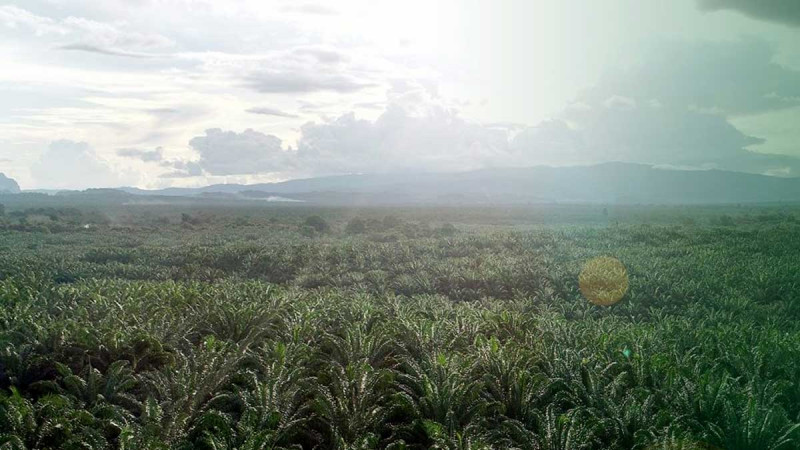
Based on scientific measurements of transpiration and evapotranspiration, the study found that water use by oil palm is broadly comparable to many forestry and plantation crops.
According to Hendrayanto, oil palm transpiration rates do not differ significantly from crops such as rubber, mahogany, or acacia.
“Oil palm is not a water-intensive crop because its transpiration rate is comparable to other plants such as rubber, mahogany, and acacia,” he explained.
Research also showed that watersheds dominated by oil palm plantations did not display significantly worse hydrological responses than watersheds dominated by rubber plantations.
Forest Degradation and Land Conversion Are the Main Causes
Hendrayanto stressed that the core environmental problem lies in landscape transformation caused by tropical forest conversion and ecosystem degradation.
The conversion of forests into plantations, settlements, and other monoculture land uses can significantly alter hydrological cycles. Uncontrolled natural resource exploitation, weak spatial planning, and global climate anomalies further intensify hydrometeorological disasters such as floods, landslides, and drought.
At the same time, he acknowledged the palm oil sector’s major economic contribution through employment creation and foreign exchange earnings.
For that reason, he argued that discussions surrounding palm oil’s environmental impact must be framed within broader landscape management, rather than oversimplifying the issue by focusing on a single commodity.
According to Hendrayanto, the most relevant approach to reducing environmental degradation is integrated landscape management, watershed-based spatial planning, and wider adoption of best management practices in natural resource use.
With such an approach, economic, social, and ecological interests can be balanced more sustainably, including in oil palm development areas. (T2)