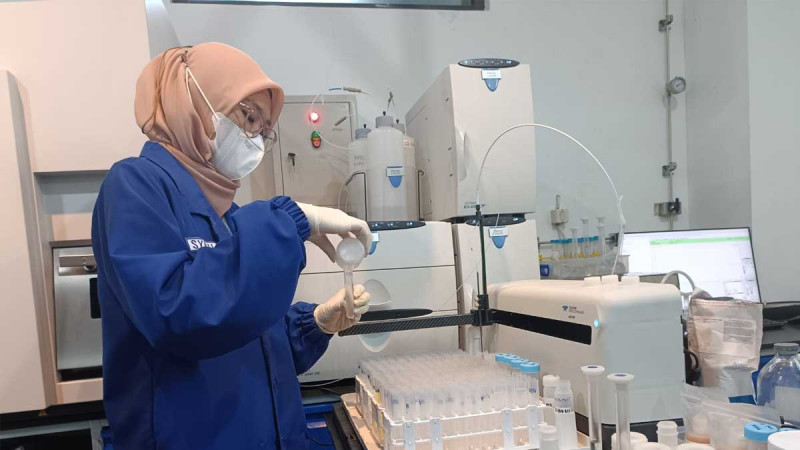
InfoSAWIT, JAKARTA – Indonesia has invested heavily in palm oil research and development over the past decade, but the bigger challenge now lies in ensuring that innovation moves beyond laboratories and academic forums into commercial application across plantations and mills.
Between 2015 and the end of 2025, funding disbursed by Badan Pengelola Dana Perkebunan (BPDP) for palm oil research reached Rp830.35 billion, covering 409 research contracts, involving 1,495 researchers, producing 305 scientific publications, 58 patents, and engaging 97 research institutions across 19 provinces.
The figures reflect serious commitment to innovation. However, much of the challenge lies in commercialization. Many technologies developed through research programs remain prototypes or academic studies, rather than becoming practical solutions adopted by the palm oil industry.
This raises a critical question: how can hundreds of billions of rupiah in research funding generate tangible gains in productivity, efficiency, sustainability, and competitiveness for Indonesia’s palm oil sector?
Committee member Tony Liwang said one root cause is the absence of a strong communication bridge between researchers and industry players.
“At present, researchers conduct studies and business players simply observe the outcomes. Going forward, we need a more open forum where industry players present their research needs directly to scientists, so innovation is built around real field demand,” Tony said, as quoted by InfoSAWIT from Majalah InfoSAWIT November 2023 edition.
Industry-Led Research Agenda
The concept is increasingly viewed as a breakthrough for Indonesia’s palm research ecosystem.
If industry takes the lead in identifying research priorities—whether related to high-yield seeds, harvesting mechanization, mill efficiency, decarbonization, bioenergy, or traceability technology—research direction would become more measurable, practical, and commercially relevant.
Tony added that BPDP support should not only finance research itself, but also catalyze the formation of an industry research demand forum, connecting market needs with research capacity.
Such a platform would help ensure that research investment is no longer measured solely by administrative outputs such as publications and patents, but by successful business implementation.
In fact, BPDP has already opened broad access for industrial adoption of research outputs. Technologies developed under BPDP-funded programs can generally be used by industry free of charge, provided they are not tied to specific patent agreements requiring further collaboration with intellectual property holders.
Coordination with the Ministry of Finance has also clarified intellectual property governance, ensuring that companies adopting domestic innovations are not burdened with additional fees.
The key challenge now is no longer funding research—but accelerating commercialization.
For Indonesia’s palm oil industry, the most valuable research is not merely research that produces journals and patents, but research that can be deployed in plantations, mills, and supply chains to improve efficiency and generate economic value. (T2)