InfoSAWIT, JAKARTA – Indonesia’s palm oil industry continues to face several strategic challenges, including Smallholder plantation legality issues, obstacles in the Smallholder replanting program (PSR), and global geopolitical dynamics that may disrupt export logistics.
Chairman of the Indonesian Palm Oil Association (GAPKI), Eddy Martono, stated that the legality of Smallholder plantations remains a major issue that must be resolved to maintain productivity and sustainability in the palm oil sector.
“The palm oil industry still faces legality challenges at the Smallholder level. This remains an important issue that we must address together,” he said during the GAPKI press conference and Ramadan gathering, attended by InfoSAWIT on Thursday (12/3/2026).
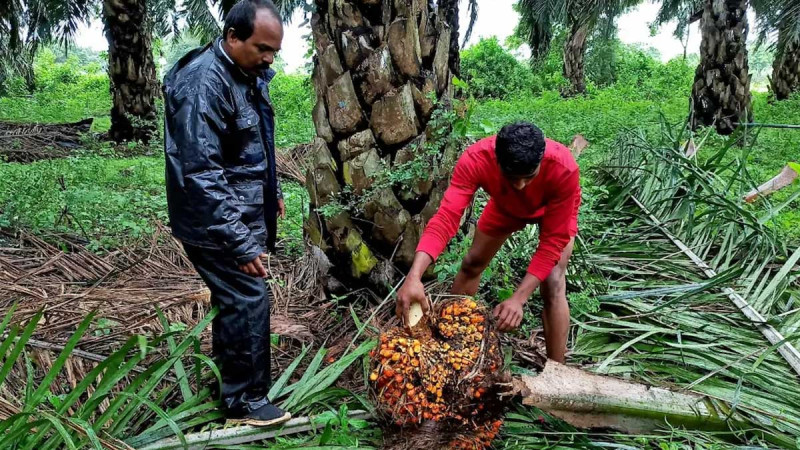
Eddy also highlighted ongoing obstacles in implementing the Smallholder replanting program (replanting) across various regions.
According to him, if the replanting program can run optimally, productivity targets for Smallholder plantations could be achieved, providing positive impacts for the broader industry.
“We are concerned about Smallholders still facing obstacles in replanting. If replanting runs well, production targets can be achieved, so this issue needs to be resolved soon,” he explained.
Global Conflicts Push CPO Prices Higher
Eddy added that global geopolitical tensions have created mixed impacts on the palm oil industry. While conflicts raise concerns over trade stability, they also contribute to rising crude palm oil (CPO) prices.
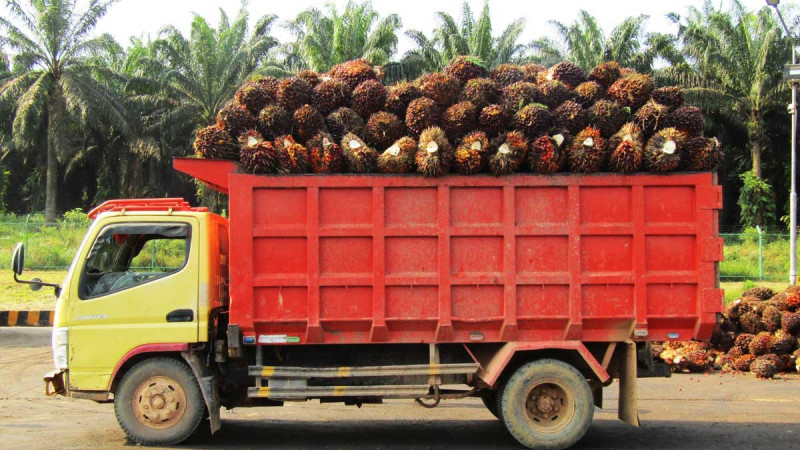
Currently, Indonesia exports palm oil products to 177 countries, with total exports reaching approximately 32.3 million tons and export values around US$35.8 billion annually.
“On the one hand, we are concerned about global conflicts, but on the other hand rising CPO prices have also become a supporting factor for the economy,” Eddy noted.
He further explained that geopolitical conflicts could disrupt Indonesia’s palm oil export routes, particularly shipments to the Middle East.
Indonesia exports about 1.83 million tons of palm oil to the region, much of which passes through shipping routes near the Strait of Hormuz.
If the route is disrupted, vessels may need to divert through alternative routes such as the Cape of Good Hope in South Africa, increasing logistics costs due to longer travel distances and higher fuel consumption.
Meanwhile, shipping through the Suez Canal is also considered relatively costly, posing another challenge for exporters.
“If shipping routes have to be diverted, logistics costs could increase because of higher fuel requirements,” he said.
Palm Oil Exports Continue to Europe and Africa
Despite global uncertainties, Indonesia’s palm oil exports continue to reach various regions worldwide.
Eddy noted that palm oil exports to Europe reach around 3.23 million tons, while exports to the Eurasian region remain relatively small.
Meanwhile, exports to Africa continue at a fairly strong pace, although shipments to several countries such as Egypt have experienced disruptions due to geopolitical developments.
“We are grateful exports are still running. However, if this situation persists, it could affect purchasing due to rising logistics costs,” he said.
Eddy emphasized that the palm oil industry should be viewed as a strategic national asset that must be supported through balanced and conducive policies.
According to him, the government should strengthen trade diplomacy to address tariff policies in global markets while also reviewing taxes and levies that may burden the industry.
“Palm oil must be treated as a strategic industrial asset for the nation. Policies must be managed in a balanced way so the industry can achieve maximum production and continue contributing to the economy,” he stressed.
He also urged that negative narratives and hoaxes about the palm oil industry should not be exaggerated, although constructive criticism remains welcome.
“We in GAPKI are open to criticism, that is fine. But misinformation should not be amplified,” he said.
Eddy also noted that GAPKI is now entering its 45th anniversary, calling on all stakeholders to work together to maintain the stability of the palm oil industry, which plays an important role in supporting Indonesia’s economy. (T2)