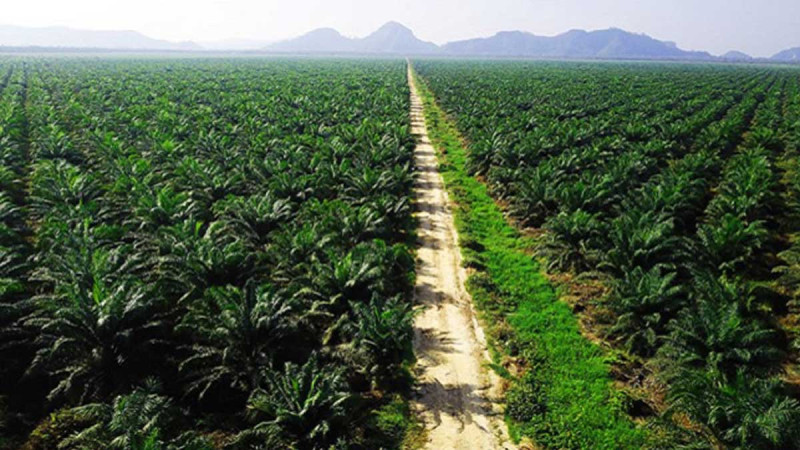
InfoSAWIT, JAKARTA – With half a million hectares of oil palm plantations, Sinar Mas Agribusiness & Food has a major responsibility to reduce carbon emissions.
Amidst the increasingly alarming climate crisis, agriculture and food systems are often seen as both "sinners" and victims. The Chief Sustainability and Communications Officer of Sinar Mas Agribusiness & Food, Anita Neville, stated that the agricultural sector is responsible for global greenhouse gas emissions. However, she noted that the plantation sector is also highly vulnerable to the impacts of climate change and biodiversity loss.
"We have a large carbon footprint on this planet, but we are also highly vulnerable to being impacted," Anita said at the International Conference on Palm Oil and the Environment in Bali, attended by InfoSAWIT in mid-February 2025.
She emphasized that many countries in the Asia-Pacific region, including Indonesia, are on the list of the 40 most climate-vulnerable nations. "Rural communities and farmers are the most affected. The increasing frequency of floods in Indonesia, for example, has disrupted logistics and agricultural productivity," she said.
Anita also revealed that persistent high temperatures affect pollination and cultivation practices in oil palm plantations. The impact on human labor productivity has not been fully measured yet. "This pushes us to think further about automation and mechanization in this industry," she added.
As Chief Sustainability Officer, Anita is often asked how the company's sustainability strategy aligns with its business strategy. Her answer is simple but firm: "It is our business strategy. Climate change and biodiversity loss are existential threats to every business in the world, including ours in Indonesia."
To address these challenges, Sinar Mas Agribusiness & Food has taken concrete steps. Over the past two years, the company has intensively measured its emissions footprint, improved data quality and granularity, and aligned its approach with internationally recognized best practices.
"In 2022, we set a baseline year to measure our emissions. Now, we have an emissions map for three categories, compiled into Scope 1, 2, and 3, including targets aligned with the Science Based Targets initiative," Anita explained.
Approximately 77% of Sinar Mas Agribusiness & Food's carbon footprint comes from Scope 3, which is their supply chain. This reflects the complexity of the challenge. However, Anita sees this as a great opportunity. "If 78% of our carbon footprint comes from our supply chain, then our solution can also be a solution for our customers," she stated. (T2)
For detail read InfoSAWIT Magazine June edition 2025