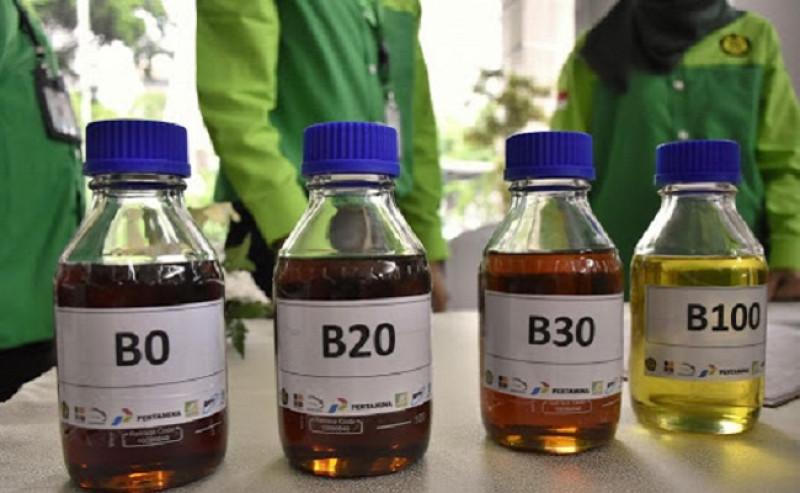
InfoAWIT, JAKARTA — The Indonesian government estimates that the B40 biodiesel program, aimed at reducing dependence on diesel imports, will be fully implemented starting next month after experiencing delays earlier this year. This was announced by Eniya Listiani Dewi, an official from the Ministry of Energy and Mineral Resources (ESDM), during a press conference.
According to Eniya, the distribution of palm oil-based biodiesel (B40) has reached approximately 1.2 million kiloliters (kl) as of Friday. The initial plan for the mandatory B40 launch—containing 40% biofuel from palm oil—was set to begin on January 1, 2024. However, delays occurred due to regulatory issues and the transition period granted to distributors until the end of February.
"There will be no extension of the transition period. All parties are working to meet the target," Eniya emphasized. Previously, Indonesia implemented a 35% biodiesel blend (B35) since 2023.
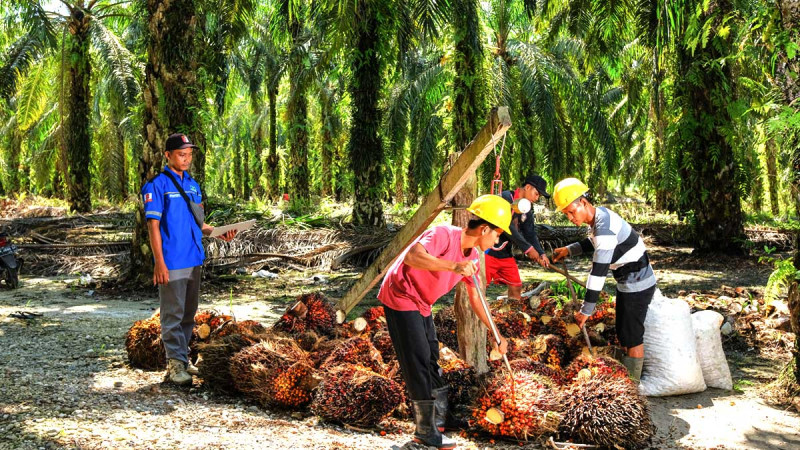
The implementation of B40 has drawn attention from global palm oil market players, as this policy will affect domestic demand for palm oil in the energy sector and its potential impact on exports. Indonesia is the world's largest palm oil producer.
In 2025, the government has allocated 15.6 million kl of biodiesel for distribution, an increase from approximately 13 million kl last year. This increase in volume may require larger subsidies to cover the price difference between palm oil and diesel.
Meanwhile, Samuel Hamonangan Lubis, the Sales Industrialization Manager at Pertamina Patra Niaga, acknowledged several challenges during the International Conference on Oil Palm and Environment (ICOPE) Series 2025. First, the production scale of biodiesel is not yet optimal, despite government incentives for farmers and producers. Second, there are technical constraints, such as vehicle engine adaptation to high biodiesel blends. "Technical issues remain a barrier, especially in achieving B50 and beyond," he explained.
Pertamina's data shows that biodiesel usage has significantly increased, from 9.4 million kiloliters in 2021 to 15.61 million kiloliters in 2025. By 2026, it is projected to reach 19.52 million kiloliters, valued at around Rp290 trillion. "This presents a significant opportunity for palm oil farmers and producers, but prices must remain competitive," Samuel stressed.
The issue of biodiesel pricing is considered crucial. Currently, biodiesel prices range from Rp22,650 to Rp22,900 per liter, significantly higher than regular diesel such as Dexlite (Rp14,600/liter) and Pertamina Dex (Rp14,800/liter). "Customers are complaining about the prices. Producers must find solutions to keep biodiesel affordable. The industry cannot wait," he concluded. (T2)