
InfoSAWIT, YOGYAKARTA – Partnerships between oil palm plantation companies and smallholders remain a fundamental pillar of Indonesia's palm oil industry. However, changing production costs, technological developments, market requirements, and governance challenges are creating a growing need for more adaptive partnership models that deliver fair economic value to all parties.
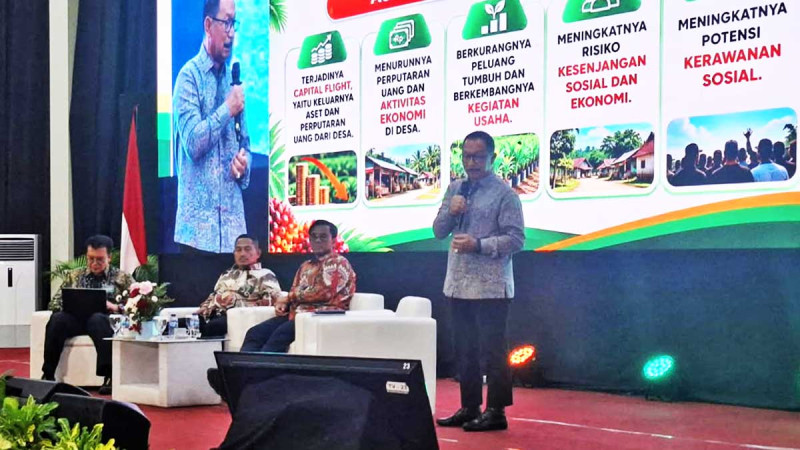
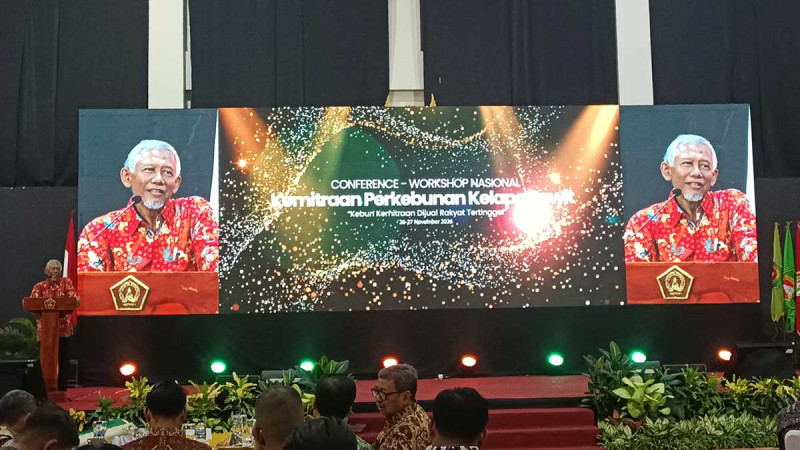
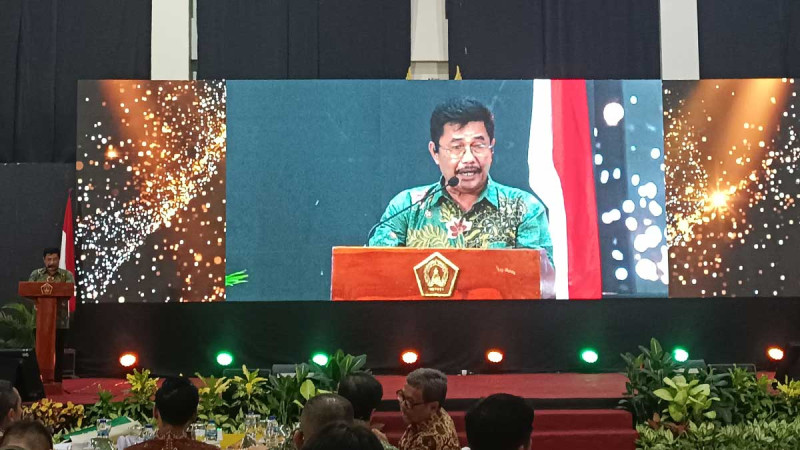
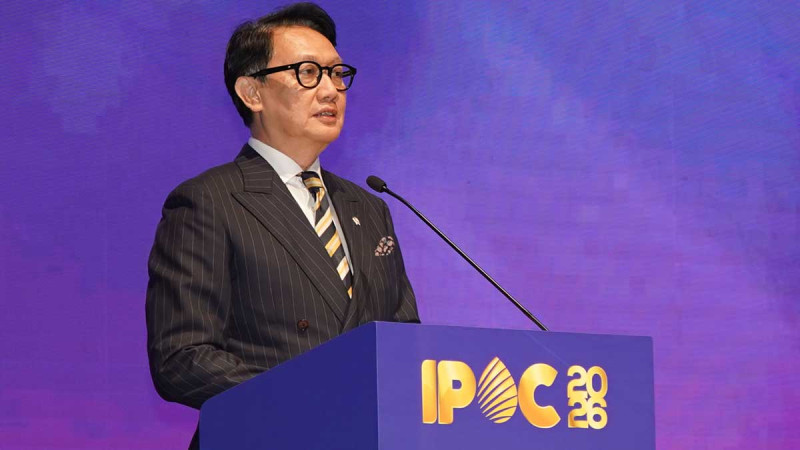
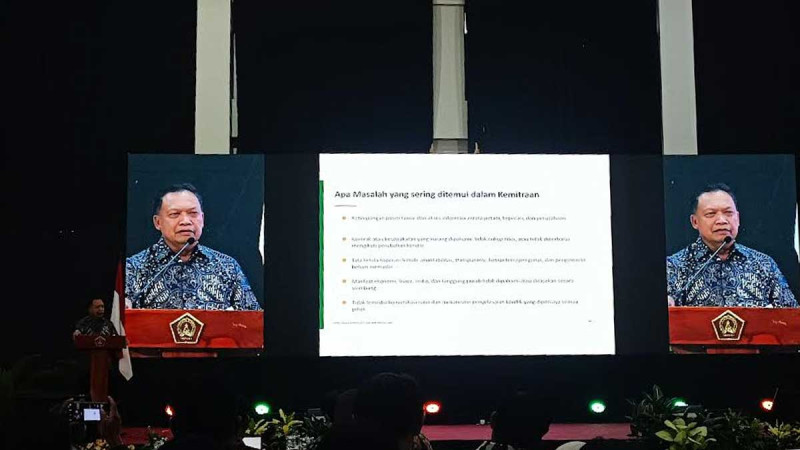
The issue was highlighted by Joko Supriyono, Advisory Board Member of the Indonesian Palm Oil Association (GAPKI), during his keynote address at the National Conference and Workshop on Oil Palm Plantation Partnerships, themed "Partnership Plantations Are Sold, the People Are Left Behind", in Yogyakarta on Thursday, November 26, 2026.
Joko emphasized that partnerships between plantation companies and smallholders are essential to establishing a sustainable palm oil supply chain.
Reliable raw material supplies, production and quality standards, market access, and compliance with sustainability requirements are among the key reasons why these relationships need to be strengthened.
He noted that the nucleus-plasma partnership model has historically served as one of the foundations for developing smallholder plantations.
Nevertheless, its implementation continues to face various challenges, including conflicts, a lack of trust, information imbalances, and the termination of partnership arrangements.
According to Joko, generational changes among smallholders, rising production costs, evolving market requirements, and increasingly complex governance structures mean that traditional partnership models need to be reassessed.
Reform should go beyond simply fulfilling mandatory partnership obligations. Instead, it should focus on creating shared economic value for both companies and smallholders.
Information Gaps and Weak Governance
Joko identified several recurring problems in oil palm plantation partnerships.
First, unequal bargaining positions and access to information among smallholders, cooperatives, and plantation companies. This imbalance can place farmers at a disadvantage when making decisions about plantation management and business cooperation.
Second, partnership contracts and agreements are often poorly understood, insufficiently detailed, or not updated to reflect changing conditions.
Such weaknesses can create disputes over rights, obligations, benefit-sharing arrangements, and the responsibilities of each party.
Third, weak cooperative governance remains a major concern, particularly in terms of accountability, transparency, management competence, and supervision.
Cooperatives play a crucial role as intermediaries between smallholders and plantation companies in implementing partnership arrangements.
In addition, problems arise when economic benefits, costs, risks, and responsibilities are not understood or distributed fairly.
The absence of regular communication and trusted conflict-resolution mechanisms can further increase the likelihood of disputes.
Joko also described a recurring cycle that can cause partnership relationships to deteriorate. It often begins with a lack of transparency, followed by weakened farmer institutions, financial and operational problems, declining performance, and eventually prolonged conflict.
"If these issues are not addressed, the same problems will continue to recur and gradually erode trust between the parties," he said.
Three Alternative Partnership Models
To address these challenges, Joko outlined three partnership models that could be considered according to the circumstances and capabilities of the parties involved.
The first is the operator model. Under this arrangement, the company manages the plantation while smallholders retain their rights in accordance with the partnership agreement. The company acts as the plantation operator and ensures that activities are carried out according to agreed standards.
The second is the fresh fruit bunch (FFB) marketing model. In this arrangement, smallholders independently manage their plantations, while the partnership with the company focuses primarily on marketing their harvested FFB.
The third is a hybrid model. Under this approach, smallholders manage their own plantations with support from companies through technical assistance, production inputs, financing, and selected services.
Each model offers a different approach to building business relationships between plantation companies and smallholders.
The choice should take into account the institutional capacity of smallholder organizations, company capabilities, plantation conditions, and the distribution of rights, obligations, risks, and economic benefits.
Ultimately, oil palm partnerships should not be viewed merely as corporate obligations or administrative relationships with farmers.
Instead, they need to evolve into transparent and professionally managed business systems that ensure sustainable raw material supplies while improving smallholder welfare.
"Transforming partnerships is also an important part of strengthening the palm oil industry's social legitimacy. Through more balanced relationships, companies and smallholders can build resilient supply chains, meet sustainability standards, and generate broader economic benefits for plantation communities," he concluded. (T2)