
InfoSAWIT, BALI – International sustainability requirements and financing policies are emerging as significant challenges for Indonesia's palm oil industry. Their impact could extend beyond major plantation companies to smallholders, particularly as access to international markets increasingly depends on compliance with supply chain requirements.
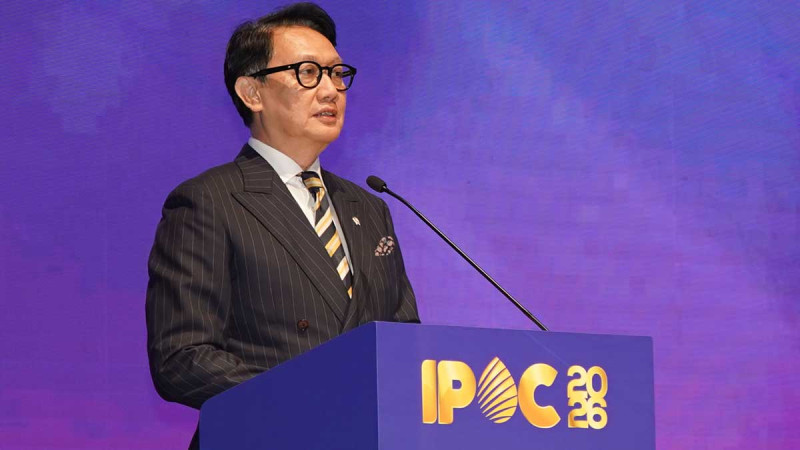
Indonesia's Deputy Foreign Minister, Arif Havas Oegroseno, raised the issue during the 22nd Indonesian Palm Oil Conference (IPOC) 2026 and 2027 Price Outlook in Nusa Dua, Bali, on Thursday, November 12, 2026.
Havas highlighted the growing influence of international financial institutions in assessing companies' eligibility for financing based on environmental and social considerations. These requirements increasingly include commitments to prevent deforestation and improve plantation governance.
While such standards can encourage companies to strengthen environmental and social management practices, Havas questioned whether they are being applied consistently across different economic sectors.
He argued that plantation industries should not face disproportionately stringent requirements while other sectors with environmental and social impacts are not necessarily subject to comparable scrutiny.
In his view, sustainability standards should be implemented consistently and should not become instruments for creating trade barriers against producing countries.
Smallholders Face Growing Supply Chain Challenges
One of the main concerns is whether smallholders have the capacity to comply with international market requirements.
Traceability systems, documentation obligations, and sustainability standards can impose additional burdens on small-scale producers, particularly when adequate technical and institutional support is unavailable.
Havas warned that farmers in producing countries may bear the consequences of policies developed by importing countries, despite having little or no involvement in the regulatory process.
The European Union Deforestation Regulation (EUDR) is one example of a policy that requires close attention. Its traceability and product-origin verification requirements demand stronger data systems and administrative capabilities throughout the supply chain.
Without access to technical assistance, plantation data, and appropriate certification mechanisms, smallholders could face difficulties entering supply chains serving international markets.
Strengthening smallholder participation must therefore become an integral part of Indonesia's strategy for responding to evolving global trade policies. Support for traceability systems, capacity building, and certification assistance will be essential.
Financing Policies and International Market Perceptions
Beyond trade regulations, Havas also highlighted the influence of civil society organizations and environmental campaigns on international public perceptions.
According to him, narratives circulating globally can shape government policies, financial institutions' decisions, and market acceptance of particular commodities.
This demonstrates that the challenges facing the palm oil industry are no longer limited to production and physical trade. Market perceptions and financing policies can also influence relationships between companies, buyers, and financial institutions.
For Indonesia, the situation underscores the importance of strengthening international communication through credible data and information about improvements in national plantation governance.
Smallholders Must Be Part of Indonesia's Palm Oil Diplomacy
Havas emphasized that smallholder interests must be incorporated into Indonesia's diplomatic strategy when addressing international policies.
This is particularly important because restrictions on market access and increasingly complex supply chain requirements can ultimately affect producers at the grassroots level.
The government and industry players need to ensure that smallholders have access to information, technical assistance, traceability systems, and certification mechanisms required by international markets.
Such measures are essential to maintaining smallholder participation in global palm oil supply chains.
As sustainability standards and financing policies gain greater influence over international trade, protecting smallholder interests must go hand in hand with improving industry governance.
For Indonesia, maintaining palm oil competitiveness requires more than trade diplomacy and higher productivity. Smallholders' readiness to meet global market requirements will also play a decisive role in sustaining the industry's position in an increasingly demanding global economy. (T2)