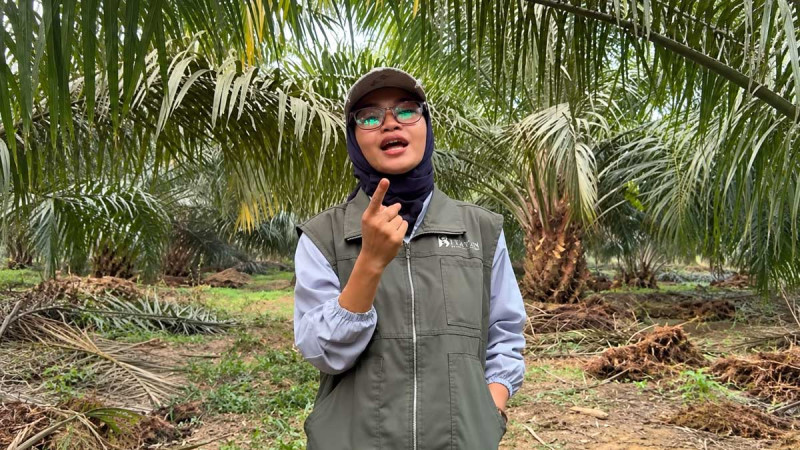
InfoSAWIT, JAKARTA – Women are playing an increasingly important role in strengthening sustainable palm oil supply chains, particularly through access to training, technical knowledge, and opportunities to participate in decision-making. The experience of Nurul Lifadillah, a female smallholder and Internal Control System (ICS) Manager at the Belayan Sejahtera Cooperative, illustrates how capacity-building can benefit both individuals and farming communities.
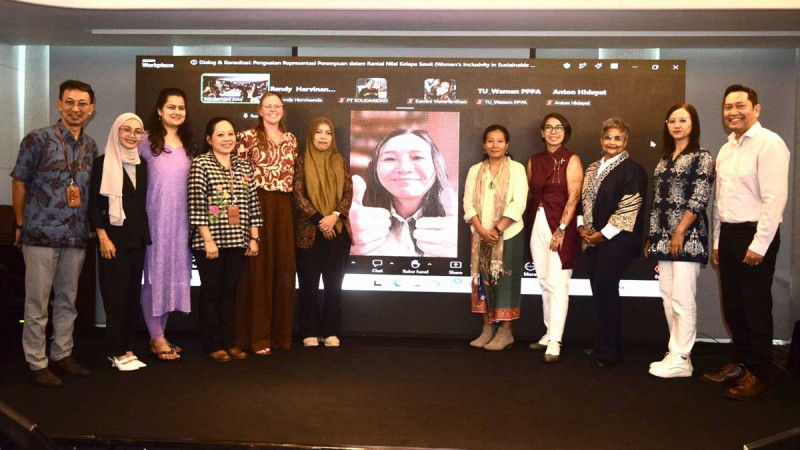
Speaking at the Dialogue on Female Representation in the Palm Oil Value Chain, attended by InfoSAWIT on October 29, 2026, Nurul described her journey with the cooperative in Kembang Janggut Village, Kutai Kartanegara Regency, East Kalimantan.
Coming from a farming family, she initially had limited knowledge of oil palm cultivation, including crop maintenance, fertilisation, and plantation cost management. Joining the cooperative gave her opportunities to learn and develop practical skills.
Her growing experience has also enabled her to share knowledge with other farmers and help her own family improve plantation management practices.
“The knowledge I have gained is not only beneficial to myself, but can also be shared with my family, the people around me, and farmers who are members of the cooperative,” Nurul said.
The cooperative has participated in both Indonesian Sustainable Palm Oil (ISPO) and Roundtable on Sustainable Palm Oil (RSPO) certification programmes. According to Nurul, the cooperative’s RSPO audit in October 2026 went smoothly, with a further audit scheduled for November.
Nurul believes women need equal opportunities to access education, attend training, express their views, and participate in decision-making processes across the palm oil value chain.
Belayan Sejahtera Cooperative also organises training for farmers’ families and workers’ families, with support from Solidaridad. These initiatives aim to broaden access to learning opportunities among communities connected to the palm oil supply chain.
For Nurul, empowering women is an important part of building a more inclusive and sustainable palm oil sector. When women gain access to knowledge and professional development, the benefits can extend beyond individuals to their families, cooperatives, and the wider smallholder community. (T2)