
InfoSAWIT, YOGYAKARTA – The rapidly changing palm oil industry requires new approaches to partnerships between plantation companies, smallholders, government institutions, and local communities.
Existing partnership schemes need continuous evaluation to ensure they can respond to technological developments, changing social needs, and the evolving business landscape of Indonesia's palm oil industry.
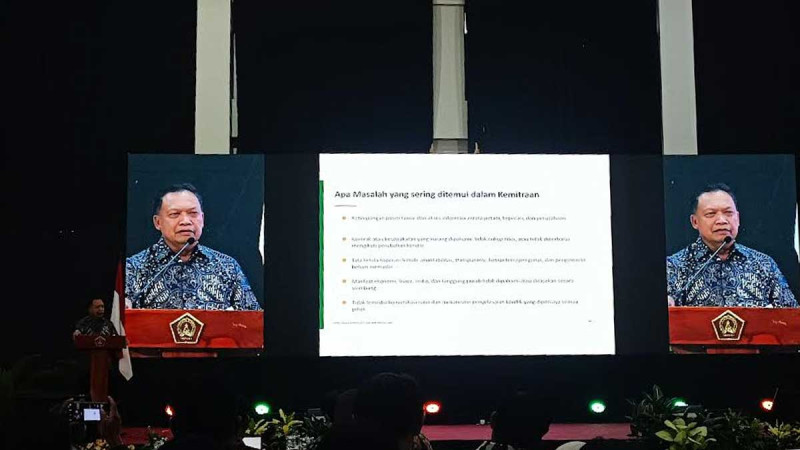
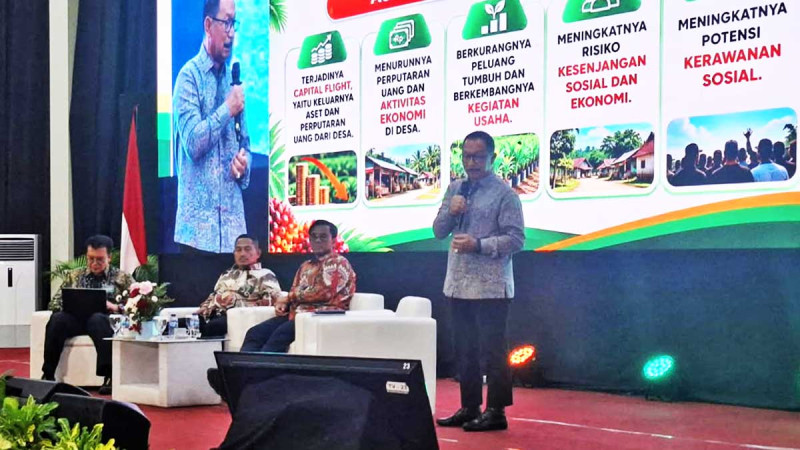
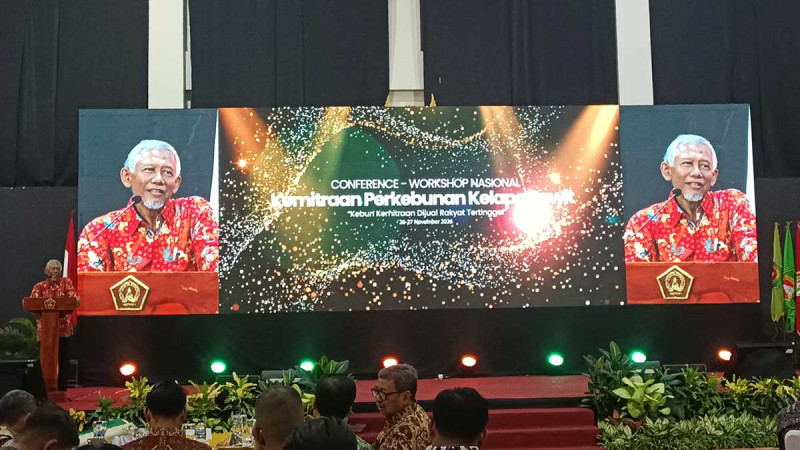
The issue was highlighted by Dr. Harsawardana, Rector of the Institut Pertanian Stiper (Instiper) Yogyakarta, during the National Conference and Workshop on Oil Palm Plantation Partnerships, themed "Partnership Plantations Are Sold, the People Are Left Behind", held in Yogyakarta on Thursday, November 26, 2026.
According to Harsawardana, plantation partnerships should be viewed as an important component of the industry's social contribution and broader sustainable development efforts.
Such arrangements are not merely business relationships between companies and smallholders. They also concern how communities are recognized and benefit from the development of the plantation industry.
He noted that government attention to partnership development, including through mandatory partnership policies and corporate social responsibility (CSR) obligations, deserves more comprehensive discussion.
A broader understanding is needed to determine which partnership structures and mechanisms are most appropriate for all parties involved.
Harsawardana pointed out that Indonesia's palm oil industry is developing rapidly. Changes are taking place not only in production and markets but also in technology and the way stakeholders approach partnership arrangements.
As a result, existing partnership approaches need to be adjusted to meet future challenges and requirements.
Models that were once considered relevant may no longer fully address changing industry conditions or the interests of both smallholders and plantation companies.
"The question is, what kind of partnership and business model is actually appropriate? This requires joint discussions among all stakeholders to formulate a partnership business model that is suitable for the future," he said.
He expressed hope that the national workshop and conference would provide a platform for exchanging ideas and bringing together perspectives from government institutions, plantation companies, smallholders, academics, and other stakeholders.
Through these discussions, participants are expected to identify existing problems in partnership implementation while developing cooperation models that are more adaptable to changes in the palm oil industry.
Harsawardana also stressed that the event should go beyond exchanging views and produce concrete recommendations that can contribute to future policy development and plantation partnership practices.
"Hopefully, this event will generate recommendations that can support the continued development of Indonesia's national palm oil industry," he concluded. (T2)