
InfoSAWIT, JAKARTA – Informal transactions involving oil palm partnership plantation plots are creating new challenges for plantation governance in Indonesia.
Undocumented ownership transfers can complicate cooperative membership records, disrupt the distribution of economic benefits, and trigger disputes among local communities, cooperatives, and plantation companies.
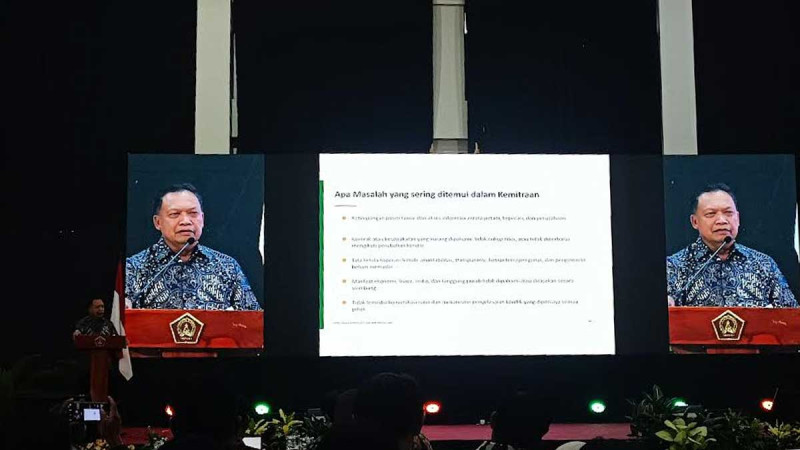
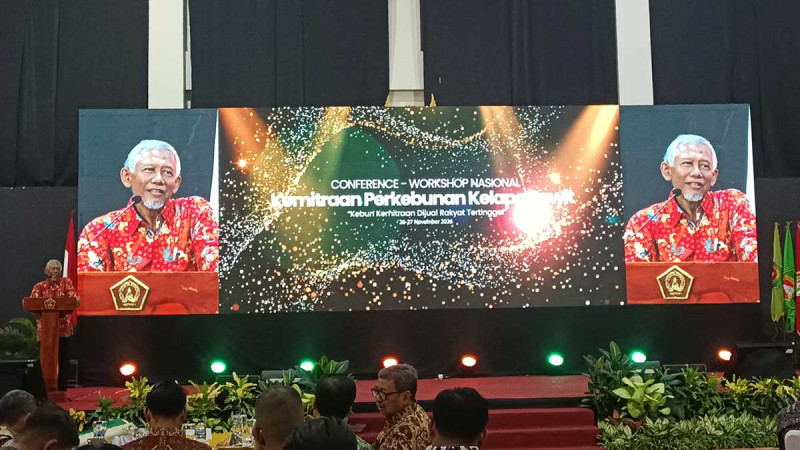
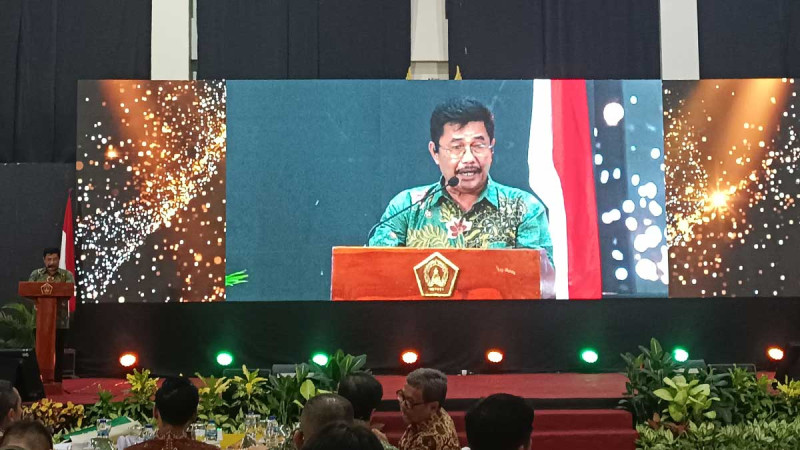
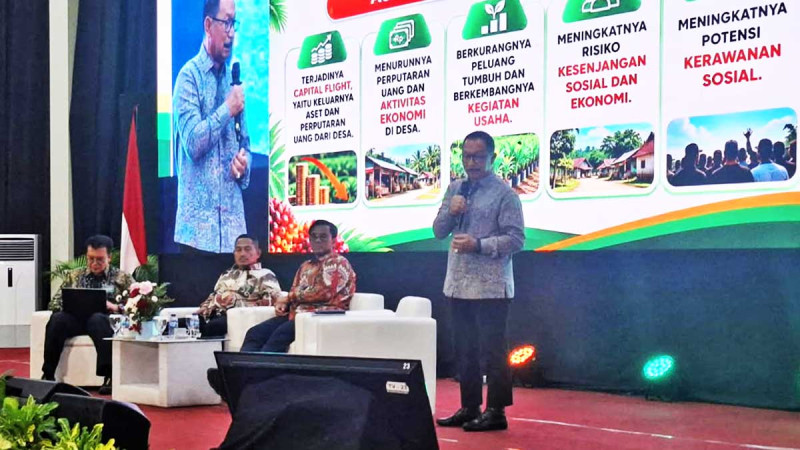
The issue was highlighted by Priyanto PS, Chief Corporate Affairs Officer of PT Bumitama Gunajaya Agro Group, during the National Conference and Workshop on Oil Palm Plantation Partnerships, themed "Partnership Plantations Are Sold, the People Are Left Behind", on Thursday, November 26, 2026.
Priyanto explained that transactions involving partnership plantation plots have generally occurred since the early stages of investment or when plantation operations begin generating returns.
In many cases, these transactions are conducted privately, either with or without clear administrative procedures.
Problems emerge when plantation plots are transferred to new owners while the original owners remain officially registered as cooperative members.
This creates uncertainty over who is actually entitled to receive the economic benefits generated by the plantation.
According to Priyanto, the situation can also create unfairness within cooperative management. In some cases, individuals may continue receiving economic benefits even though they no longer exercise actual ownership or control over the plots.
"The transfer-out value is almost entirely exhausted and is not equivalent to the value of the business proceeds distributed," he said, describing the gap between the selling price of a plantation plot and the long-term economic benefits that communities could otherwise receive.
For this reason, the issue cannot be resolved simply by examining the transaction between the seller and buyer.
A more comprehensive mechanism is needed to accommodate the interests of both parties while maintaining the sustainability of cooperative institutions.
Balancing the Interests of Buyers and Sellers
Priyanto argued that efforts to return partnership plantation plots to local communities must be carefully designed.
Such measures should not disregard the interests of buyers who have spent money acquiring the plots, nor should they unfairly disadvantage the original sellers who have already completed their transactions.
A fair resolution mechanism must therefore provide legal certainty while taking into account the financial commitments and economic sacrifices made by all parties involved.
"How can we establish a mechanism to return the plots without disadvantaging either the buyer or the seller? The seller should not feel that they have lost out again, social conditions must remain stable, and buyers must receive value in return for the financial commitment they have made," Priyanto explained.
He warned that without a fair resolution, ownership disputes involving partnership plots could develop into broader social conflicts.
Such developments would not only harm local communities but could also undermine the investment climate and disrupt the continuity of plantation businesses in affected regions.
Legal Framework Needed to Protect Local Communities
Priyanto therefore stressed the importance of establishing a clear legal framework to protect all parties, particularly local communities that often occupy a weaker economic position.
Clear regulations and dispute-resolution mechanisms are urgently needed to address informal plantation plot transactions and prevent them from becoming a recurring source of conflict within oil palm partnership schemes.
The challenge is to ensure that partnership arrangements remain economically beneficial to local communities while providing legal certainty for investors and maintaining the integrity of cooperative governance. (T2)