InfoSAWIT, JAKARTA – PT Dharma Satya Nusantara Tbk (DSNG) started 2026 on a strong note, posting solid first-quarter earnings growth driven primarily by its resilient palm oil business, despite ongoing volatility in commodity markets and softer demand in non-core business segments.
The company recorded revenue of Rp2.9 trillion in Q1 2026, up 8% year-on-year, while net profit rose 15% YoY to Rp421 billion, reflecting stronger operational performance and improved financial efficiency.
President Director Andrianto Oetomo said the palm oil segment remained the company’s main growth engine during the quarter.
“The company continues to implement strategic and prudent measures, including an ongoing replanting program to maintain plantation productivity. To date, replanting realization has reached around 5,000 hectares,” he said.
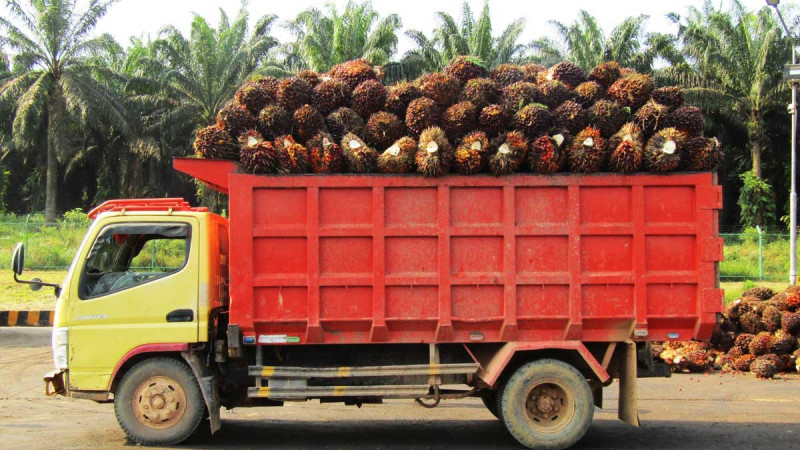
Operationally, DSNG reported an 18% increase in crude palm oil (CPO) sales volume, although average selling prices softened by around 3% during the period.
Fresh fruit bunch (FFB) production rose 2.7% YoY to 492,000 tons, supported by stronger output from plasma plantations, which grew 6.2%, while nucleus estate production increased 1.8%.
Downstream production also improved, with CPO output reaching 141,000 tons (+2.1%), Palm Kernel production rising to 27,000 tons (+2.9%), and Palm Kernel Oil output climbing to 8,500 tons (+5.7%).
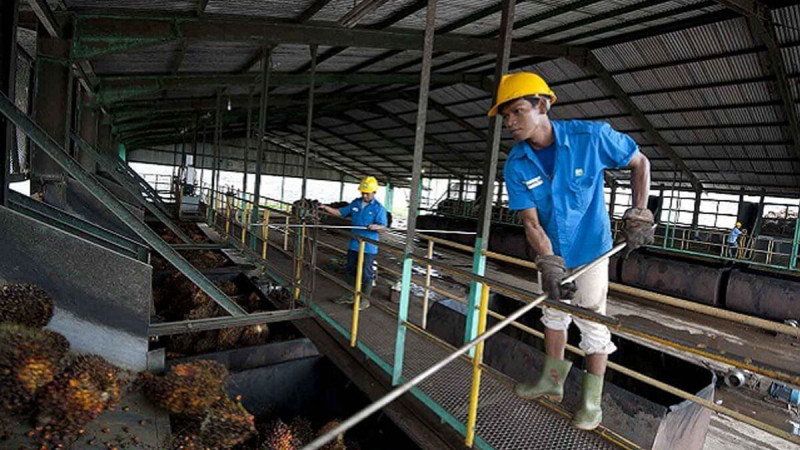
The company maintained strong operational efficiency, recording an Oil Extraction Rate (OER) of 23.32% while keeping Free Fatty Acid (FFA) levels at around 3%, indicating stable milling performance.
Despite a 10% increase in cost of goods sold to Rp2 trillion, mainly due to higher CPO sales volume, DSNG’s deleveraging strategy helped lower borrowing costs, strengthening margins and allowing profit growth to outpace revenue expansion.
Outside palm oil, however, business conditions remained challenging.
Its wood products segment faced continued pressure from weaker global demand, especially for wood panels and engineered flooring, both of which have significant exposure to the U.S. market amid tariff uncertainty and cautious buyer sentiment.
Meanwhile, renewable energy revenue declined due to weaker exports of Palm Kernel Shell (PKS), reflecting softer biomass demand from Japan.
Even so, DSNG’s financial position remains solid, with total assets reaching Rp17.7 trillion, liabilities at Rp5.7 trillion, and equity at Rp12 trillion as of March 31, 2026.
In April 2026, DSNG also gained regional recognition after being named among Asia-Pacific’s Top 500 Companies by TIME, based on employee satisfaction, revenue performance, and Environmental, Social, and Governance (ESG) performance—further reinforcing its standing as one of Indonesia’s leading sustainable agribusiness companies. (T2)