InfoSAWIT, JAKARTA — Imagine standing in the middle of a desert. Thirsty, exhausted, disoriented. In the distance, you see water, palm trees, shade. Relief seems certain—until the image vanishes as you draw closer.
That illusion is a mirage. For many producing countries, local communities, and even regulators, this metaphor increasingly mirrors the promise of “sustainable palm oil.”
Promises That Remain Out of Reach
For years, sustainability in the palm oil industry has been promoted as an achievable destination: follow the rules, meet the criteria, pass the audits, tick the boxes. Growth, we were told, could continue while forests were protected, communities respected, and laws upheld.
The promise was seductive because it offered simplicity. Complex political and ecological challenges were believed to be solvable through technical systems. Markets, armed with the right instruments, were expected to self-correct.
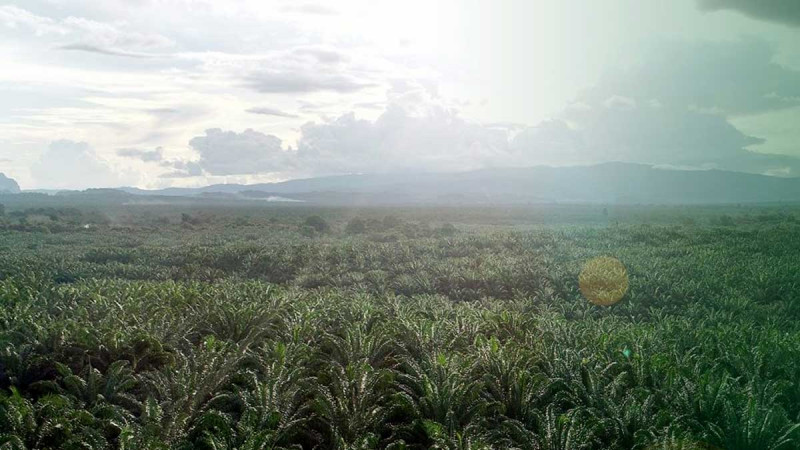
Yet outside conference rooms and dashboards—on the ground—the picture often fades. Deforestation persists. Land conflicts remain unresolved. Plantations operate in legally contested areas. Smallholders struggle to survive while being asked to meet ever more complex standards. The oasis looks real—but only from afar.
When Sustainability Becomes a Narrative
There is no denying that sustainability frameworks have delivered improvements. Some fires have been prevented. Certain forests saved. These gains are real.
But over time, sustainability has also become a soothing narrative. It reassures anxious consumers, mitigates investor reputational risk, and offers governments technical solutions that feel safer than structural reform.
The danger lies not in the narrative being entirely false, but in it becoming self-contained. Success is measured by compliance with systems, not by real-world outcomes. When documents outweigh lived realities, the mirage grows stronger.
Limits of Sustainability
The deepest tension emerges where sustainability intersects with power. Recent years have shown that even sectors wrapped in sustainability language are not immune to governance failures—corruption linked to market access, controversial court rulings, and large-scale law enforcement actions exposing plantations operating in prohibited areas.
Sustainability cannot rest on fragile legality. Audits cannot replace the rule of law. Labels cannot resolve structural contradictions that drive expansion and rent-seeking. Yet sustainability systems are often tasked with filling governance gaps they were never designed to fix.
When Markets Change the Rules
Global markets are now shifting again. Assurance is no longer enough. Buyers demand proof—coordinates, traceability, and legal certainty down to plot level. Risk is being pushed upstream to producers and smallholders who had little say in designing the original systems.
This shift is a tacit admission that earlier approaches were insufficient. Voluntary mechanisms eased concerns but did not eliminate them. The oasis, it turns out, was at least partly an optical illusion.
The Quiet Cost of a Mirage
The greatest cost of a mirage is not disappointment, but delay. As long as the oasis seems attainable, people keep walking toward it—without questioning the map or seeking alternative routes.
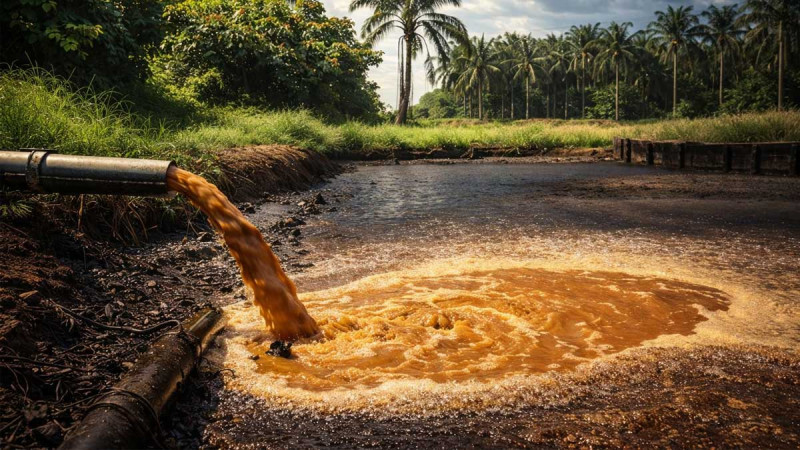
In palm oil, this delay has tangible consequences: shrinking forests, frozen conflicts, and smallholders asked to comply with standards without the security to do so. Meanwhile, the sustainability narrative continues to be refined, repeated, and exported.
This is not a call to abandon sustainability. That would be reckless. But the conversation must mature. Sustainability cannot substitute for governance. It cannot be reduced to a label that absorbs contradictions. And it cannot pretend that technical solutions alone can resolve political realities.
The uncomfortable question now is not whether sustainable palm oil is possible in theory—but whether, as practiced today, it is genuinely achievable. Or whether it remains a mirage: convincing from a distance, comforting to believe in, yet structurally unable to quench the thirst it promises to satisfy. (*)
Author: Dr. M. Windrawan Inantha
Doctor in Sustainable Development Management / Strategic Advisor for Sustainable Development / CECT Sustainability, Trisakti University
Disclaimer: This article reflects the author’s personal views and does not represent InfoSAWIT.