InfoSAWIT, PONTIANAK — The story of Fatimah, a 67-year-old casual worker at PT Aditya Agroindo (AA Group KPU/DTK), has drawn attention to the fragile protection mechanisms for elderly laborers in Indonesia’s palm oil plantations. Despite the sector’s significant economic contribution to West Kalimantan, her case exposes a deeper structural problem: aging workers who continue to toil in physically demanding roles without social safety nets.
According to the Teraju Indonesia Foundation, Fatimah’s situation reflects long-standing issues in employment practices within the plantation industry. During her 13 years of work, she never received a change in employment status—remaining a daily casual worker with no access to health insurance, old-age benefits, or basic labor protections.
“At 67, she still walks the plantation every day. Legally, workers with long service should receive certainty over their employment status and normative rights,” said Teraju Indonesia Chairperson Agus Sutomo, quoted by InfoSAWIT from Antara on Tuesday (18/11/2025).
Fatimah and her husband live in a simple zinc-roofed hut on the plantation grounds. Several times, she reportedly asked to resign or be granted retirement due to her declining health, but according to Teraju Indonesia, the company did not respond.
Alleged Violations of Social Security and Workplace Safety
Teraju Indonesia also highlighted indications of non-compliance with mandatory enrollment in BPJS Health and Employment programs. Fatimah was allegedly not registered for any social security schemes throughout her 13 years of work, forcing her to pay out-of-pocket whenever she fell ill.
“This is not merely administrative negligence. It concerns constitutional rights and company obligations under the national social security system,” Agus emphasized.
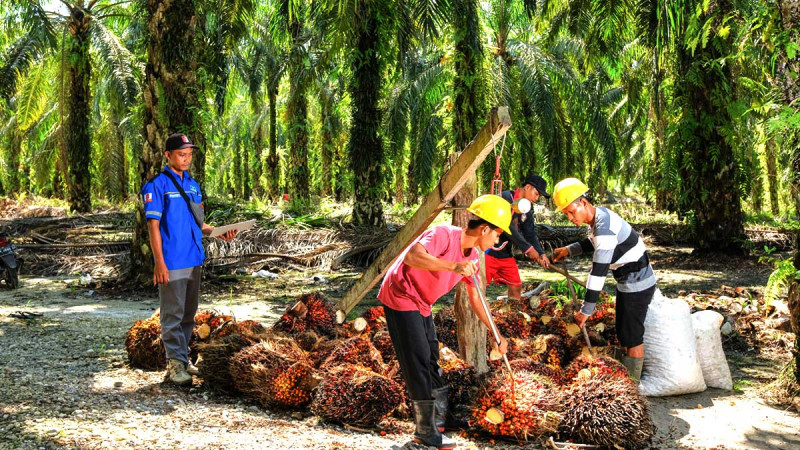
Her deteriorating condition, he added, likely stems from years of heavy manual work without adequate safety standards—an especially serious risk for elderly workers.
Teraju’s preliminary findings suggest that Fatimah’s case is not isolated. Many workers in Ketapang reportedly remain stuck in prolonged casual employment, lack legal protection, and are excluded from social security systems. The group argues this reflects a significant gap in labor oversight, particularly in a sector highly dependent on manual labor.
“Plantation workers are the backbone of the palm oil industry, yet they remain structurally vulnerable. The state cannot be absent in ensuring their protection,” Agus stressed.
Teraju Indonesia said it is prepared to provide legal assistance for Fatimah and urged both local and national authorities to initiate a comprehensive investigation. The foundation also called for tighter oversight on companies employing elderly workers and for universal inclusion of all plantation workers in the national social security system. (T2)