InfoSAWIT, NUSA DUA — The government’s plan to raise the biodiesel blend from B40 to B50 has again drawn concern from farmers. The Chairman of the Palm Oil Farmers Union (SPKS), Sabarudin, emphasized the need for a thorough evaluation of the policy to ensure it does not place a disproportionate burden on smallholders.
Speaking on the sidelines of the Indonesia Palm Oil Conference (IPOC) 2025 and Price Outlook 2026 in Nusa Dua, Bali, Sabarudin said that farmers fundamentally support the biodiesel program as it absorbs large volumes of Indonesia’s CPO and stabilizes the domestic market.
“We certainly need biodiesel because the program absorbs Indonesian CPO,” he told InfoSAWIT. However, he added that every increase in the biodiesel blending rate must be assessed carefully, especially in terms of its impact on farmers.
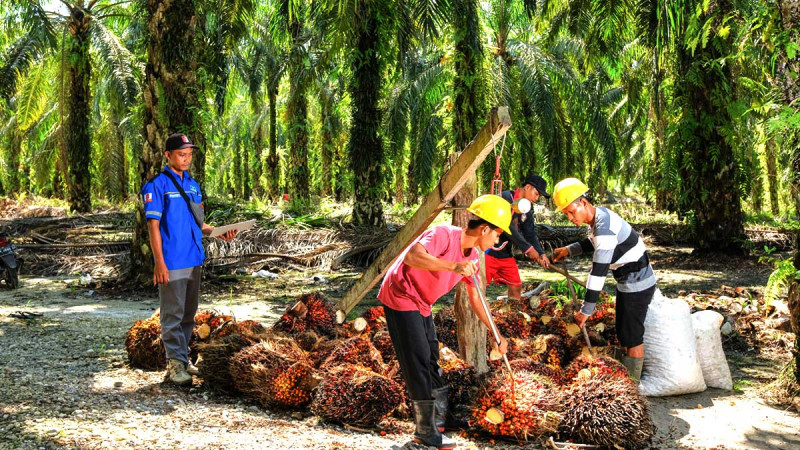
Sabarudin pointed out that the transition from B40 to B50 could raise export levies collected by the Palm Oil Fund Management Agency (BPDP). Such increases, he said, ultimately add pressure on farmers — particularly independent smallholders who lack adequate price protection.
“Every increase from B40 to B50 usually comes with higher levies. This becomes a burden for farmers,” he asserted. He further noted that farmers often do not directly feel the benefits of the biodiesel program, while the financial impact is more pronounced at the farm level.
SPKS urged the government to involve farmer organizations in the evaluation process, including ensuring that the benefits of the biodiesel program are distributed fairly to smallholders. According to Sabarudin, the success of the biodiesel mandate should not only be measured by CPO absorption or industry growth, but also by how much it improves farmers’ welfare.
Without comprehensive evaluation, he warned, increasing the biodiesel blend could deepen inequality within the palm oil supply chain. “We hope the government considers farmers’ real conditions. Energy policies must not sacrifice the upstream plantation sector,” he said.
Going forward, SPKS encourages open dialogue between the government, BPDP, and farmer representatives to ensure the biodiesel policy remains balanced — supporting the energy industry while safeguarding the economic sustainability of Indonesia’s palm oil smallholders. (T2)