InfoSAWIT, KUALA LUMPUR — The issue of palm oil sustainability once again emerged in the annual Roundtable on Sustainable Palm Oil (RSPO) RT2025 forum in Kuala Lumpur. Amid the spirit of cross-sector collaboration, deep concern arose regarding the condition of certified smallholder palm oil farmers who are now facing a stagnant credit market.
On that occasion, Sascha Tischler from relations Gesellschaft für Kommunikation mbH—who is also active in the Forum Nachhaltiges Palmöl (FONAP) network—shared the results of an inspiring meeting with several FONAP members such as CarbonSpaceTech, Koltiva, and Deutsche Gesellschaft für Internationale Zusammenarbeit (GIZ) GmbH. However, behind that dialogue spirit, a “worrying” conversation occurred with the smallholder palm oil farmers' organization, Palm Oil Farmers Union (SPKS), represented by Sabarudin and Maryanti Taufik.
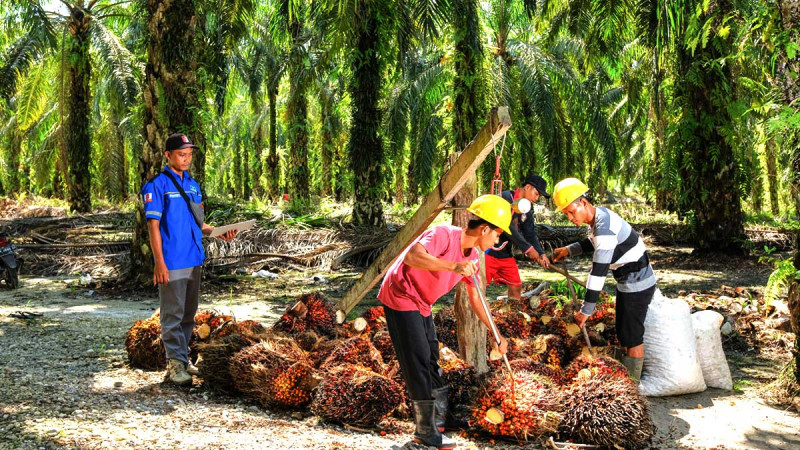
According to Tischler, that meeting revealed undeniable field facts. Sabarudin, Chairman of SPKS, emphasized that the credit market for RSPO-certified palm oil farmers has practically collapsed. Meaning, SPKS members who have met sustainability standards can no longer sell their palm oil products as certified products.
“The credit market for smallholder palm oil farmers is practically not running. Many of our members have lost access to sell their products as sustainable products,” said Sabarudin quoted by InfoSAWIT from Sascha T's Linkedin, Thursday (6/11/2025). “We have repeatedly called for this, both to RSPO and to FONAP, so that there are strong and real solutions for farmers.”
This credit market crisis is not a new issue. Since 2023 to 2024, several organizations representing smallholder farmers have reported similar things—especially after the emergence of the European Union Deforestation Regulation (EUDR) policy that tightens commodity access to European markets. As a result, many independent (self-reliant) farmers feel increasingly sidelined from the global supply chain, even though they have invested to meet sustainable certification.
This situation raises a big question: does RSPO certification still provide added value for smallholder farmers if the market system supporting it no longer runs effectively?
In response to this, Tischler emphasized the importance of considering alternative certification systems that are better and ethics-oriented. One of them is UEBT (Union for Ethical BioTrade), Sourcing with Respect, which emphasizes fair trade and social sustainability principles.
Since this year, FONAP has also begun to open space for new approaches by recognizing the combination of UEBT and EU Organic certifications as a form of company commitment to sustainable palm oil. According to Tischler, schemes like this can be an exit for independent smallholder farmers to rejoin the international supply chain through more inclusive and market-appropriate alternative certifications.
The RSPO RT2025 forum also serves as an important reminder: amid the intense global campaigns about sustainability, the fate of smallholder farmers must remain the main focus. Without support from a fair and functional market system, the noble goals of sustainable certification will be difficult to achieve socially and economically. (T2)