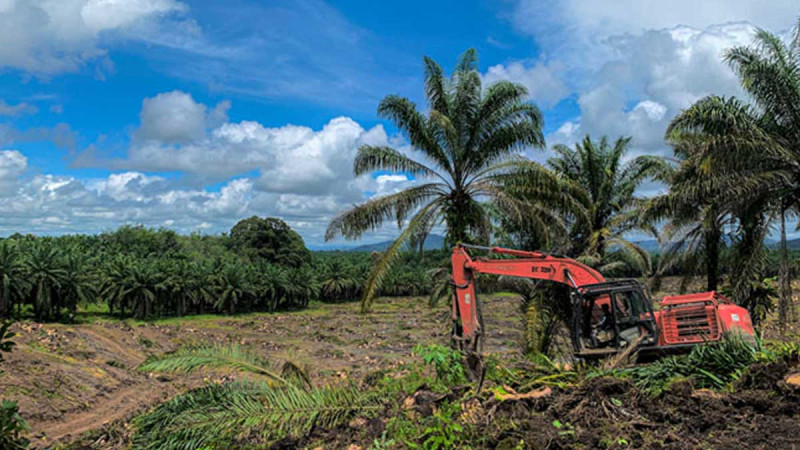
InfoSAWIT, JAKARTA – Amid limited fertile land due to land use change and increasing deforestation, researchers from the National Research and Innovation Agency (BRIN) emphasize the need for new breakthroughs to maintain national palm oil productivity. One solution currently in focus is the utilization of Acidic Dry Land (ADL) as a potential alternative resource for sustainable palm plantation development.
Head of BRIN's Agricultural and Food Research Organization (ORPP), Puji Lestari, stated that palm research must receive full support due to its strategic role for Indonesia's economy. "Our palm productivity is still far from its genetic potential. Therefore, research and innovation play an important role in creating efficient, adaptive, and sustainable production systems," she said in the EstCrops_Corner #20 webinar titled "Exploring Potential and Technological Innovation in Indonesian Palm Plantation Development", held by BRIN's Plantation Crops Research Center (PRTP), Tuesday (21/10).
Puji explained that Acidic Dry Land is widely distributed in various Indonesian regions, especially in Kalimantan and Sumatra. Ultisols, Oxisols, and Inceptisols soils dominate these areas with naturally acidic properties, nutrient-poor, weak structure, and prone to erosion. Although challenging, research shows that this land can still be optimized through technology and science-based intensification approaches.
These approaches include balanced fertilization, soil amelioration, land and water conservation, and the use of superior seeds. With proper management, ADL can transform from marginal land into productive and environmentally friendly agricultural areas.
Puji also emphasized the importance of implementing Best Management Practices (BMP), such as 4T fertilization (right type, dose, time, and place), use of organic fertilizers and biochar, as well as land and water conservation. According to her, these practices have proven to increase yields without damaging ecosystem balance.
However, socio-economic challenges remain obstacles in the field. "Weak farmer institutions, low technology adoption, and fluctuating FFB prices are still major constraints. This needs to be addressed with research collaboration, policy support, and direct assistance to farmers," Puji explained as quoted by InfoSAWIT from BRIN, Thursday (23/10/2025).
In addition, she emphasized that innovation in superior planting materials is key to the success of the national palm industry. Through breeding programs, tissue culture techniques, and biotechnology, Indonesia can increase productivity without opening new land. "The quality of planting materials determines the competitiveness of the palm industry. Cross-sector collaboration is very important so that research results can be widely implemented," she added.
Meanwhile, Head of BRIN PRTP Setiari Marwanto stated that palm oil is a strategic commodity that contributes greatly to national economic growth and labor absorption. However, there is still a gap between actual results and plant potential. "Advanced breeding technology and precision soil management are two important pillars to realize Indonesian palm sustainability," she said.
In the scientific presentation session, BRIN Senior Researcher Suratman explained the characteristics and challenges of ADL management. He mentioned that palm oil has high tolerance to acidic soil and can adapt to short-term water deficit conditions thanks to its deep and strong root system. "This proves that palm can grow optimally on acidic dry land if managed with appropriate technology," he explained.
According to Suratman, the success of ADL management depends on a multi-factor approach: utilization of fertilizers and biochar, liming, addition of organic matter, and land and water conservation. "Social, economic, and institutional factors must also be strengthened so that technology application in the field is truly effective," he said. (T2)