InfoSAWIT, BANDARLAMPUNG - A team of lecturers from the Agro-industrial Product Development program at Lampung State Polytechnic (Polinela) is spearheading a renewable energy innovation. Their research, titled "Production Process Optimization of Briquettes from Oyster Mushroom Substrate and Oil Palm Empty Fruit Bunches (EFB)," aims to create a new high-energy fuel source.
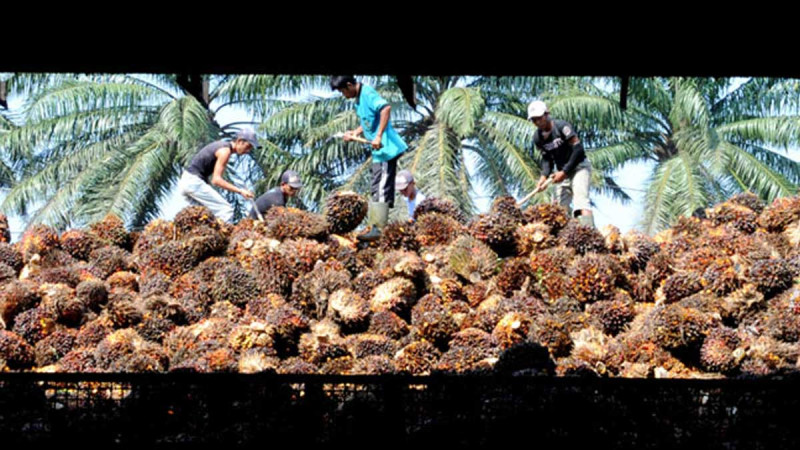
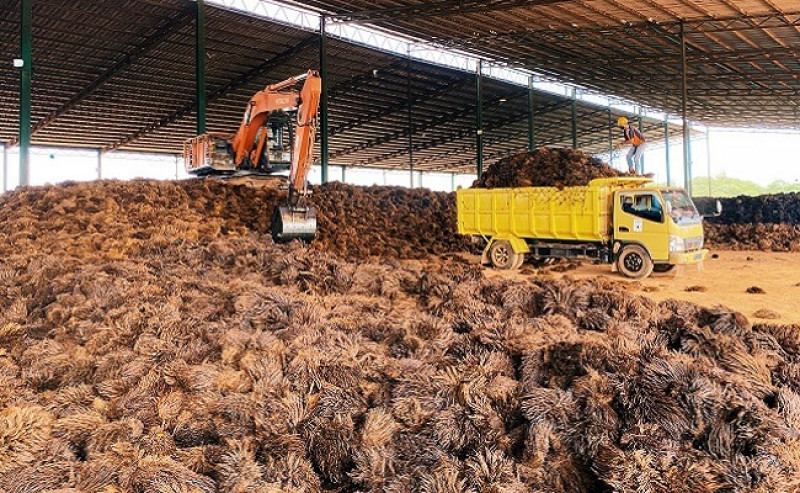
The project, led by M. Perdiansyah Mulia Harahap, along with Prof. Dr. Ir. Sarono and Subandi, focuses on maximizing the use of EFB. This byproduct, which constitutes about 23% of fresh fruit bunches, is often treated as waste.
According to Sarono, while EFB is commonly used as a growing medium for oyster mushrooms, the residual substrate remains rich in lignocellulose, making it a viable resource for further processing. "This EFB waste can be converted into briquettes, a high-energy solid fuel that offers a solution to our energy challenges," he stated, as reported by KBRN RRI.
The briquette production process begins by converting EFB into charcoal through drying and pyrolysis. The charcoal is then ground into a fine powder (40 mesh) and mixed with tapioca adhesive and water before being compacted under specific pressure. "Determining the right pressure is crucial for ensuring the briquettes have good density and quality," Subandi explained.
Initial tests show the briquettes have a high calorific value ranging from 5,115 to 5,396 cal/gram, confirming their potential as an efficient and eco-friendly alternative fuel. "With a sufficiently high calorific value, EFB briquettes can become a promising source of renewable energy," M. Perdiansyah added. (T2)