

InfoSAWIT, PADANG — Universitas Andalas (UNAND) reaffirms the active role of academia in promoting more sustainable management of the palm oil industry. Through the Center for Environmental Studies (PSLH), UNAND hosted a National Seminar titled "Sustainable Palm Oil Industry Management," held at The ZHM Premiere Hotel, Padang, as part of the series of the Conference and National Working Meeting of the Environmental Study Center Cooperation Agency (BKPSL) and the Western Region Postgraduate Leadership Forum (Forpimpas) Meeting.
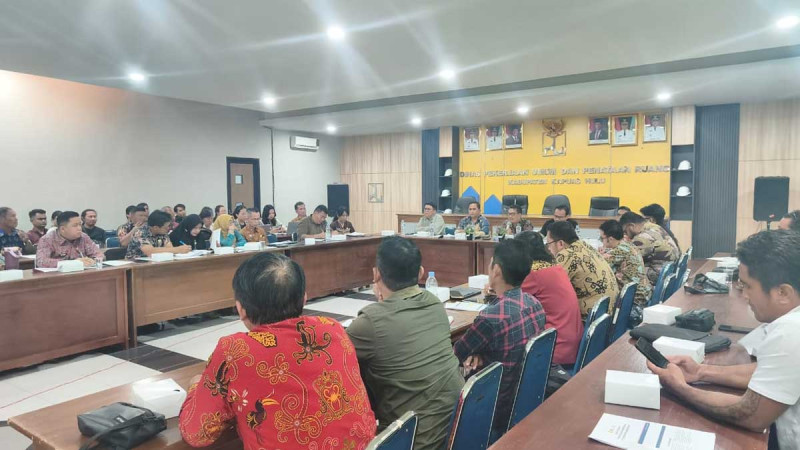
The seminar brought together stakeholders from various sectors: academia, government, and industry players. Among those present were the Chair of Forpimpas Western Region, Prof. Aan Asphianto, Chair of BKPSL Prof. Anwar Daud, and UNAND Rector represented by Prof. Apt. Henny Lucida, Ph.D.
The central government also showed concern through the presence of Nur Adi Wardoyo, Special Staff to the Minister of Environment and Forestry (LHK), representing the Minister of Environment/Head of BPLH RI. Meanwhile, from the local government, the Head of the Plantation, Food Crops, and Horticulture Office of West Sumatra Province, Febrina Trisusila Putri, attended on behalf of the Governor.
As reported by InfoSAWIT from the Unand website, on Tuesday (5/8/2025), in his presentation, Nur Adi Wardoyo emphasized that palm oil is a strategic sector for Indonesia's economy. "As the largest palm oil producer in the world, Indonesia contributes significantly in terms of foreign exchange, job creation, and regional development," he stated. He noted that exports of fats and vegetable oils — including palm oil — have reached a fantastic figure of 14.43 billion USD.
However, behind this achievement, significant challenges loom. He highlighted issues of deforestation, biodiversity loss, land conflicts, and pollution due to industrial waste. "The uncontrolled expansion of palm oil plantations, forest burning, and disputes with local communities need to be resolved through sustainable approaches," emphasized Nur Adi.
As a solution, he encouraged the implementation of Indonesian Sustainable Palm Oil (ISPO) certification, more responsible waste management, forest area preservation, and strengthening social forestry programs. According to him, higher education institutions have a strategic position to become centers of innovation and sustainability education in Indonesia.
In line with this, Prof. Apt. Henny Lucida expressed her appreciation for the synergy built in this forum. She believes that cross-sector involvement from ministries, local governments, business actors, and academia is an important foundation in building an environmentally friendly palm oil industry ecosystem.
"We are optimistic that palm oil industrial waste can be processed into renewable energy sources that can replace fossil fuels. This seminar is not only a platform for exchanging ideas but also a space to create real solutions for environmental sustainability in Indonesia and the world," she concluded. (T2)