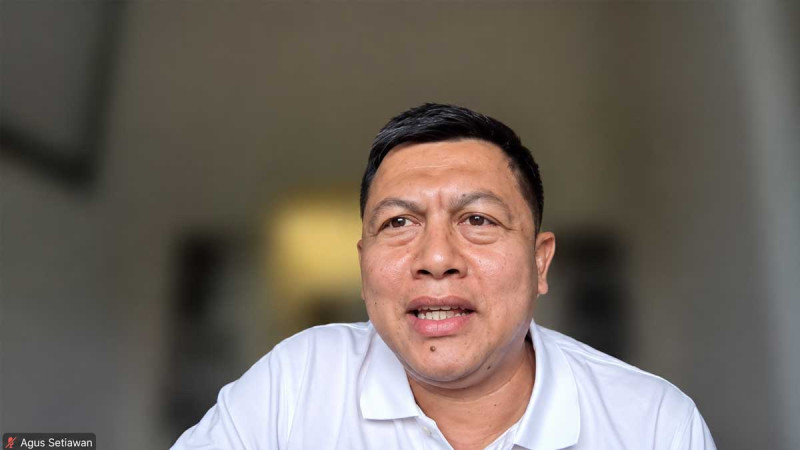
InfoSAWIT, JAKARTA – Technological advancements are changing the skills required in the oil palm plantation sector. Future plantation professionals, or planters, will need more than practical field experience. They must also be able to interpret data, use digital technologies, and make decisions based on accurate information.
The remarks were delivered by Bumitama Gunajaya Agro (BGA) Human Capital & OSM Director Agus Sutrisno during IPS Planter Talks 2026 Series #5, titled "Leading from the Field: Turning Leadership into Excellence & Result." The event was attended by InfoSAWIT on Saturday (November 7, 2026).
Agus explained that plantation operations are evolving alongside technological developments, automation, and mechanization. Companies must prepare their workforce to adapt, including shifting from work patterns that rely heavily on individual experience toward systems supported by data and digital tools.
According to him, workforce requirements that were once largely generalist-oriented are increasingly moving toward specialization. Employees do not necessarily need to master every field but should develop deeper expertise in their respective functions and responsibilities.
This shift is also changing the role of field assistants. In addition to understanding agronomy and technical plantation operations, they are expected to use digital applications, interpret operational data, and apply technology to support decision-making.
Agus cited the use of 360-degree cameras to monitor plantation conditions as one example. This technology enables management teams to observe block conditions remotely without having to visit every location in person.
Such technology can help companies obtain a faster and more comprehensive picture of field conditions. The information collected can then serve as a basis for management analysis and operational decisions.
With digital support, tasks that previously required manual recording and inspection can be completed more efficiently. Workforce requirements, for example, can be calculated with the assistance of digital systems, accelerating the analysis process.
However, Agus emphasized that technology does not eliminate the role of people. Instead, these developments require workers to improve their ability to interpret information and make sound decisions.
Generational changes also present new challenges in workforce management. Today's employees have different expectations regarding workplace environments, relationships with supervisors, and work-life balance.
As a result, plantation leaders need to establish more open relationships with their teams. Agus highlighted the importance of regular communication with employees, including meetings that provide opportunities to listen to concerns, understand workers' experiences, and follow up on issues they face.
He also stressed the importance of recognizing employee achievements, including small accomplishments in the field. Acknowledging workers' contributions can help strengthen motivation and their sense of belonging to the organization.
Furthermore, Agus believes that leadership and management should not be viewed as competing functions. Both must work together. Management involves planning, organizing, implementing, and controlling operations, while leadership focuses on setting direction, aligning teams, and empowering people.
A field assistant, for example, is not only responsible for completing administrative and operational tasks. The role also requires the ability to set an example, guide team members, and encourage workers to pursue shared objectives.
As a result, the competencies required of future planters will combine technical expertise, technological proficiency, data analysis, and leadership skills. Companies need development systems capable of addressing these changing requirements.
Agus reminded plantation professionals that their capabilities should not be limited to the knowledge they currently possess. They must continue learning, reading, expanding their professional networks, and strengthening their analytical skills to meet increasingly complex plantation challenges.
Amid the transformation of the palm oil industry, operational excellence will ultimately depend not only on the sophistication of the technology being used but also on the workforce's ability to apply it to improve decisions and performance. (T2)