InfoSAWIT, SIAK – Preventing recurring forest and land fires (karhutla) in peatland areas requires more than firefighting operations once flames have emerged. Maintaining peatland moisture, improving water management, and regularly monitoring groundwater levels are essential to reducing the risk of repeated fires.
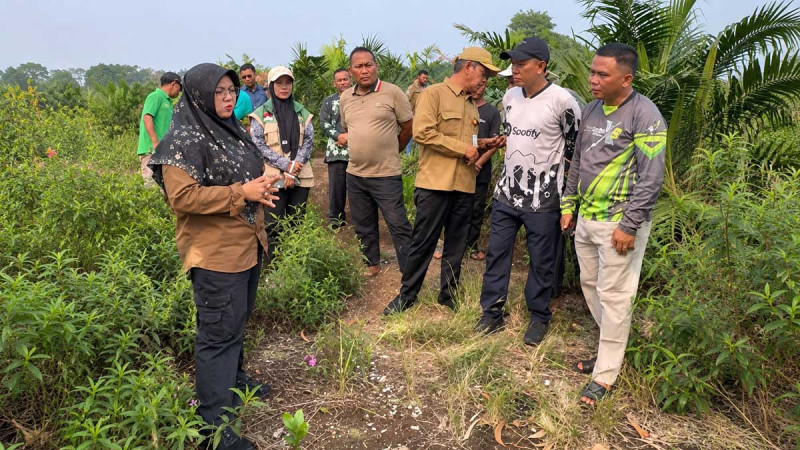
Siak Regent Afni Zulkifli shared this perspective, as reported by InfoSAWIT from her social media account on Tuesday (November 17, 2026). She said peatland fire prevention policies must address actual conditions on the ground rather than being formulated solely through discussions among policymakers and officials.
Afni highlighted the challenges in production forest areas where industrial activities intersect with local communities, including settlements and agricultural land. She argued that policies governing these areas must take existing social and ecological conditions into account.
She also referred to a question raised by President Prabowo Subianto about whether fires in peatland forest areas could be prevented. According to Afni, the answer lies in ensuring that peatlands remain wet throughout the year, including during the dry season.
Peatlands naturally contain high levels of moisture. However, past land exploitation and inappropriate water management practices have altered their hydrological conditions, making some areas increasingly vulnerable to drying and fires.
Afni explained that under Government Regulation No. 57/2016, the groundwater level in peatlands must be maintained at no more than 0.4 metres below the peat surface. Monitoring water levels is therefore an important component of fire prevention efforts.
Digital Groundwater Monitoring System Proposed
To strengthen monitoring, Afni proposed installing groundwater-level monitoring devices connected to digital systems. These devices would allow peatland conditions to be monitored regularly and provide early information about areas experiencing declining groundwater levels.
She said the forest area under consideration in Siak covers more than 400,000 hectares. Based on a monitoring radius of approximately 25 kilometres, around 167–169 monitoring points would be required to cover the area.
The proposed monitoring system is expected to provide early warnings when groundwater levels indicate increasing fire risks. Information accessible through mobile phones would enable local authorities to identify vulnerable locations and respond more quickly.
When groundwater levels begin to decline, preventive measures could include canal blocking and improvements to water-control systems to prevent excessive water loss from peatland areas.
Afni also highlighted a community innovation in Dayun Village, Siak, where residents developed a simple manual peatland water-level monitoring device costing approximately IDR600,000.
Although the device operates manually, she considers it a more affordable alternative for routine monitoring, particularly during the dry season.
Water Management Must Take Priority Over Firefighting
Afni emphasized that fire prevention should take priority over responding after fires have already started. Once peatland fires break out, suppression efforts require significantly greater resources, personnel, and equipment.
According to her, one of the underlying problems in several peatland areas is competition for water resources between companies, local communities, and plantation activities. Without integrated water management, this situation can worsen peatland dryness.
She therefore argued that fire prevention policies should not focus solely on enforcement against companies. Assessments must also consider land ownership conditions and community activities, including plantations located in peatland areas.
Afni warned that revoking permits without considering social conditions and subsequent land management could create new problems if the affected areas are left unmanaged. A broader collaborative approach and comprehensive peatland rewetting efforts are needed.
She also proposed placing a water management and peatland specialist in every subdistrict. These specialists would provide technical recommendations to communities and other parties planning to open or manage peatland areas.
Such an approach would help ensure that land management decisions take hydrological conditions and environmental carrying capacity into account.
Peatland Policies Should Follow Hydrological Units
Afni further called for central government support for fire prevention to be based on Peat Hydrological Units (KHG), rather than relying solely on administrative boundaries such as regencies or subdistricts.
Peatland characteristics and water flows do not follow administrative borders. Consequently, water management must be implemented across an integrated ecological system.
She also suggested that plans to construct bore wells at fire-prone locations should be reassessed. Based on experiences in Siak, she said bore wells may not always be effective because fire locations can change, access for emergency personnel may be difficult, and wells themselves could be affected by fires.
Instead, she believes peatland water management should prioritize hydrological restoration and control measures, including canal blocking and groundwater-level monitoring.
Changes in ecological conditions resulting from plantation development and land use also require adjustments to existing policies. This makes cooperation among central and local governments, regional leadership coordination forums (Forkopimda), companies, and communities increasingly important.
For Afni, addressing peatland fires requires a shift from a predominantly firefighting-oriented approach toward ecosystem management and long-term prevention. Keeping peatlands wet remains a fundamental measure for reducing the risk of recurring fires. (T2)