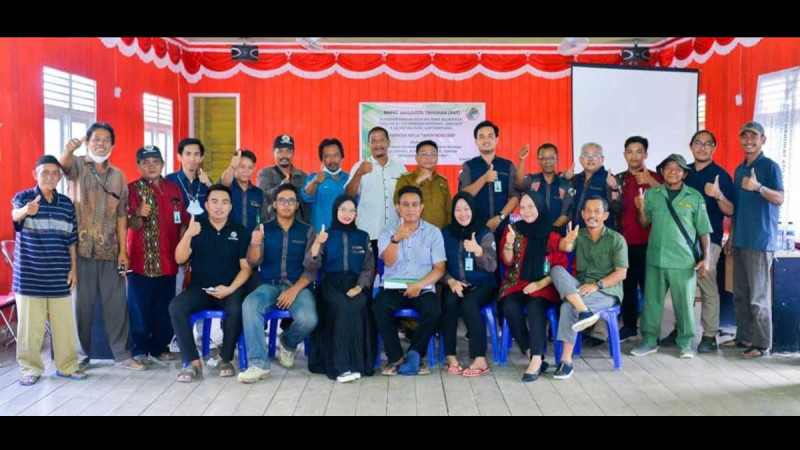
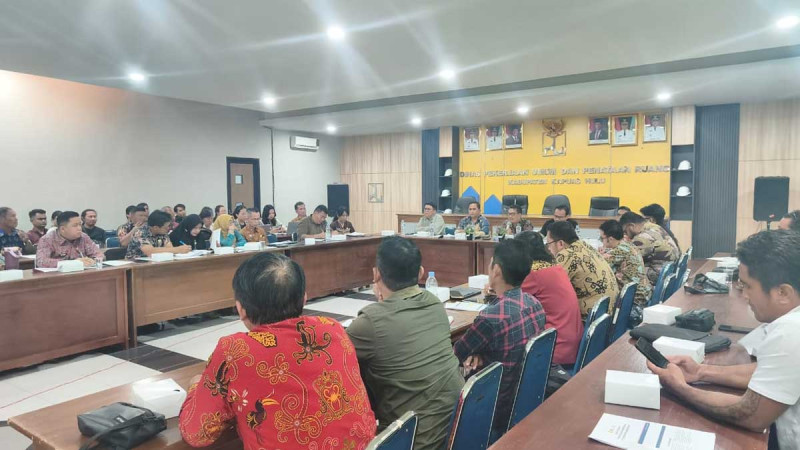
InfoSAWIT, PONTIANAK — In an effort to create a new generation of transformative leaders within palm oil labor unions, Link-AR Borneo, in collaboration with the Palm Labor Coalition (KBS) and the Trade Union Rights Center (TURC), held training for young and female palm oil workers across Kalimantan from July 24-26, 2025, at Hotel Neo Pontianak.
This training utilized the Learning, Influence, Sustainable-Alliance Building (LISA) approach and was attended by 18 participants (8 women and 10 men) from five provinces in Kalimantan: North Kalimantan, East Kalimantan, Central Kalimantan, South Kalimantan, and West Kalimantan. The majority of participants are young individuals who are already active in organizations, with some having held leadership positions in palm oil labor unions.
Director of Link-AR Borneo, Ahmad Syukri, stated that the training aims to produce transformative labor union leaders, who can unify the future vision of all members, inspire, and motivate. "And encourage members to develop their competencies and seek new ways to carry out union activities to achieve common goals," he said in an official statement received by InfoSAWIT on Wednesday (July 30, 2025).
One of the main methods used in this training is the "U Theory," a leadership development and social system transformation approach developed by Otto Scharmer from MIT, USA. As explained by Mida Saragih, a facilitator from KBS, U Theory invites participants to experience a transformation process both internally and collectively through five main stages: Co-Initiating, Co-Sensing, Presencing, Co-Creating, and Co-Evolving—which form a curve resembling the letter "U."
During the three-day training, participants engaged in various group dynamics, discussions, and presentations on topics relevant to labor issues in the palm oil sector. Ismet Inoni, KBS Coordinator, explained that the training covered various important topics, such as labor conditions in the palm oil industry, the role of labor unions, challenges faced by young and female palm oil workers, transformative leadership, and communication and influence.
As a conclusion, participants collectively drafted and declared a commitment to transformative leadership as a demonstration of their seriousness in fulfilling new roles in their respective organizations.
Overall, participants showed high enthusiasm in attending all sessions. In their testimonials, they stated that the training not only broadened their knowledge but also opened new perspectives on managing and developing palm oil labor unions into organizations that can truly advocate for the fundamental interests of plantation workers.
One of the declarations made at the end of the training stated, "For the realization of competent future leadership, we will continue to collaborate and establish communication."
This training represents a concrete step in strengthening the leadership capacity of palm oil labor unions in Kalimantan—not just technically, but also touching on aspects of vision and internal organizational transformation. (T2)