KARACHI, InfoSAWIT – Indonesian products are steadily strengthening their position in Pakistan through the modern retail network Imtiaz, now recognized as one of the country’s main showcases for imported products. With stores spread across multiple cities, Imtiaz has grown into Pakistan’s largest and most successful modern retailer, becoming a strong representation of the country’s modern retail landscape.
The strengthening presence of Indonesian products was highlighted when Indonesia’s Deputy Minister of Trade, Dyah Roro Esti Widya Putri, visited one of Imtiaz’s outlets in Karachi on Saturday (10/1).
“Imtiaz is Indonesia’s strategic partner in reaching end consumers in Pakistan. The prominent placement of Indonesian products on Imtiaz shelves reflects Pakistan’s confidence in the quality and competitiveness of Indonesian goods. This trust also reinforces Indonesia’s reputation as a reliable supplier that meets quality, sustainability, and halal compliance standards,” said Deputy Minister Roro in an official statement quoted by InfoSAWIT, Monday (19/1/2026).
During her visit, she expressed appreciation to Imtiaz Group for consistently marketing Indonesian products ranging from palm oil and its derivatives, food and beverages, household necessities, to personal care products.
Deputy Minister Roro also encouraged Imtiaz to further expand both the variety and volume of Indonesian products across its entire store network. She invited the retailer to explore deeper cooperation opportunities, including direct sourcing, long-term supply contracts, and potential exclusive partnerships with Indonesian producers.
To support these efforts, she reaffirmed the Indonesian government’s readiness—through the Ministry of Trade, the Indonesian Embassy in Islamabad, and the Consulate General in Karachi—to facilitate business strengthening initiatives such as business matching, supplier introductions, and technical assistance. Imtiaz was also encouraged to conduct a business visit to Indonesia to explore new product opportunities tailored to Pakistan’s market needs.
Meanwhile, Imtiaz Group Director Kashif Imtiaz said Indonesian products have gained popularity among Pakistani consumers due to their strong quality and suitability to local preferences.
He expressed optimism that demand for Indonesian products—whether in food and beverages, household goods, or other categories—will continue to grow. Therefore, Kashif hoped Indonesia would open wider opportunities to source additional products to be marketed through the Imtiaz retail network.
Waheed Group Plans Dedicated Jetty to Support Imports of Indonesian Palm Oil
Before visiting Imtiaz, Deputy Minister Roro met with Waheed Group in Karachi on Thursday (8/1). Waheed Group is known as one of the largest importers of Indonesian palm oil in Pakistan, with core businesses covering manufacturing, imports, and distribution of vegetable oils, including crude palm oil, RBD (Refining, Bleaching, Deodorizing), and RBD olein.
Beyond vegetable oils, Waheed Group is also active in importing food-industry chemicals, electrolytic tin plates, and compressed natural gas (CNG) business and infrastructure.
In the meeting, Deputy Minister Roro met Waheed Group leaders including Chairman Abdul Waheed, CEO Awais Karni, and Director Faad Waheed. She expressed appreciation for Waheed Group’s contribution in promoting Indonesia–Pakistan palm oil trade.
Based on Indonesia’s Ministry of Trade data, Waheed Group imported Indonesian palm oil worth USD 383.55 million, totaling 290.53 thousand tons in 2025. The company is also a recipient of the Primaduta Award 2019 and has remained among the largest Indonesian palm oil importers in Pakistan for over a decade.
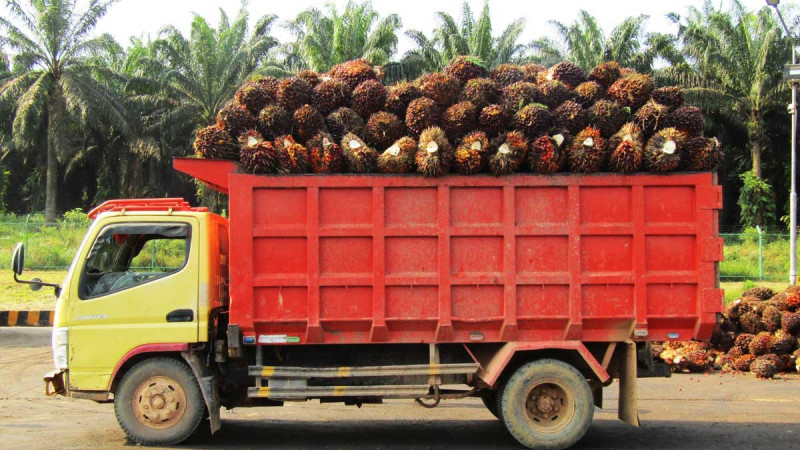
Waheed Group also presented its investment plan to build a dedicated jetty to support imports of palm oil from Indonesia. This infrastructure is expected to improve logistics efficiency and streamline unloading processes, as Indonesian palm oil currently dominates around 70% of Pakistan’s vegetable oil market share.
Indonesia Assures Stable Palm Oil Supply Despite Strengthening Domestic Biodiesel Policy
On the same day, Deputy Minister Roro also met with CEO of the Pakistan Edible Oil Conference (PEOC), Rasheed Jan Mohammad, in Karachi. During the meeting, she reaffirmed Indonesia’s commitment to maintaining stable palm oil supply to Pakistan, even as Indonesia strengthens its domestic biodiesel policy through the B30 program and preparations toward B50 in 2026.
The B30 program mandates a mix of 30% palm oil-based biodiesel with 70% diesel. The move toward B50 by 2026 is part of Indonesia’s long-term energy strategy and, according to her, will not disrupt exports.
“Indonesia continues to improve palm oil governance to maintain balance between domestic needs and exports. With strong production capacity, higher productivity, and effective stock management, export supply will remain stable, predictable, and sufficient, including for strategic partners like Pakistan,” said Deputy Minister Roro.
Rasheed emphasized that Indonesia remains a strategic partner for Pakistan and will continue to play a key role. Given Pakistan’s high demand for Indonesian palm oil, PEOC hopes import opportunities can be expanded, supported by stable and sustainable supply assurances.
Supporting Indonesia–Pakistan CEPA, Health Services Opportunities Also Opened
Deputy Minister Roro continued her series of meetings on Friday (9/1), holding discussions with the Federation of Pakistan Chambers of Commerce and Industry (FPCCI) in Karachi.
In the dialogue, she welcomed the strong interest among Pakistani businesses in expanding collaboration with Indonesia. She also mentioned follow-up steps from Indonesian President Prabowo Subianto’s visit to Pakistan in December 2025, which is expected to accelerate the establishment of a Comprehensive Economic Partnership Agreement (CEPA) between the two countries.
CEPA is seen as opening wider cooperation opportunities, including trade in services such as healthcare services, medical personnel, and medical equipment.
“Trade between Indonesia and Pakistan is built on friendship, trust, and mutual respect, allowing various business sectors to grow sustainably in both countries. We hope the commitments agreed upon by both heads of state in the Joint Statement during President Prabowo’s visit in December 2025 can be implemented optimally and provide tangible benefits for both sides,” she added.
FPCCI representative Ibrahim Tawwaf also said Deputy Minister Roro’s visit served as an important momentum that reinforces both countries’ commitment to strengthening cross-sector business progress, including business and investment opportunities in healthcare services.
This series of engagements highlights Indonesia’s ongoing efforts to deepen trade partnerships with Pakistan—through strengthening logistics infrastructure, ensuring supply stability of strategic commodities such as palm oil, and expanding Indonesian product access to Pakistan’s modern retail market. (T2)