InfoSAWIT, BANDUNG — The West Java Provincial Government is being urged to immediately conduct a comprehensive re-verification of oil palm plantations within its territory. The call comes after several findings indicated discrepancies between provincial records and actual field conditions—both in plantation area size and distribution, particularly for smallholder-owned plots.
West Java’s policy restricting oil palm expansion, as outlined in a Governor’s Circular Letter, requires a highly accurate database. However, recent findings suggest the current plantation data still contains inconsistencies. Without a thorough update, palm oil control policies risk being ineffective or misdirected.
One example can be seen in Ciamis Regency, where official provincial data does not record significant oil palm acreage. Yet, based on on-the-ground information, there are reportedly dozens of hectares of oil palm plantations that have long been cultivated and managed by local communities. These plantations are spread across several areas and have entered productive stages, but remain absent from West Java’s official database.
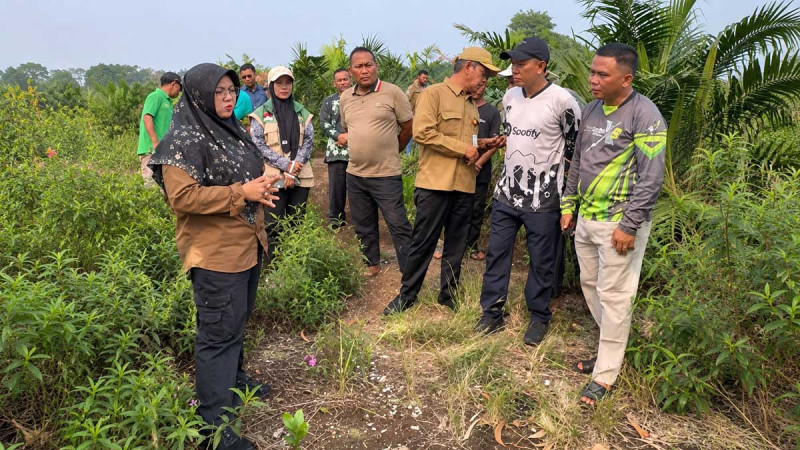
A similar situation is found in Banjar City. Provincial records list around 2 hectares of smallholder oil palm plantations. However, data verification by Banjar’s Agriculture Office shows the actual area is closer to 1.5 hectares, all located in Binangun Village. The difference highlights a lack of synchronization between provincial-level records and district-level realities.
The Binangun Village Secretary previously confirmed that the 1.5-hectare plantation can yield around 8 tons of FFB per harvest. The plantation was initiated by the village government and is located far from residential areas. This indicates that existing oil palm plantations in West Java are not merely statistics—they carry real social and economic dimensions at the village level.
Inaccurate plantation area data may lead to policy errors, including in monitoring, spatial planning enforcement, and environmental impact assessment. Smallholders also risk being affected by policies that are not grounded in verified and factual data.
Therefore, a province-wide re-verification process is needed, involving district and city governments down to the village level. Field verification will be critical to ensuring the resulting database is not only administrative, but truly reflects existing realities.
Re-verification is not only necessary to support the oil palm expansion restriction policy, but also to ensure that existing smallholder plantations receive clarity regarding their status and future management direction. Without accurate data, West Java’s palm oil policy risks operating on assumptions—not reality. (*)
Reporter: Zainal Abidin (Banjar)