InfoSAWIT, JAKARTA — Violence and harassment in the workplace remain a serious challenge in Indonesia. A survey by the International Labour Organization (ILO) shows that more than 70 percent of workers in the country have experienced or been exposed to various forms of violence and harassment at work, underscoring the urgency for businesses to take corrective action.
In response, the ILO, in collaboration with the Indonesia Business Coalition for Women Empowerment (IBCWE), held a Leaders’ Gathering themed “Building Workplaces Free from Violence and Harassment” in Jakarta on Thursday. The event was part of the global 16 Days of Activism Against Gender-Based Violence campaign.
The forum brought together around 50 business leaders from various sectors. Representing the palm oil industry, the Indonesian Palm Oil Association (GAPKI) shared its experience and ongoing initiatives to strengthen worker protection. Chairman of GAPKI’s Human Resources Development Division and Founder Chairman of WISPO (Worker Initiatives for Sustainable Palm Oil), Sumarjono Saragih, emphasized that protecting workers—especially women—has become a key agenda for GAPKI in recent years.
“Since 2021, GAPKI has initiated a movement to protect women workers in oil palm plantations. This is not merely a written commitment, but one that is translated into concrete actions on the ground,” Sumarjono said in a statement to InfoSAWIT, Sunday (14/12/2025).
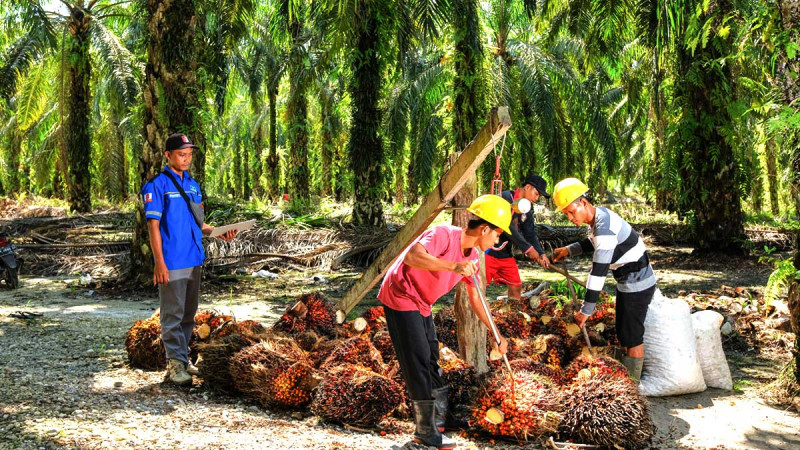
A major milestone of this initiative was the launch of the Guidelines for the Protection of Women Workers in Oil Palm Plantations, which encourage the establishment of Gender Committees and Women Workers Protection Houses (RP3) at operational units. The aim is to ensure a safe, dignified, and violence-free working environment.
According to Sumarjono, workplaces free from violence and harassment should be an inherent part of business operations. Beyond being mandated by national regulations, such principles are also international standards and prerequisites in various certification schemes and global markets.
“For corporations, there is only one option: compliance,” he stressed.
However, for the palm oil industry, compliance alone is no longer sufficient. Amid intense public scrutiny and ongoing controversies, society expects the sector to move beyond compliance and become a driver of positive change.
This awareness has encouraged GAPKI to develop worker protection into a collective movement. Through continuous outreach, training, and workshops, GAPKI involves member companies, smallholder farmers, local governments, and non-governmental organizations.
These collective efforts have begun to gain wider recognition. GAPKI’s participation as a speaker at the ILO–IBCWE Leaders’ Gathering reflects growing national and international attention to the palm oil industry’s initiatives in promoting safe workplaces.
“This shows that the palm oil industry can also be part of the solution,” Sumarjono said. “We want to ensure that oil palm plantations are not only economically productive, but also fair and safe for all workers.” (T2)