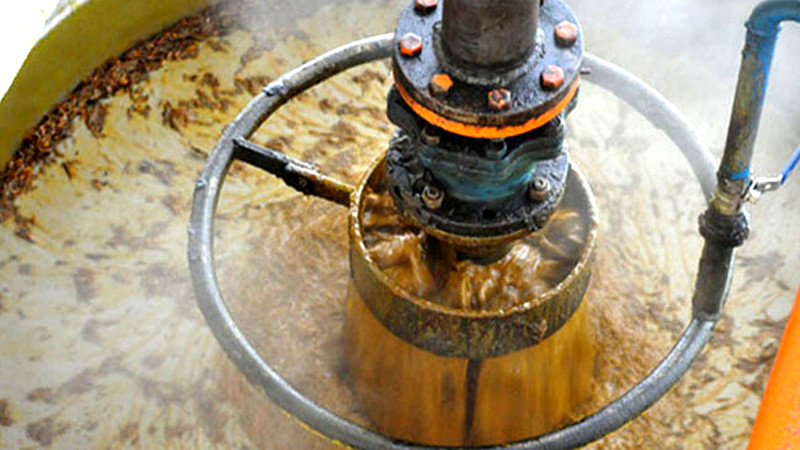
InfoSAWIT, JAKARTA — Indonesia’s palm oil industry marked a major milestone as the International Civil Aviation Organization (ICAO) officially approved Palm Oil Mill Effluent (POME) as a certified feedstock for Sustainable Aviation Fuel (SAF). The decision is recorded in the global reference document “CORSIA Default Life Cycle Emissions Values for CORSIA Eligible Fuels”, which guides the aviation sector in transitioning to low-emission fuels.
The approval follows a year-long technical evaluation conducted by Hasselt University and the European Commission’s Joint Research Centre (JRC). The findings awarded POME a Life Cycle Assessment (LCA) value of 18.1 gCO₂e/MJ, significantly lower than fossil jet fuel, and now set as a global default value for SAF producers.
A Long Submission Process, Backed by Science and Diplomacy
Indonesia’s submission began in November 2024, led by the Ministry of Transportation and Ministry of Foreign Affairs, with support from Indonesia Palm Oil Strategic Studies (IPOSS) and PT Tripatra.
The process included extensive field data collection from palm oil mills, preparation of working papers for ICAO’s Working Group 5, and intensive discussions with member states. Indonesia emphasized that POME is a processing residue with zero ILUC impact, meeting sustainability criteria under the HEFA pathway.
Sokhib Al Rokhman, Director of Airworthiness and Aircraft Operation at the Ministry of Transportation, said the approval strengthens Indonesia’s SAF roadmap.
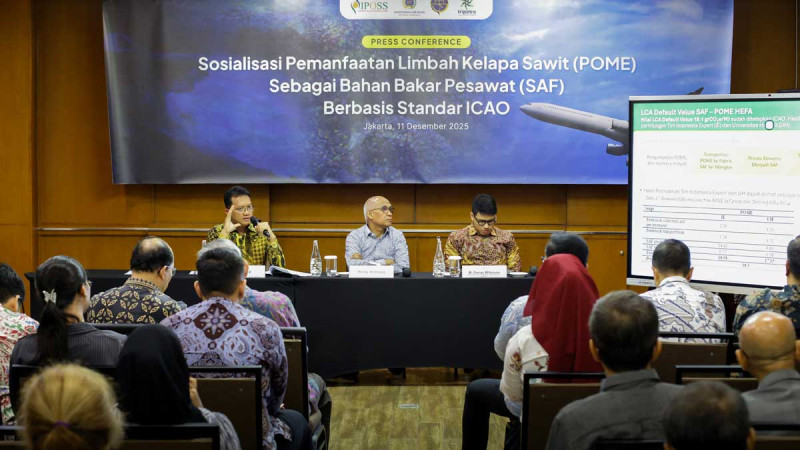
“With a default value in place, emission calculations are more straightforward and can be applied immediately by producers in Indonesia,” he said at a press conference attended by InfoSAWIT.
IPOSS Supervisory Board member Sofyan Djalil called the recognition a breakthrough.
“POME has always been considered waste, yet it now qualifies as aviation fuel because it meets strict sustainability criteria,” he said.
Officials from the Ministry of Foreign Affairs and Indonesia’s representative to ICAO’s CAEP reaffirmed that all submitted data aligned with ICAO’s technical standards.
Tripatra’s Faras Wibisono added that field measurements placed Indonesia’s POME emissions between 17.5–18.8 gCO₂e/MJ, before being averaged into the official 18.1 value.
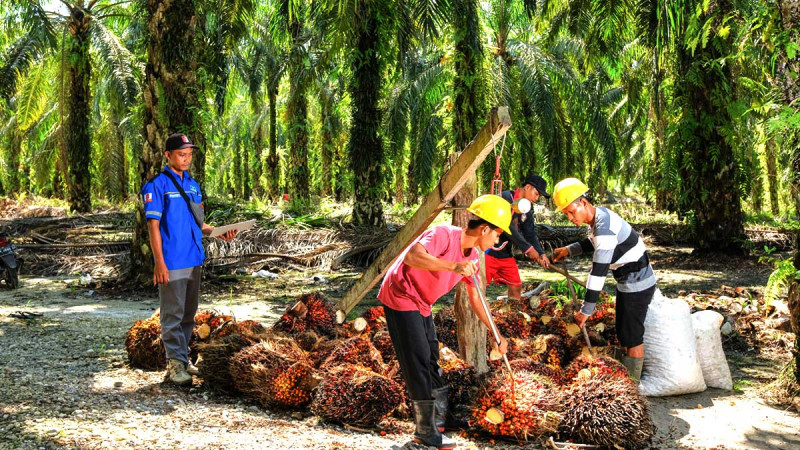
IPOSS noted Indonesia’s abundant POME potential, with 250 million tons of FFB processed annually, translating to up to 2.5 million tons of POME oil at a 1% recovery rate. However, robust governance and traceability systems remain crucial, including the need for a dedicated HS code. (T2)