InfoSAWIT, SOUTH BENGKULU — Monday morning, 24 November 2025, began like any other day in Pino Raya. Farmers walked to their fields, continuing routines passed down through generations. But the calm shattered just hours later when gunfire erupted, leaving five farmers bleeding on the ground.
For the people of Pino Raya, the violence was not an isolated episode. It was the latest—and bloodiest—eruption of a conflict that has haunted their lives since 2012, a conflict that never seemed to meet a real resolution.
When a Bulldozer Pushes Away Hope
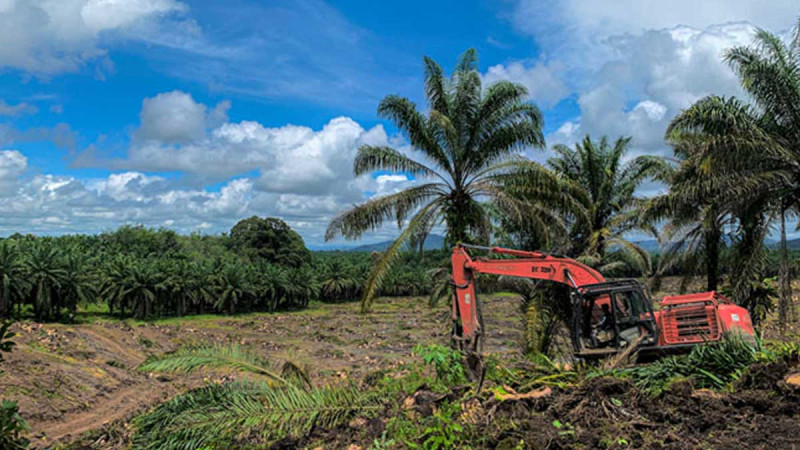
Around 10 a.m., farmers once again encountered a familiar and painful sight: a PT Agro Bengkulu Selatan (PT ABS) bulldozer clearing their crops. It was the third incident that day. Each fallen plant symbolized more than lost farmland—it meant the erasure of livelihoods, memories, and years of labor.
According to WALHI’s official statement cited by InfoSAWIT (25/11/2025), tension escalated at 10:45 a.m. Heated arguments broke out. No one backed away. By noon, the situation had become a spark waiting to ignite.
At 12:45 p.m., it did.
A company security officer raised his weapon and shot a farmer named Buyung in the chest. Panic spread instantly. Yet the shooter reportedly continued firing while fleeing, sending bullets toward the farmers behind him.
Four more farmers fell, Linsurman – shot in the knee; Edi Hermanto – shot in the thigh; Santo – hit under the armpit; • Suhardin – shot in the calf.
Their screams echoed through the fields that had long been their lifeline.
Residents, fueled by anger and fear, chased the man identified as Ricky, eventually capturing him. Victims were rushed to the hospital, but the emotional damage etched onto Pino Raya was deeper than their physical wounds.
A Conflict That Never Ends
To understand the tragedy, one must look back to 2012, when Bengkulu Selatan’s Regent issued Decree No. 503/425 granting PT ABS a location permit for 2,950 hectares. Since then, border disputes, protests, criminalization, and now gunfire have shaped daily life.
Residents feel abandoned. They say both central and regional authorities—including ATR/BPN, the governor, and the regent—have failed to resolve a 13-year conflict.
Following the shooting, WALHI and 29 regional chapters issued a solidarity statement demanding immediate action, a thorough police investigation into the shooting and the legality of the weapon, protection for victims and their families, oversight by Kompolnas, investigations by Komnas HAM, Komnas Perempuan, ORI, and LPSK, and fair agrarian conflict resolution by ATR/BPN, including reconsidering PT ABS’s permit
Nearly every family in Pino Raya carries a story of land, fear, and survival. But on that day, those stories converged into a national tragedy.
Now, five injured farmers fight to recover—while the community waits for something they have long been denied, justice. (T2)