InfoSAWIT, BOGOR – Three students from the Physics Department at IPB University have proven that palm oil waste can be processed into high-value products. Pristy Tasya Nabila, Salsabilla Permata Bayah, and Annisa Nur Azahra successfully developed environmentally friendly acoustic panels made from palm oil trunks and empty palm oil fruit bunches (EFB).
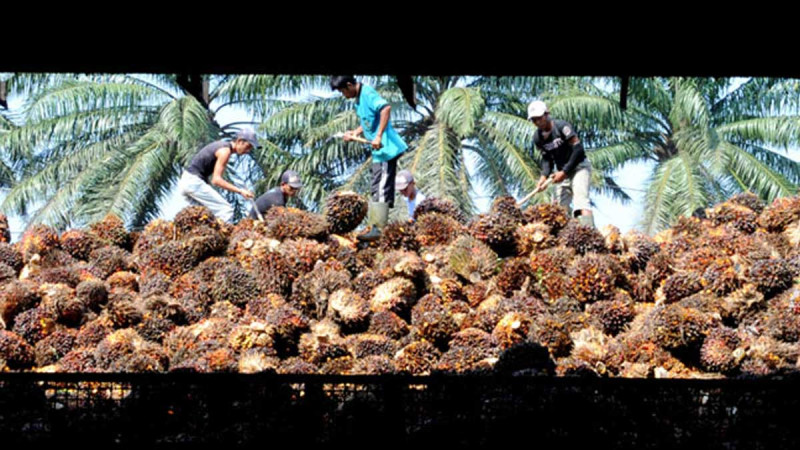
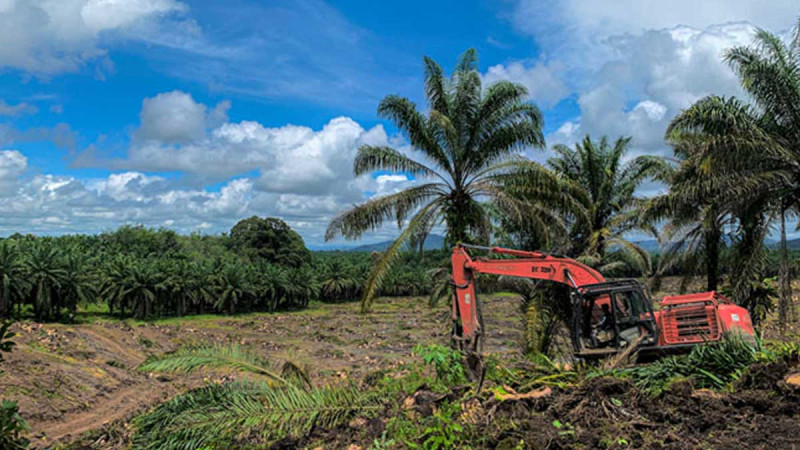
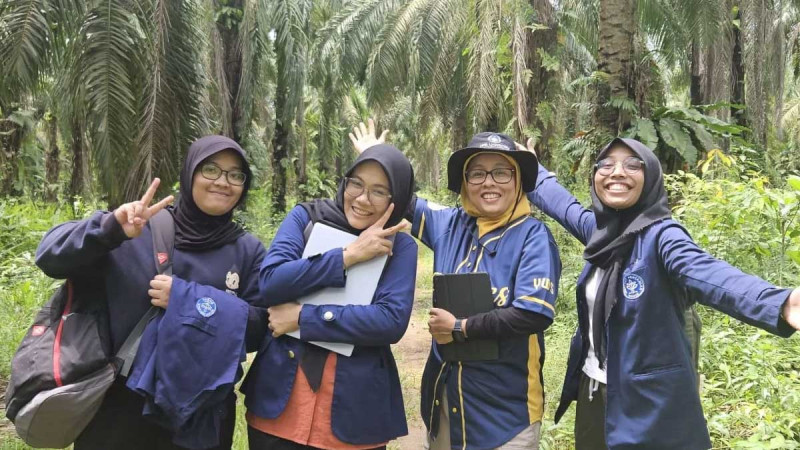
The idea was born after they directly observed the conditions of palm oil plantations in Kalimantan. “We saw that the impact of palm oil in Indonesia is huge, especially from the waste it generates. From palm trunks to empty fruit bunches,” said Pristy, quoted by InfoSAWIT from IPB University on Monday (9/29/2025).
Based on their observation, the trio designed a simple yet effective innovation. Palm trunks were dried and ground into powder, while EFB were cut into fibers. Both materials were then mixed with tapioca flour as a natural adhesive, molded, and heated in an oven. “We chose tapioca flour because it’s natural, easy to obtain, and its starch content is effective as a binder,” explained Annisa.
Laboratory tests showed that the acoustic panels, which they named Trangton, have a sound absorption coefficient of 0.8, or an equivalent of 80 percent, which is close to the quality of commercial acoustic panels. “Our product is not only eco-friendly but also has performance comparable to manufactured panels. It can even reduce noise by up to 21 percent,” Salsabilla noted.
Trangton’s achievement didn't stop in the lab. The innovation led the IPB team to win First Place and Best Presentation at the International Oil Palm Trunk Product Design Competition 2025. This accomplishment opens significant opportunities for the commercialization stage.
However, challenges remain, especially concerning the transportation of the large-sized palm trunks. “The solution is that the palm trunks can be dried at the plantation site first to make them lighter to move. The manufacturing process is simple, but the results are extraordinary,” said Pristy.
The three students are optimistic that Trangton can expand with the support of investors and industry partners. They hope that palm oil waste, which is often discarded, can gain added value and become a sustainable acoustic panel alternative for the future. (T2)