InfoSAWIT, JAKARTA – A new report from AgriFutures Australia reveals that the Pongamia plant has the potential to become a highly productive and economically viable source of second-generation biofuel. The report suggests that Pongamia offers significant advantages over existing biofuel alternatives, such as canola and palm oil.
According to the report, canola has an average oil yield of 0.6 tons per hectare, while Pongamia seeds have the potential to produce up to 3 tons per hectare. This yield could increase if the pods (which contain the seeds) are processed into renewable fuel along with pruned material (leaves and stems), bringing the total biofuel yield to 6 tons per hectare.
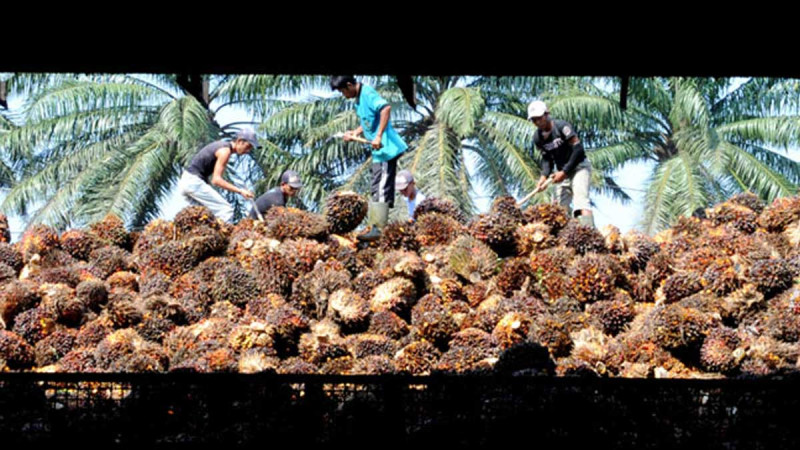
In comparison, a report by Ritchie and Roser (2021) noted that palm oil production in 2018 was 71 million tons from 19 million hectares, with an average yield of 3.7 tons per hectare. Palm oil has long been known as the highest-yielding oil-producing crop.
Globally, more than 300 million hectares of land are used for oil crop production. Palm oil accounts for 6% of this land use but produces 36% of the world's total oil. Remarkably, Pongamia not only has the potential for a higher oil yield than palm oil but also requires less than half the rainfall and, as a legume, can generate its own nitrogen.
Agricultural Opportunity and Additional Economic Benefits
Besides its primary benefit in producing renewable biodiesel to combat climate change, planting Pongamia trees also offers other advantages and byproducts that make it an attractive and economically viable agricultural enterprise. These include carbon sequestration by the trees, potential carbon revenue by using the pods as biomass fuel, producing high-protein livestock feed supplements that can reduce methane, and additional economic development in northern Australia.
Research data presented in the report shows that feeding livestock with high-protein Pongamia seed meal can reduce methane emissions in three ways: by improving feed quality, shortening the time it takes for livestock to reach maturity, and increasing the calving percentage of beef cattle.
Other additional byproducts from Pongamia also have the potential to produce various products, such as medicinal products and agricultural insecticides. The plant has been used for medicinal purposes in India for many years, and its oil residue may one day become the most valuable part of the processed plant, offering new avenues to fight bacterial and viral infections. Researchers in India have also developed insecticides from compounds extracted from crude Pongamia oil to control insect pests and mosquitoes, which are claimed to be safer than traditional alternatives.
A Strong Foundation for Growth
Researchers from The University of Queensland (UQ) have been studying Pongamia for 15 years. Trial plantings at more than 17 locations across northern Australia have contributed a wealth of information and practical knowledge to this report. Although more research is still needed, the knowledge about Pongamia is already sufficient to support commercial development.
Most of the land in northern Australia is suitable for planting Pongamia, and it is currently largely used as pasture for beef cattle. On such land, Pongamia would have a minimal impact on beef production if there is grazing in the plantations and protein feed is provided to the cattle. Pongamia also grows well on other agricultural lands, but its primary purpose is to produce renewable fuel on land not used for food production.
Although sensitive to frost, especially when young, the tree is tolerant of heat and floods, and can produce seeds when grown in soils with a fairly high level of salinity. This means Pongamia is likely to be more resilient than common agricultural crops in northern Australia, such as cotton and sugarcane. The plant also requires less irrigation.
Pongamia is suitable for Australia's tropical north, in most areas from Mareeba, Queensland, to Broome, Western Australia (WA). In the Northern Territory (NT), for example, there are vast areas between Katherine and Darwin where the average annual rainfall is over 800 mm, and there is potential to supplement it with small amounts of irrigation from groundwater or water harvesting. There is also potential in coastal Queensland areas from Kilcoy to Cooktown, where rainfall is above 900 mm and the risk of frost is low.
Pongamia can yield 5 to 8 tons of seeds per hectare without irrigation if the annual rainfall exceeds 900 mm and the soil can store at least 150 mm of moisture. However, the tree requires winter rainfall or irrigation if winter rainfall is low. In some locations, there may be years with no seed production if it is dry for the three months leading up to the flowering period, which is in October and November.
Data from trials and observations show the optimal yield of Pongamia, with sufficient rainfall or supplemental irrigation, is about 18 tons of seeds per hectare with an oil content of around 40%. However, a conservative yield of 9 tons per hectare, half of the optimal yield, is suggested as a target yield when planning for commercial development.
A Profitable Business Case
The economic assessment outlined in the report shows the potential for significant profitability from a 5,000-hectare Pongamia project, with an Internal Rate of Return (IRR) of 15%. This is a very impressive figure for an agricultural enterprise.
The results from previous economic studies on Pongamia were not as favorable as those reported here for various reasons. Not only have renewable fuel prices increased, but in recent years, Pongamia yields have also improved by switching from trees grown from seed to clonal propagation of high-yielding varieties. Clonal trees are ready for harvest at about the same time as trees propagated from seeds, and there is now a lot of practical experience with clonal propagation.
Research over the past 10 years has developed ways to remove anti-nutritional compounds from the seed meal, so the meal can be used as high-protein livestock feed. The potential revenue from carbon offsets from Pongamia plantations has also increased with rising demand for carbon offsets and higher carbon prices. The combination of these factors means the breakeven price for Pongamia oil is close to zero. These findings suggest that Pongamia has the potential to become an important crop in northern Australia, which will help boost the Australian economy and help it become carbon-neutral by 2050. (*)
By Dadang Gusyana, Agronomist Consultant at Agriconsulting Europe S.A. (AESA), Brussels.