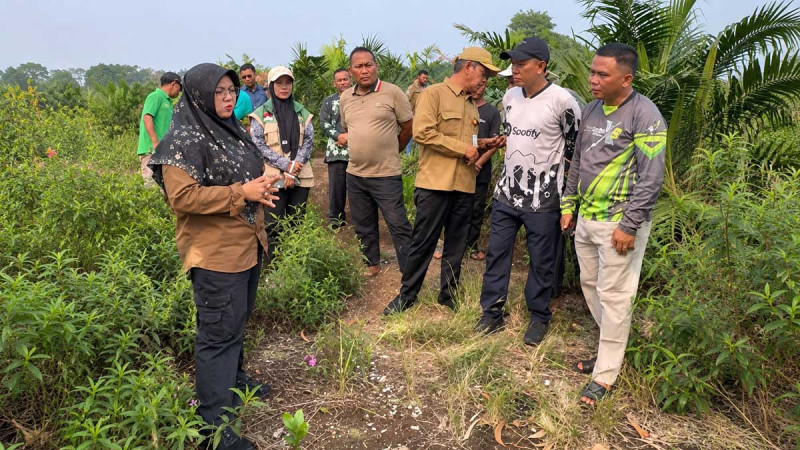
InfoSAWIT, JAKARTA – Indonesia remains a major player in the global palm oil industry. Over 59 percent of global production comes from the country, with plantation areas covering 16.38 million hectares and crude palm oil (CPO) production reaching 45.5 million tons per year. Interestingly, approximately 41 percent of this total production is contributed by independent smallholders, comprising 2.5 million farmers.
However, despite this significant contribution, independent palm oil farmers are struggling to meet sustainability standards. Certifications like the Indonesian Sustainable Palm Oil (ISPO) and the Roundtable on Sustainable Palm Oil (RSPO) are recognized as gateways to the global market. Unfortunately, the path to certification is not easy for farmers who manage their land independently.
According to Fortasbi, certifications are expected to open up access to premium markets with better prices. However, high costs are the biggest challenge. The certification process requires a significant initial investment, from audits and training to improving plantation infrastructure. Farmers are also required to prepare complete administrative documents, such as proof of land ownership, plantation maps, and the Cultivation Registration Certificate (STDB).
Unlike large companies that have resources and experts, independent palm oil farmers have to struggle alone to understand the strict standards that cover environmental and social aspects, as well as worker welfare. The lack of technical assistance makes this process even more difficult.
Limited Market Access
In addition to cost constraints, access to technology and information is also a barrier. Many farmers still rely on middlemen or "tokes" to sell their fresh fruit bunches (FFB), as the distance to processing mills is quite far and transportation costs are not insignificant. This situation weakens the farmers' bargaining position.
However, if certified FFB could be sold directly to mills, farmers would have the opportunity to get a premium price. The involvement of farmers in regional price setting is also crucial so they can gain greater benefits from their certification efforts.
Stakeholders are urged not to stand still. The government and supporting organizations need to provide technical and financial assistance to make it easier for smallholders to access certification. "Without real support, it is difficult to imagine millions of independent palm oil farmers being able to help push the Indonesian palm oil industry towards more sustainable practices," Fortasbi noted.
With the right breakthroughs, certification will no longer be a burden but an opportunity. The hope is that more and more independent farmers will be able to penetrate the global market with sustainable palm oil products, not only protecting environmental sustainability but also improving farmer welfare. (T2)