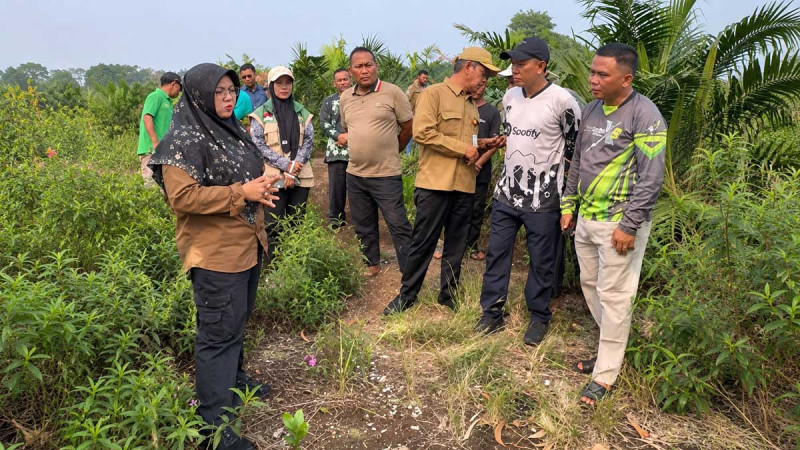
InfoSAWIT, PASANGKAYU – The Plantation Office of West Sulawesi Province (Sulbar) conducted direct monitoring of pricing and the processing of Fresh Fruit Bunches (FFB) into Crude Palm Oil (CPO) at several palm oil mills (PKS) in Pasangkayu Regency on Sunday (10/8/2025).
The monitoring was led by the Acting Head of the Sulbar Plantation Office, Muh. Faizal Thamrin, and targeted several palm oil companies, including PT Awana Sawit Lestari, PT Pasangkayu, PT Trinity, PT Suryaraya Lestari II, and PT MAS.
Faizal stated that this activity is part of the guidance and supervision to ensure the implementation of Minister of Agriculture Regulation Number 13 of 2024. "We want to ensure that the production process is efficient, yields are maximized, and CPO quality meets standards," he said, as quoted by InfoSAWIT from the Sulbar Plantation Office on Tuesday (19/8/2025).
During the visit, Faizal also reviewed the use of palm oil waste, such as shells, as boiler fuel. He emphasized the importance of waste management that is not only environmentally friendly but also adds economic value.
The monitoring results showed that FFB prices at several PKS were relatively in line with the government's set price, ranging from Rp2,740 to Rp3,050 per kilogram. However, price deductions of 1–3 percent were found at non-plantation PKS for FFB that did not meet requirements, such as unripe, overripe, or wet fruit. Meanwhile, at integrated PKS, no price deductions were applied.
The Acting Head of the Division for Processing and Marketing of Plantation Products (PPHP) of the Sulbar Plantation Office, Agustina, added that there are currently 14 active PKS in the province. She reminded that FFB from plasma and smallholder plantations should be processed a maximum of 24 hours after harvest. "If it's longer than that, the oil extraction rate and CPO quality will decrease," she explained.
This monitoring is in line with the mission of the Governor and Deputy Governor of Sulbar, Suhardi Duka – Salim S. Mengga (SDK–JSM), to promote inclusive and sustainable economic growth through transparent and efficient plantation governance. (T2)