InfoSAWIT, JAKARTA — Deputy Chairman of Commission VI of the Indonesian House of Representatives, Nurdin Halid, encourages PT Perkebunan Nusantara (PTPN) to play a more active role in accelerating the transformation of the national palm oil industry. In his view, digitalization that focuses on sustainability and environmental impact must be the main axis of change in this strategic sector.
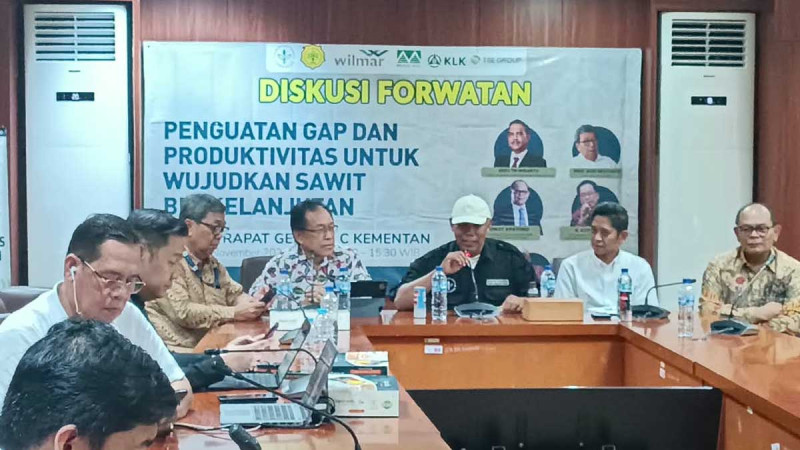
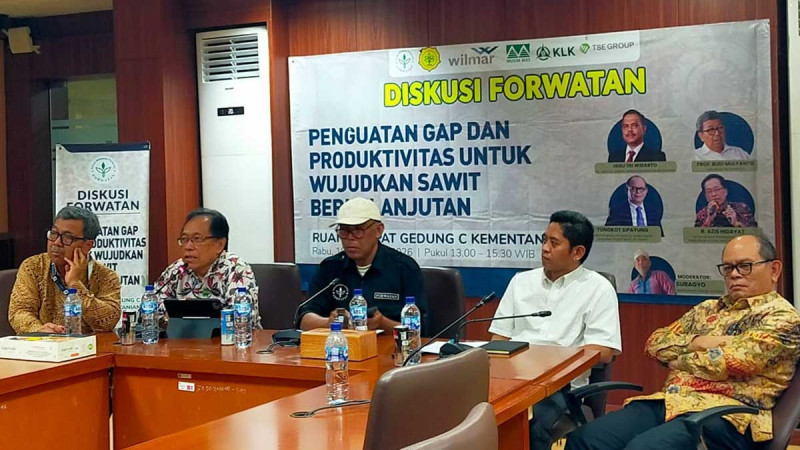
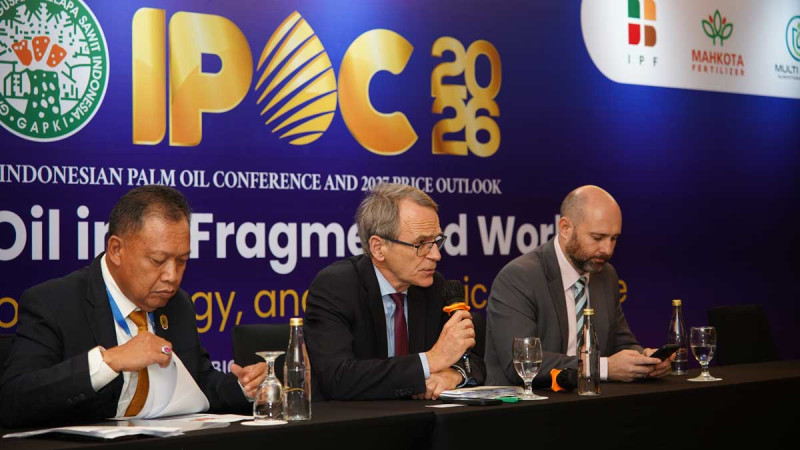
Speaking at a discussion forum with stakeholders in the palm oil industry, Nurdin emphasized that transformation cannot be solely focused on technology and efficiency aspects. According to him, a comprehensive approach must include six important dimensions: environment, economy, social, land, digitalization, and marketing.
“How can the industry we are currently building have minimal impact on the environment? We also need to discuss economic and social impacts, land management, as well as digitalization and marketing. These six challenges need to be jointly addressed by PTPN and regulators,” said Nurdin, as quoted by InfoSAWIT from the Golkar website on Wednesday (August 6, 2025).
He underscored that the transformation process is not only the responsibility of state-owned enterprises but also requires cross-sector synergy between the government, state-owned enterprises, cooperatives, and industry players. Strong collaboration is believed to be the key to addressing various global challenges faced by Indonesia's palm oil sector.
In the context of international trade, Nurdin also highlighted the irony of Indonesia's position as the world's largest producer and exporter of palm oil, yet lacking control over global price determination. He cited Malaysia, which is more dominant in international price formation, despite its smaller production compared to Indonesia.
“We are the largest producer and exporter of palm oil in the world, but the one determining international prices is Malaysia. This is an anomaly that we must solve together. We need to understand the obstacles that prevent Indonesia from becoming a price setter in the world,” emphasized the senior Golkar politician.
Furthermore, he also stressed the importance of empowering cooperatives and state-owned enterprises as spearheads in strengthening the governance of the palm oil industry. The synergy between the two is seen as a way to accelerate the implementation of digitalization and improve the distribution and marketing systems of crude palm oil (CPO), both domestically and internationally.
According to Nurdin, Indonesia should not be satisfied merely as the largest CPO producer. There must be a strategic leap for Indonesia to also become a determinant of global palm oil industry policy—ranging from prices, environmental sustainability, to the development of technology-based innovations.
“If we build this synergy, I am optimistic that Indonesia will not only be known as a CPO-producing country but also as a leader in determining price policies and the direction of the global palm oil industry,” he concluded. (T2)