InfoSAWIT, MAMUJU – The Governor of West Sulawesi, Suhardi Duka (SDK), has shared encouraging news regarding the improvement of farmers' welfare in the region. During the 2025 Thematic Coordination Meeting on Transmigration held at the Maleo Ballroom in Mamuju on Friday, SDK announced that the Farmers' Exchange Rate (NTP) in West Sulawesi has reached 146—surpassing the national average.
“What is encouraging is that our farmers' NTP stands at 146. This indicates that farmers in West Sulawesi are relatively prosperous, largely supported by smallholders, especially in the palm oil sector,” said Suhardi Duka in front of the Minister of Transmigration, Muhammad Iftitah Sulaiman Suryanagara.
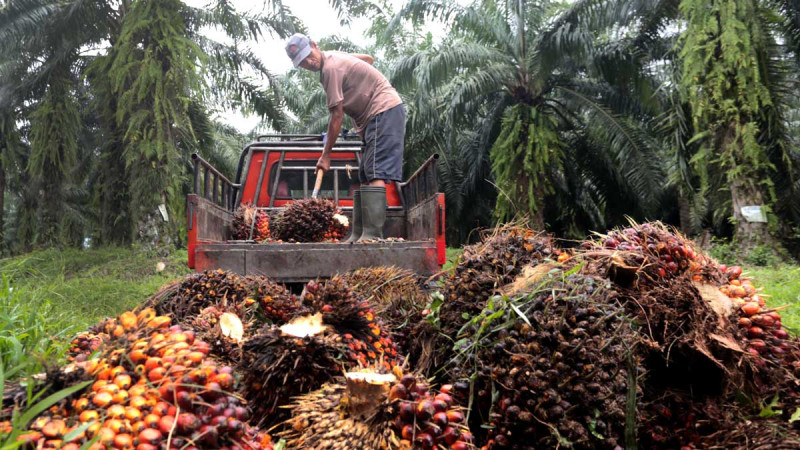
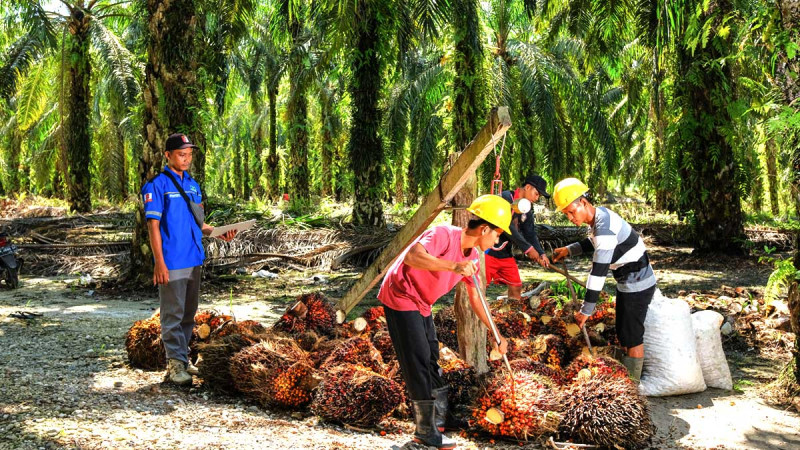
The NTP is an important indicator for measuring farmers' welfare. A figure above 100 indicates that farmers earn more than their expenditures. The achievement of 146 reflects the success of the transmigration program, particularly in palm oil plantation centers such as Mamuju Tengah and Pasangkayu—two areas that were once transmigrant pockets.
SDK shared a success story from a transmigrant in Mamuju Tengah. “The Minister had the opportunity to meet directly with transmigrant residents who have performed the Hajj and earn up to IDR 15 million per month. This is tangible proof that transmigration can improve living standards,” he stated, as quoted by InfoSAWIT from the West Sulawesi Provincial Government on Monday, July 21, 2025.
Furthermore, he stated that transmigration has had a significant impact on local economic growth. Amid the challenges of poverty—currently above 10 percent, higher than the national average—SDK views transmigration as a strategic solution.
“If impoverished individuals from each district can be relocated to transmigration areas, I believe that will be an effective way to address poverty issues in West Sulawesi,” he asserted.
However, he highlighted the low participation of local residents in the transmigration program thus far. Since 1981, most participants have come from outside the province, such as Java, Bali, Lombok, and Sunda. “Local involvement has been minimal. From previous patterns, 80 percent are migrants from outside. We in West Sulawesi only receive about 10 to 20 families because the APBDT allocation is largely taken from South Sulawesi,” he explained.
SDK hopes that the central government will allocate a larger portion for local transmigration in the future so that the people of West Sulawesi, especially the underprivileged, can benefit from the program.
West Sulawesi itself has significant potential for transmigration development. Of the total 195,822 hectares of transmigration areas spread across six districts, around 24,000 hectares are deemed ready for development for various agricultural and livestock commodities.
Some potential transmigration areas include Tobadak, Mamuju Tengah: 7,344 hectares for cocoa and livestock; Mambidan-Mehalaan, Mamasa: 3,500 hectares for cocoa, coffee, horticulture, and livestock; Tubbi-Taramanuq, Polman: 4,000 hectares for coffee, cocoa, and horticulture; Kalukku, Mamuju: 3,000 hectares for livestock and cocoa; Sarudu-Baras, Pasangkayu: 3,500 hectares for fisheries and livestock; and Ulumanda, Majene: 3,000 hectares for cocoa, coffee, and horticulture.
With this potential, Suhardi Duka is optimistic that transmigration can become a key driver of agribusiness-based development in West Sulawesi.
“Transmigration is not just about relocating people. It is about transforming the socio-economic conditions of communities as a whole,” he concluded. (T2)