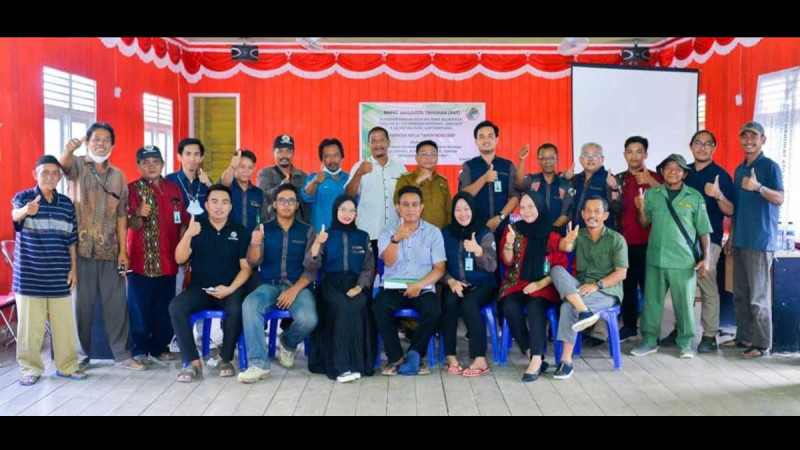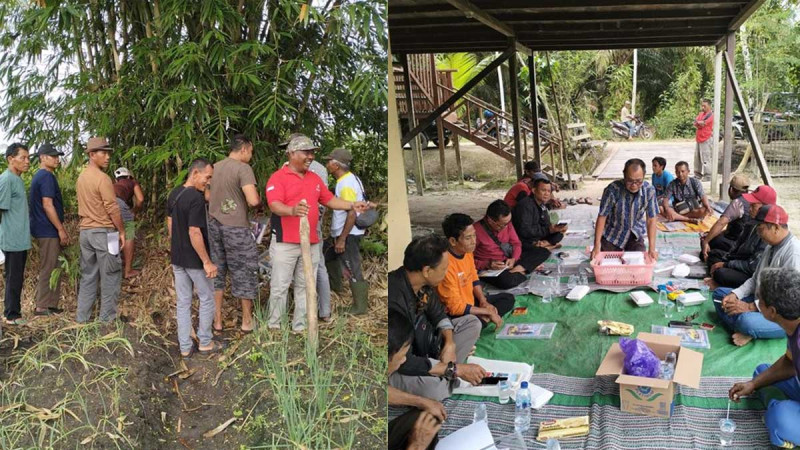
InfoSAWIT, KOTAWARINGIN TIMUR – Efforts to enhance the capacity of independent palm oil farmers continue to gain momentum in Central Kalimantan. In the Pasir Putih village of Mentawa Baru Ketapang district, 45 farmers have completed an intensive three-month training program under the Palm Oil Field School (SLKS), facilitated by Widya Erti Indonesia (WEI) with support from PT Agro Bukit Central Kalimantan (PT ABCK), a subsidiary of GoodHope Indonesia.
Using a hands-on learning approach in the fields, farmers were introduced to Good Agricultural Practices (GAP), sustainability principles such as No Deforestation, No Peat, No Exploitation (NDPE), and environmentally friendly fertilization techniques. For many participants, this program marked their first experience in systematic technical training for palm oil cultivation.
“There’s so much knowledge we’ve gained, especially regarding fertilization and pest control without chemicals,” said Supriyono, one of the participating farmers, in a statement to InfoSAWIT on Tuesday (June 24, 2025).
The results indicate a significant increase in farmers' knowledge. Based on pre-test and post-test assessments, the average normalized gain reached 84.73%. Additionally, farmers have begun adopting simple innovations such as the use of liquid organic fertilizers (POC) and environmentally friendly biological pest control techniques.
This program has also sparked the formation of two active learning groups, Margo Mulyo and Maju Jaya Bersama, which are emerging as the foundation for more independent farmer institutions, demonstrating a strong desire to continue learning. However, challenges remain, as some participants faced difficulties attending due to the need to balance training with farming activities, especially during harvest time.
To conclude the program, a reflection activity and certificate handover took place on March 19, 2025. During an open discussion, farmers shared various experiences and challenges faced, ranging from fluctuations in fresh fruit bunch (TBS) prices to market pressures regarding sustainability certification standards.
“Productivity is key to facing market uncertainties. GAP is not just about farming techniques, but about securing our livelihoods for the future,” said Sumarni, another farmer.
General Manager of PT ABCK, Ahmad Wildan, emphasized that the direct involvement of independent farmers in training programs like SLKS is a strategic step in strengthening their position in the supply chain.
“Independent farmers are important partners. When they have access to training and support, they not only follow the trends but can lead the direction of change,” Wildan asserted.
Looking ahead, this program has generated several recommendations for further strengthening, including encouraging the formation of farmer institutions based on learning groups, enriching the curriculum with regenerative agriculture and climate adaptation approaches, and providing incentives for farmers who consistently apply NDPE principles.
With the achievements and enthusiasm built in Pasir Putih, the Palm Oil Field School model is expected to be replicated in other regions as a strategic approach to strengthen the role of independent farmers in driving the sustainability transformation of the palm oil sector in Indonesia. (T2)