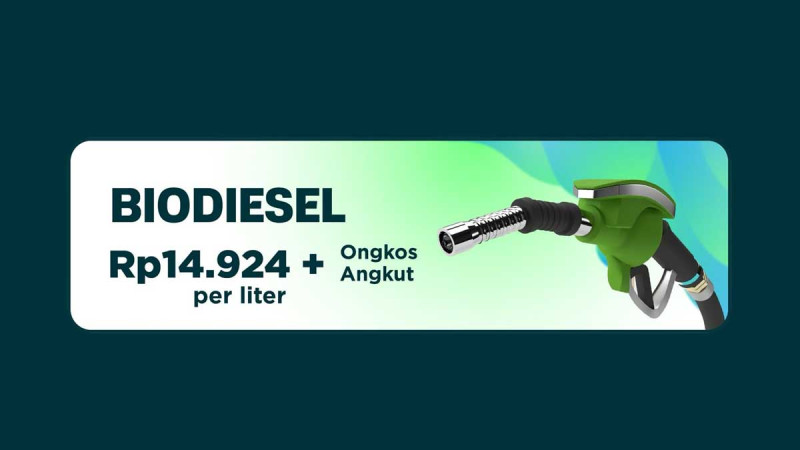
InfoSAWIT, JAKARTA – The Ministry of Energy and Mineral Resources (ESDM) through the Directorate General of New, Renewable Energy, and Energy Conservation (EBTKE) has set the Market Index Price (HIP) for biodiesel in June 2025 at Rp 12,890 per liter, reflecting a decrease of Rp 852 compared to May's price of Rp 13,742 per liter.
This determination aligns with the implementation of the Mandatory Biodiesel Program as stipulated in Article 18, paragraph (3) of Presidential Regulation No. 132 of 2024 concerning the Management of Plantation Funds. The conversion rate of Crude Palm Oil (CPO) to Biodiesel is set at 85 USD/MT, and the Market Index Price for Biodiesel (HIP BBN) for June 2025 is established at Rp 12,890/liter plus transportation costs, effective from June 1, 2025.
In an official statement quoted by InfoSAWIT on Thursday, June 12, 2025, the HIP BBN for biodiesel is calculated based on the provisions of the First Dictum of the Minister of ESDM Decree No. 3.K/EK.05/DJE/2024 regarding the Market Index Price for Biodiesel mixed with Diesel Oil, and the transportation costs are based on the provisions in the Annex of the Ministerial Decree regarding the Market Index Price for Biodiesel mixed with diesel fuel.
The transportation cost is based on the maximum transportation cost for BBN biodiesel mixed with diesel fuel as stipulated in the Ministerial Decree regarding the Market Index Price for BBN biodiesel.
“The conversion value uses the average exchange rate of Bank Indonesia from April 25, 2025, to May 24, 2025, which is Rp16,561,” noted the Ministry of ESDM regarding the Market Index Price for Biodiesel in June 2025.
This biodiesel HIP serves as an important reference for the domestic biodiesel sector, helping to stabilize cost structures amid fluctuations in raw material prices. This determination also reflects Indonesia's commitment to advancing renewable energy agendas and supporting the palm oil-based biodiesel industry as a sustainable energy alternative. The pricing mechanism for biodiesel HIP plays a crucial role in balancing production costs and ensuring its competitiveness in the national fuel market. (T2)